Interior design is a demanding dance.
Interior design is an artistic journey, full of colours and shapes, that from a distance looks like a dance of creative freedom. But when we take a closer look, it turns out to be a dance that calls not only for passion, but also for precisely arranged steps.
As an interior designer, you step onto a stage where your job is not only to bring the client's dreams to life, but also to masterfully juggle countless, often small but crucial elements that add up to the final success of the project.
It means managing and performing many moves at once, such as drawing up the cost estimate, the shopping list or the documentation.
It's a challenge that can put even the most persistent and experienced to the test.
Well-prepared choreography makes for a smooth design process.
For your dance with the design process to be smooth and full of elegance, you need to master the choreography of organising your own time perfectly.
Among the steps that help you keep the rhythm and not lose your direction, task lists play a very important role.
They let you put the pirouettes and leaps, that is your priorities, in order, make it easier to track progress and help you manage time and resources with the grace of a ballerina.
In my previous article, "5 ways to deal with feeling overwhelmed by work", I shared with you how to compose the perfect choreography of the design process, that is a to-do list.
Today I want to show you how working with a task list can become your solo performance, raising not only the productivity bar, but also adding verve to your professional passion and motivation.
Why invite a to-do list to dance?
Creating a to-do list is like learning the steps of a new dance routine.
Even psychologists have noticed the magic in these lists, stressing what an important partner they can turn out to be in our dance with our duties.
Here's why it's worth starting to work with a task list, especially when the stage of your duties grows with every new project.
It brings order to the design process.
A task list works like a magic wand, bringing order to the tangled labyrinths of the design process.
It gives the process structure and lets you move smoothly from one stage to the next. But that's not all!
A task list draws a map of your progress, letting you watch how one task after another opens your way to the goal, over days as well as months.
And at later stages of the project, when it's sometimes hard to see the whole picture of the road we've travelled from the first meeting with the client to the completion of the project, this list is a visualisation of your success. Which naturally motivates you to keep going and increases your satisfaction with your work!

It frees your mind.
Writing tasks down calms a mind struggling with the anxiety caused by a list of never-ending duties.
Once you've written down all your tasks, order starts to reign in the design process, letting your brain rest from the burden of remembering what's still left to do.
Writing down tasks is a powerful tool that lets you reduce stress and the feeling of being overwhelmed. When tasks are collected and written down in one place, they stop wandering around the corners of your mind, freeing up space for creativity, which is so essential in our work.
It helps you carry out an interior design project efficiently.
Writing tasks down automatically gets you thinking about how to do them. Simply writing down what lies ahead of us spurs our creativity to look for the best possible solutions and ways of completing a given task.
All this helps us break bigger tasks into smaller pieces, and so reduces the stress and dread that big, complex projects can cause.
How to streamline the interior design process with a task list?
Mastering the art of managing your time and tasks is like holding the key to the success of your projects.
Here are a few tips that will turn your to-do list into a powerful tool, transforming everyday activities into an endless source of motivation and complete satisfaction with your work.
1. Create a reward system for completed tasks.
Imagine that every item you tick off your task list opens up the chance of a short, refreshing break. It could be a moment's rest or time for your favourite snack.
These small rewards are like the audience's applause after a perfectly delivered performance, offering positive reinforcement that keeps up your enthusiasm to carry on.
Whether you're a soloist in design or work as part of a team, motivation is like music that keeps the rhythm and energy high. That's why it's worth creating your own scale of rewards for every completed step (task), to recharge your batteries for further work.
2. Deal with tasks left hanging.
Interior design is a complex process, and tasks often get stuck along the way. This is where it's worth applying a very important rule.
If a task has stayed undone for a long time, ask yourself whether it's essential to completing the whole project.
Sometimes it turns out that certain tasks have lost their point, and keeping them on your task list only frustrates you. It's worth simply throwing them out.
3. Review your task list regularly.
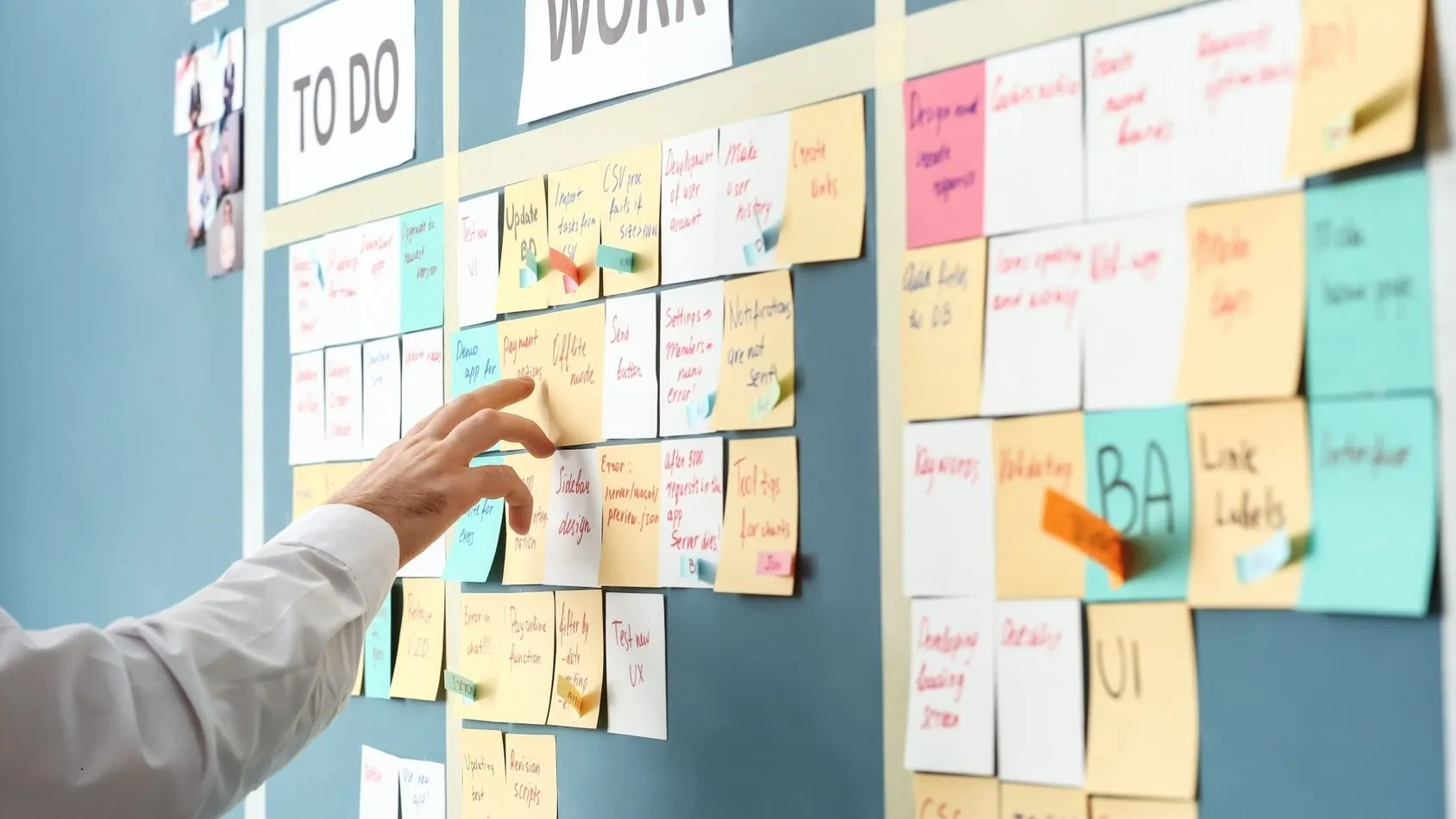
Find time for regular meetings with your task list, treating them like personal consultations with the map of your actions, to make sure that every item on it is still relevant and deserves to be called a priority goal.
If you work in a team, a task review is the perfect opportunity to divide the tasks up, allowing every member to make their own unique contribution to the project.
Remember that delegating tasks isn't just handing out duties, but a strategic manoeuvre that lets you make use of the specialist skills of individual team members, enriching the project with their individual talents and perspectives.
It's like conducting a symphony orchestra, where every musical genius helps create a harmonious, well-performed piece.
4. Plan how you'll complete your tasks.
When you write down a task, think straight away about exactly how you'll do it, how important it is and what result you expect once it's done.
Visualise the result of completing the task before you physically start working on it.
For each task, think about what steps you need to take to reach the goal.
This method will let you manage your time efficiently, and it also increases your motivation by mapping out the road to your goal.

To-do lists in KIS List.
The KIS List app lets you discover the power of creating to-do lists, which bring order and harmony to the projects you carry out.
Whether your project is a single shopping list or a big project covering several flats, KIS List helps you capture all your actions in clear to-do lists.
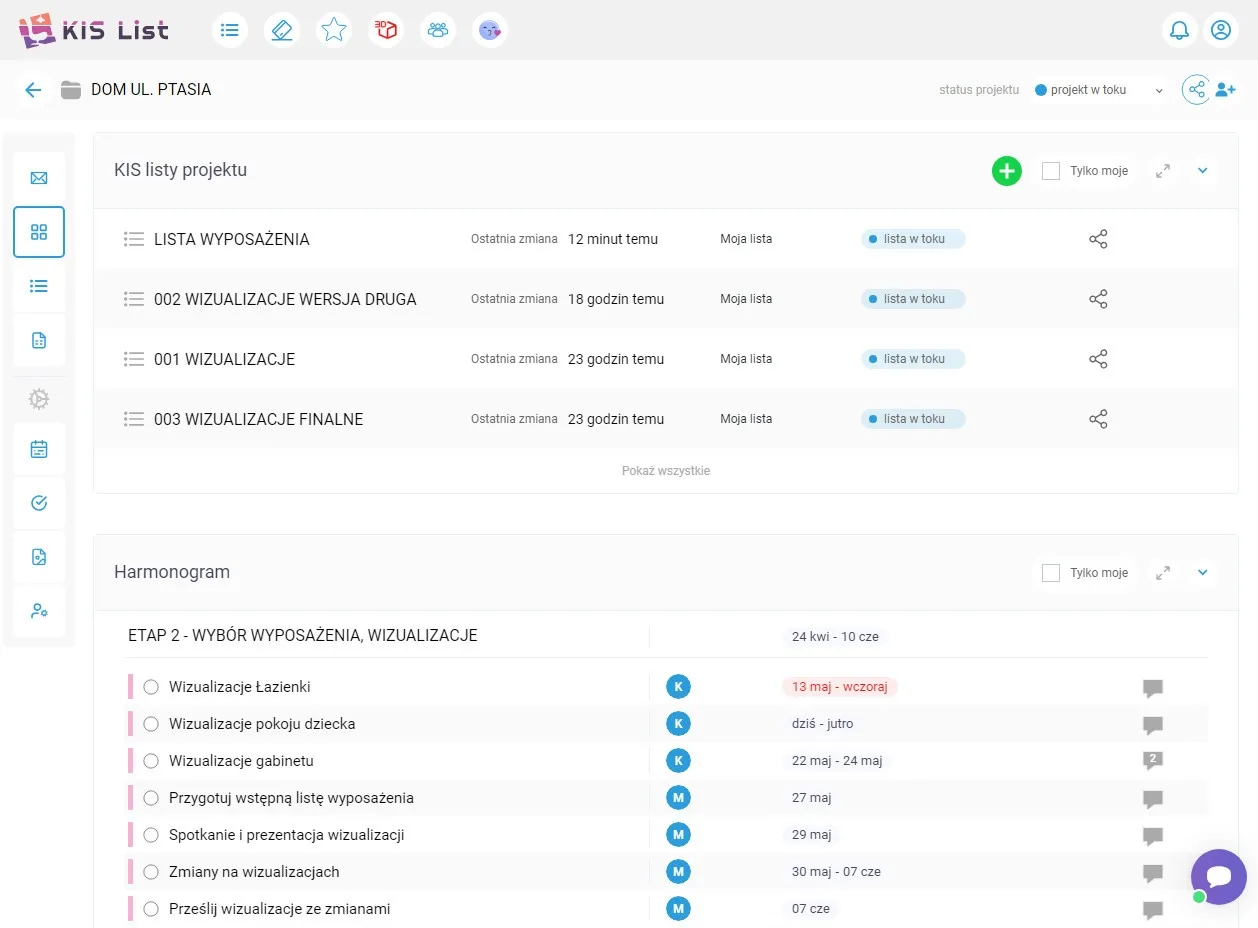
A to-do list on a shopping list in KIS List.
In the KIS List app, every shopping list can be enriched with its own, unique to-do list.
This way, from the very beginning you create a map for carrying out the project, and you know straight away what to do to reach your goal as quickly as possible.
KIS List also gives you the unique option of saving a prepared task list as a template. This means you don't have to create your action map (to-do list) from scratch every time.
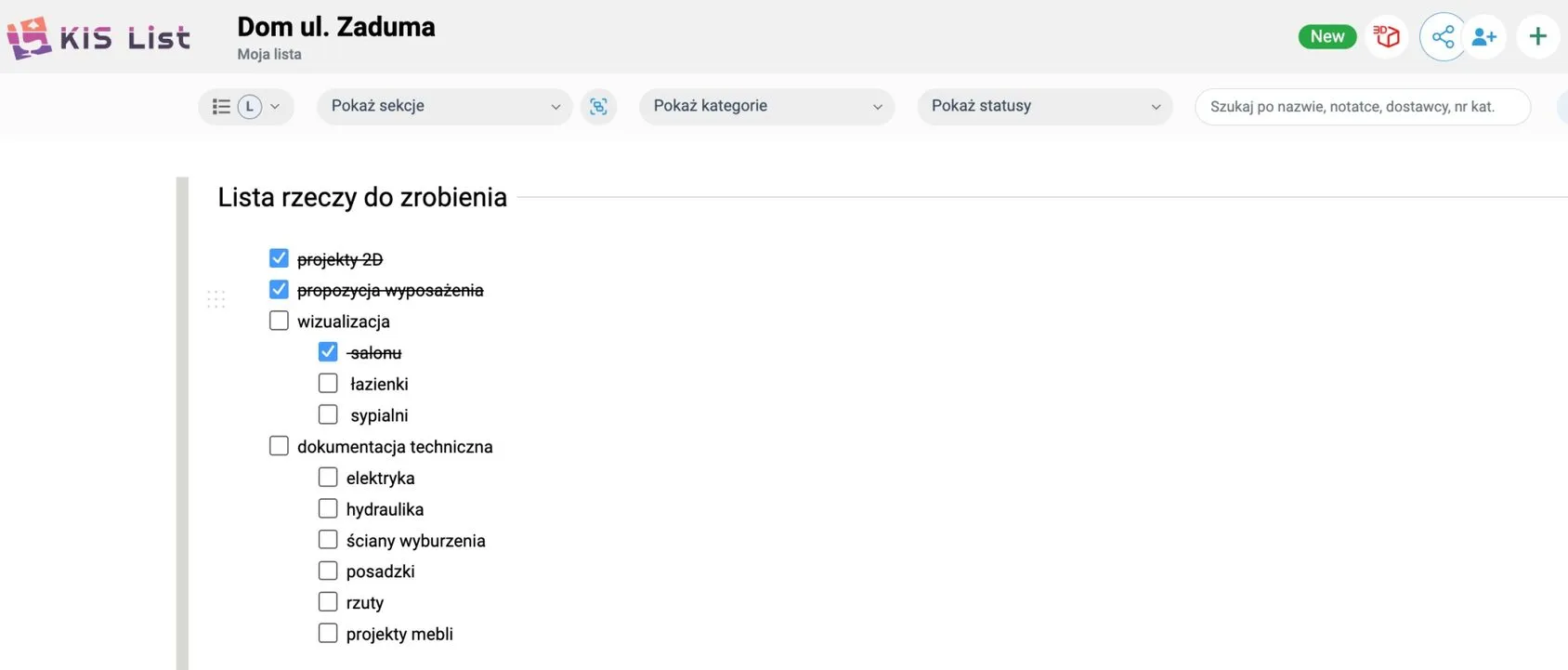
A to-do list in a project in KIS List.
In the KIS List app, you can be the architect of projects that are mosaics of many lists gathered into one project.
Just as with every list you create in KIS List, you can add a to-do list to every project, and it becomes your compass in managing the project as a whole.
This feature also gives you a unique way to delegate tasks to team members, and to set priorities and deadlines for individual tasks.
By reviewing the list regularly, you can delegate tasks right away by assigning them to individual team members.
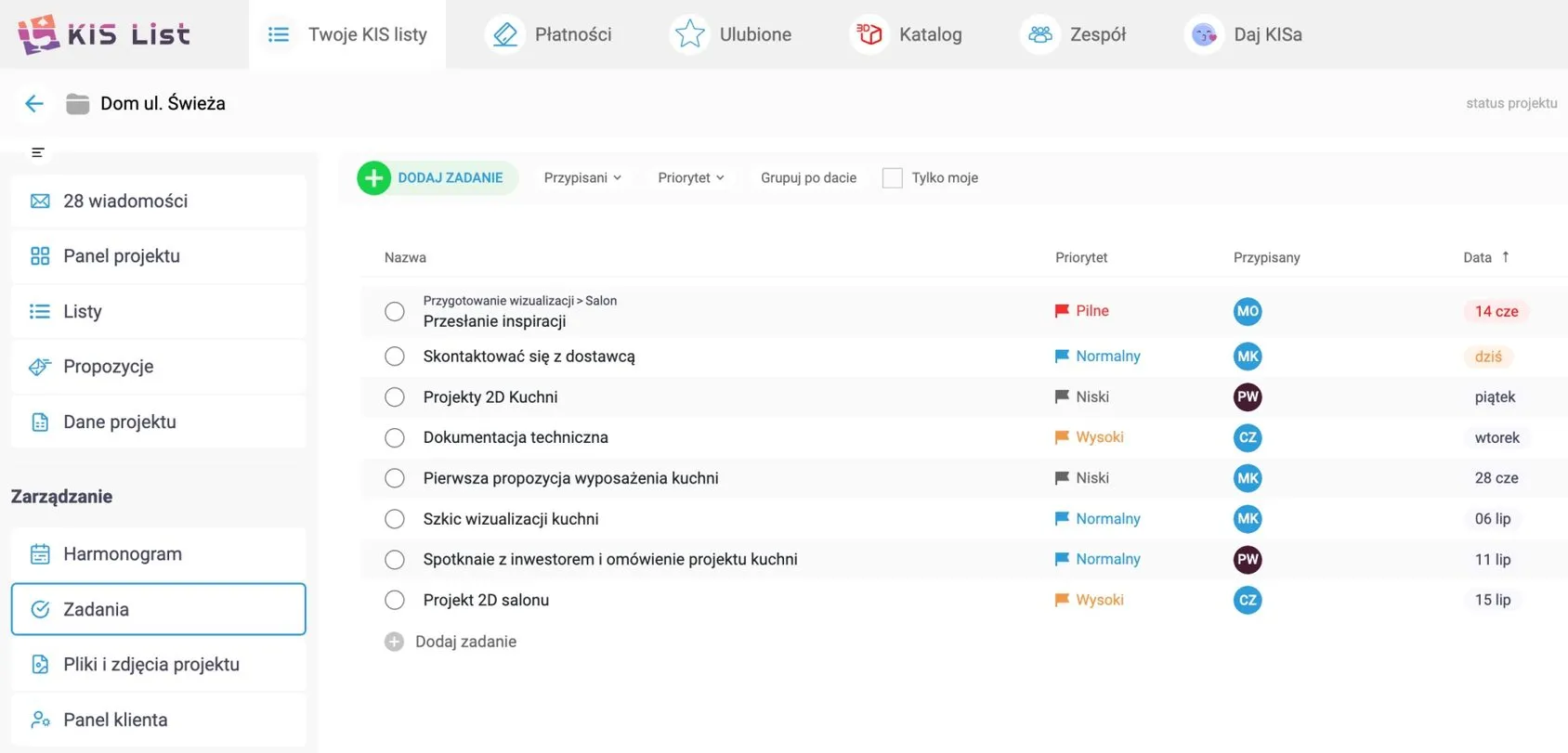
The to-do list as a tool for motivation.
In the world of interior design, where every project is a complex process, creating a to-do list is more than just a useful tool for organising your work process.
It's an essential ingredient that feeds our creativity, boosts our motivation and nurtures our wellbeing, both during a project and once it's finished.
A task list is nothing other than our magic compass, guiding us through the intricacies of creating interiors, full of unexpected twists and challenges.