Who takes interior architecture courses?
It looks like… EVERYONE! In design classes you'll meet teenagers and seniors, serious businesspeople and keen enthusiasts, amateurs taking their first steps and old hands who know architecture inside out…
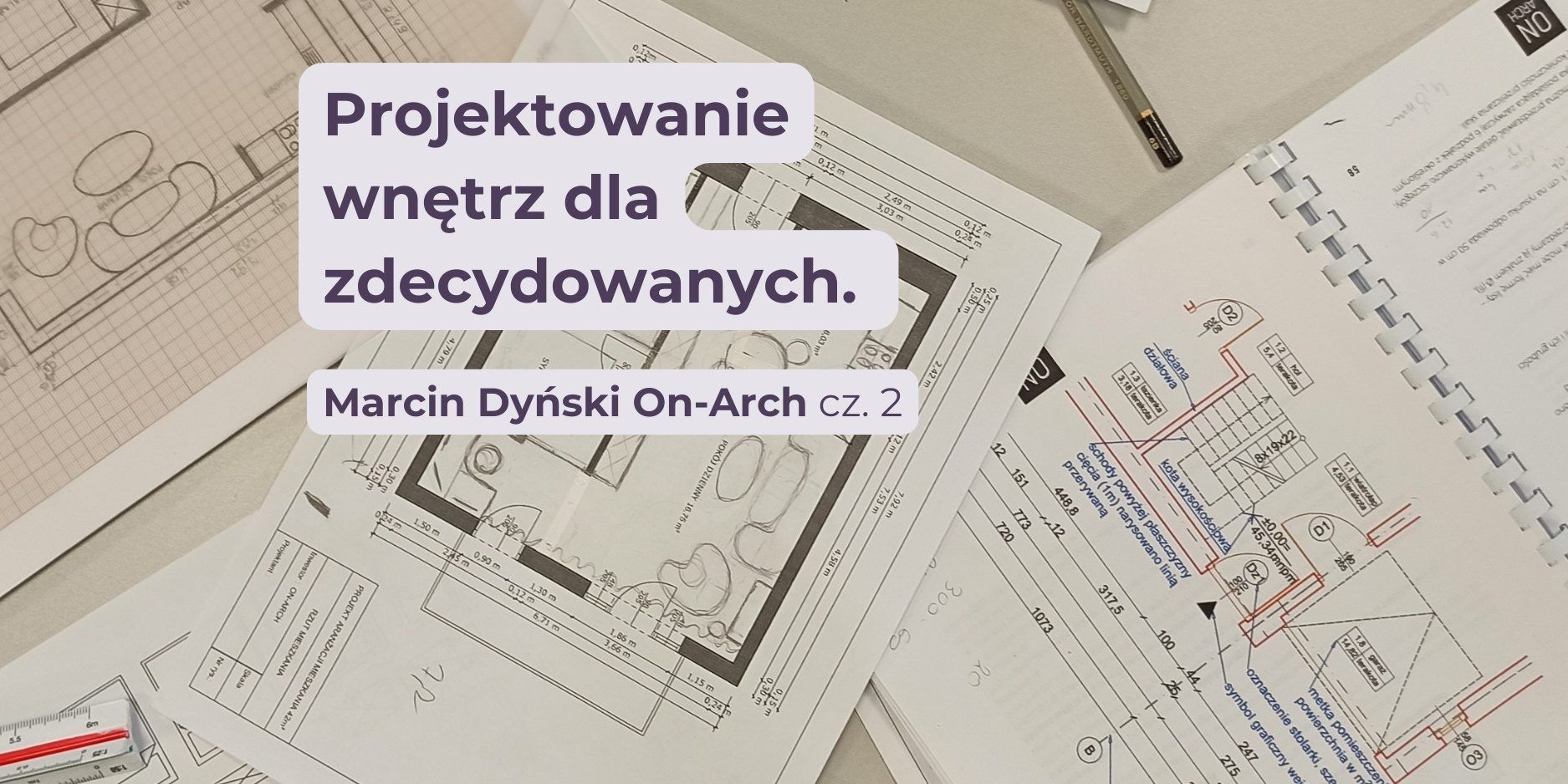
We talk to Marcin Dyński - co-founder and chief operating officer of the On-Arch training centre - about the motivations and goals of people who decide to start learning this way.
What do you think makes more and more people choose to learn through courses?
Marcin Dyński: To understand this choice, it's worth looking at our students - many of them finished university long ago; they would like to take up design and eventually become interior architects, but they don't have the time that school leavers have. These are people who can't afford, life-wise, to spend five years at university now and then several more years getting their professional licence, without even being sure it's the right path…
That's our role: we give them a chance to check whether the passion growing in their heart is something they can really work with; whether it makes sense to change careers and tie their professional future to interior architecture.
A design course: the best testing ground
I want to stress this strongly - we are not devaluing a university degree, absolutely not. It's a great option, and if someone has the opportunity, they should by all means take it. On the other hand, if someone can't afford it right now because of their commitments in life, or didn't have the chance earlier - say, even for financial reasons - to go to that kind of university and started their career somewhere else, then something like a course is the perfect answer.
It's worth emphasising that courses are often more focused and contain only the essential information on a given subject. University degrees have a lot of side subjects, so to speak, which of course develop us holistically in some way, but here the time factor comes in again. Do we really have so much of it that we can broaden our knowledge that far - for example, with topics like nail cross-sections or red-figure painting?
So what questions can you answer for yourself during a course?
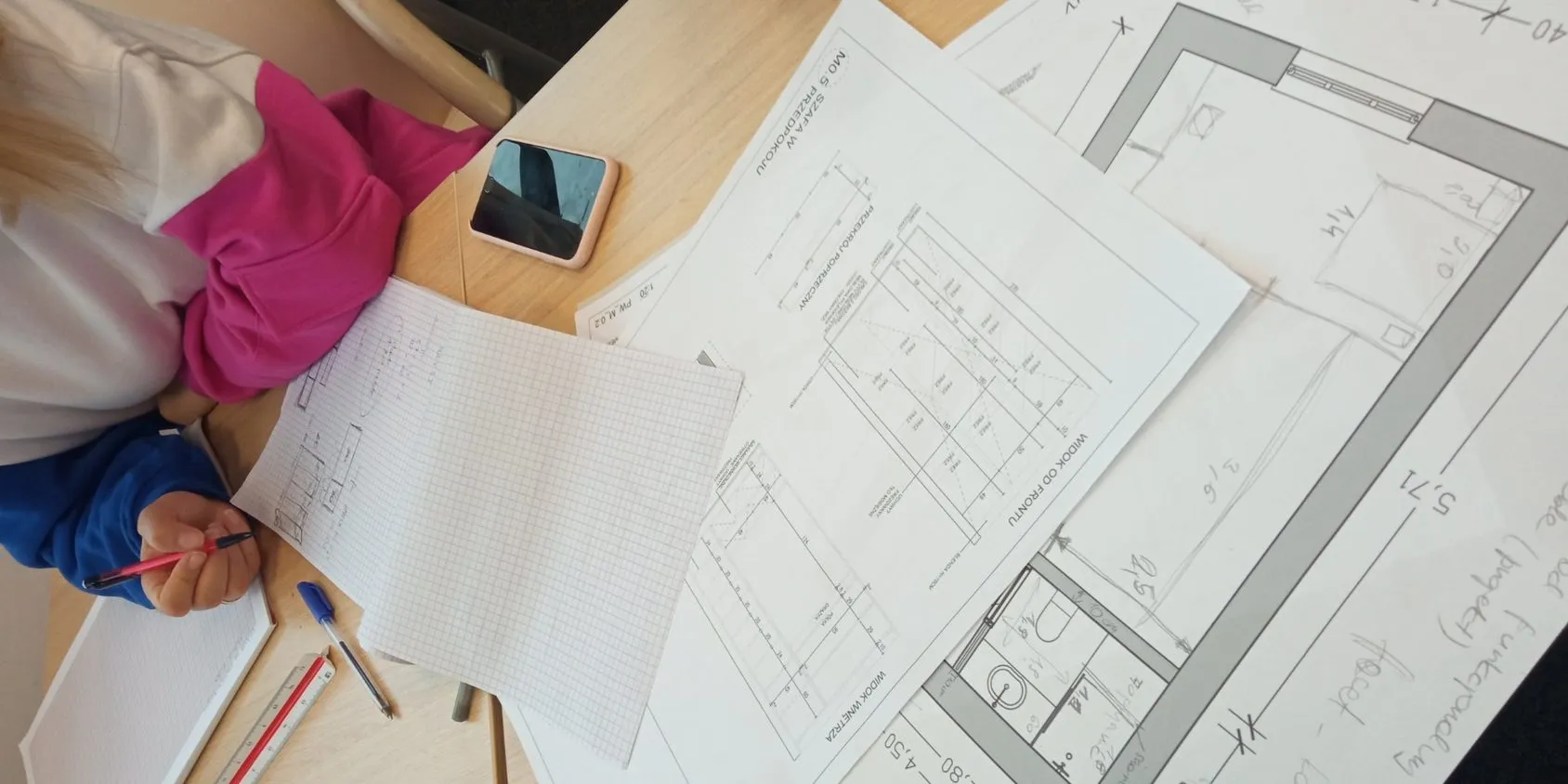
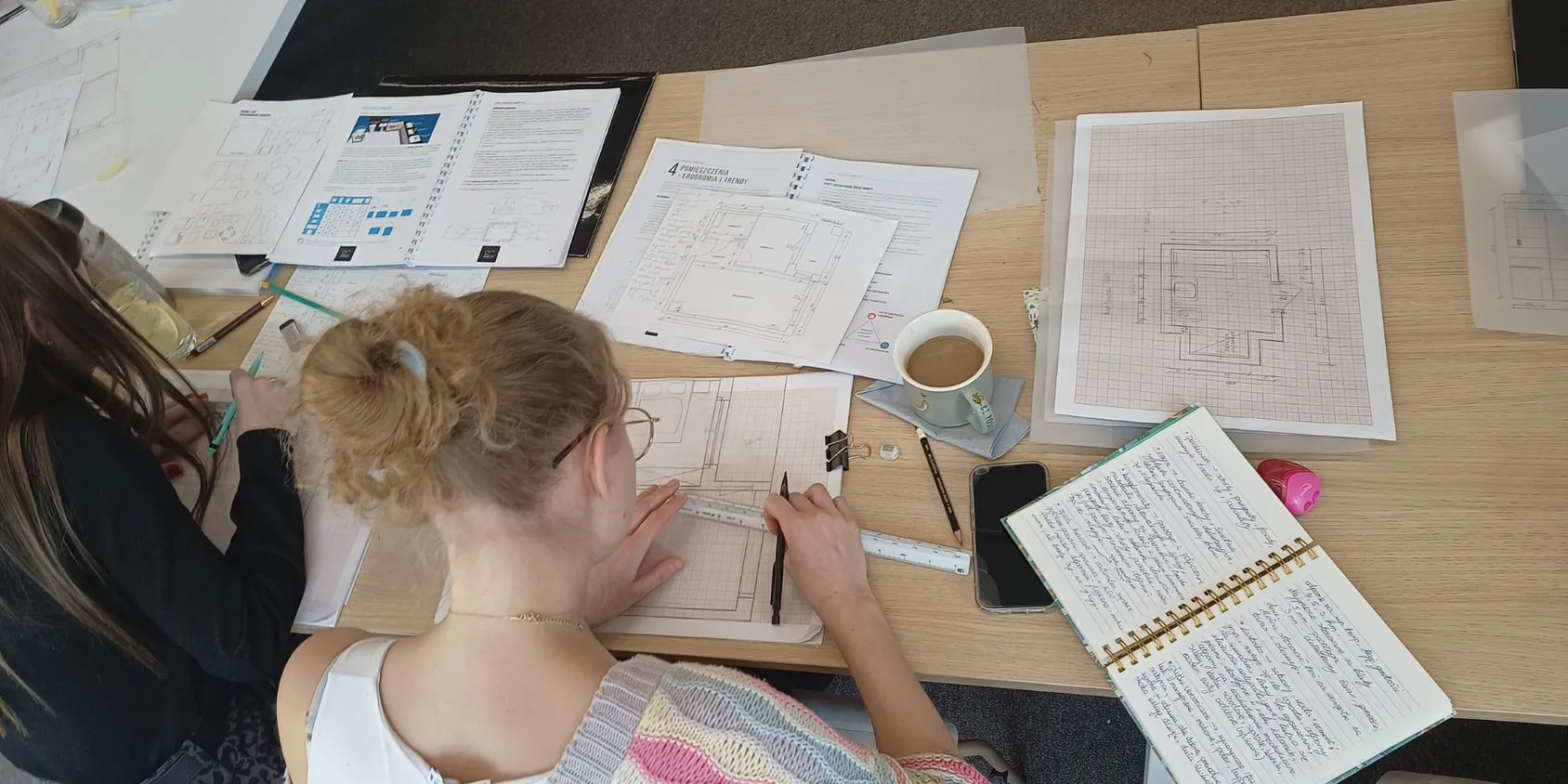
First, you can check whether this really is it. Second - in a much shorter time, you can learn the things that will get you into practice faster. I want to stress very strongly that on the courses we offer, we teach just the "meat", only and exclusively the things related to interior architecture, what is "in the walls". Theory, drawing, using software and everything related to construction documentation - that's our base, our core.
Decorating? That's just the cherry on top
I mention this because people interested in joining often come to us and ask whether we teach interior decorating. And decorating, often confused with design as such, that is interior architecture, is the cherry on top - nothing more, but nothing less. In most cases, though, clients need a designer who will help them at key moments, such as space planning, wall elevations or the services layouts. They count on support in talks with the joiner and on help in situations they can't handle without expert knowledge.
This is the point we put the most emphasis on - that people finishing our courses are simply ready for practice straight away.
Educational dilemmas: courses or a degree?
People torn between a degree and courses often worry that outside academia they won't learn the basics. And yet that technical "core" seems to be the very foundation of what you do?
It would be utterly absurd for me to say now that a five-year degree plus years of practice on site or in an architecture office afterwards - let's say at least 8 years - is worth less than a course that lasts from 3 months to a year. That is absolutely not our intention.
Our target group is beginners who, at this stage of their lives, don't have 8 years to study architecture. They are people who need to change careers quickly (they most often choose the 3-month courses) or people who can devote a year to learning, but no more. They all want to gain the knowledge, skills and tools needed to design an interior quickly, without wasting time on unnecessary information.
The perfect solution for the undecided
I don't want to be unkind or rude, but sometimes people who have done a course have better skills than architects with a degree. People who come to our training very often show great creativity and ingenuity. If we equip them with design tools, it makes a great mix for creating something beautiful.
They are also often people who have that "something" and designed their house or flat brilliantly without any design skills - they did it simply by spelling out to the contractors, in the plainest terms, what they wanted to achieve. Passion, determination and interest in the subject mean these people really have the drive. You can see it clearly later in their projects.
Can you tell us which age group is the largest on your courses?
That's a very difficult question, because we have a full cross-section among our participants. Most often they are people aged 30+ and 40+ who already have a stable job, a family and a home, but there are older participants too. Our oldest student was almost 80 and passed everything, including a complete interior design project in computer software!

True passion has no age, or diversity in the lecture hall
There are also quite a few people straight out of secondary school, or people who are already at university and come to our course. These are young people in whom the passion keeps smouldering; there's a desire to design and they want to take it on. I'd describe these students as a group exploring risk migration; going for a five-year degree is a big commitment. What if, after two years, it turns out it isn't as rosy as it first seemed? What if my passion is styling and decorating, and the degree is tedious fiddling with projects and drawing up plumbing and electrical layouts?
A course is a good space to test yourself in practice. That's why people straight out of secondary school, or starting degrees in other subjects, do indeed come to us to check their expectations.
Who do you meet more often on On-Arch courses: women or men?
The proportions keep changing, but most are women; they make up about 60-70% of our students. Quite a few participants decide to study during maternity leave, which in my opinion shouldn't be called leave given the amount of duties, but… Yes, I think that group pushes the figure up a lot.
A design course: the best way to check whether a hobby and a profession can be the same thing
I have friends - architects - who, after breaks of several years, sometimes more than ten, for children and home, realised they basically had to learn everything from scratch. They know they are behind both on the realities of the job and on the technical side, such as using the current versions of software. Do you have cases like that at On-Arch too?
Absolutely, these are people who clearly need support in finding their feet in the market. People who started out when there were literally only a few CAD programs available, at prohibitive prices of course, and nobody had even heard of visualisation tools. In this case, the answer to "a course or a degree?" is clear. The option that saves time wins.
Back in the game after a career break
Although we keep stressing that we are a company specialising in training for beginners, I won't hide that people who studied architecture and urban planning come to us as well. In other words, fields that are related in theory, but in practice cover interior architecture only to a tiny extent. These students have enormous knowledge - literally, because until now they have worked at a large scale, and now they want to add the principles of residential interior design and learn to work at a smaller scale.
Who else is interested in learning?
There's a group I'd describe as "industry insiders". People who are connected with the industry but have never designed anything themselves. For example, we have course participants who are property developers; they build blocks of flats and simply need to finish some of them to a turnkey standard, and they don't want to use an architect. On the other hand, we have savvy flippers who know that a renovation doesn't just mean repainting the tiles and putting flowers out for the photo. They want to learn how to make changes properly and by the book. For them, these courses are definitely worth it.

From flippers to joiners: students from the construction industry
We also get owners of joinery workshops, building and finishing materials shops and, finally, contractors themselves. Everyone who works in the broadly understood architecture and construction industry and often gets asked by clients for some advice. Today's technology makes it possible to visualise clients' ideas, and in doing so convince them of certain solutions and make your own work easier.
So you have both people just entering the profession and those with a lot of experience who come to you with a specific goal.
What's more, we get almost cinematic cases; about 50% of the participants on our courses are people with an established professional position who, with a profession they trained for, at 40+, decide to drop everything and pursue their passions. The proverbial case of the burnt-out accountant who can't look at numbers any more and, after 20 years working in a public office, decides to take up design because she has always loved decorating her friends' homes… It sounds like the plot of a romantic comedy, but these things really happen here.
A career change at 40+, or stories straight out of a film
There are also people who, wanting to change careers, start their own business and apply for funding from the job centre. This group makes up a really large share of our students.
My next question was going to be about the proportion of professionals to participants who treat design as a hobby, but from what I can see, the answer is clear.
Most On-Arch students have very concrete needs: they want to start a career in this particular field, or broaden and round out their skills. But, referring to the saying that if you do what you love, you'll never work a day in your life - enthusiasts come to us too.
When a hobby becomes a profession
A large share of participants know they will work in design and approach it with real enthusiasm: I want to do flips, I'm planning to get into property development, my husband or my parents have a finishing materials shop. I'm into home staging, so I go to trade fairs, look at new technological solutions, I know what's going on because I'm hooked on browsing Pinterest… Following that line, it turns out a hobby and a profession can be the same thing.
So I'd say 50% are people like that, and the other 50% are people who are "completely green in this area", but passionate; they don't have the design tools, but they're creative and determined.
What makes a good design teacher stand out?
Let's move to the other side of the Force now… who teaches at On-Arch? The company has many locations and classes take place in many cities, so I suspect there are many tutors too. What qualities do you think the ideal lecturer should have, especially given your very condensed curriculum?
We do indeed have quite a large team. There are about 40 architects who work with us permanently, plus a few guest tutors, so the whole teaching staff numbers almost 50 people - leaving aside the administrative side of the company entirely. So much for numbers; as for how we choose, we are guided by three values.
First, our pool of lecturers is mainly interior architects who have their own studios. In other words, practitioners. Of course theory is very important, but we make sure our lecturers are above all practising designers who will share first-hand knowledge with the students.
Teaching so that people actually learn
Really, only a practitioner can see that it doesn't make much difference whether we are remodelling a 352-storey house or a 12-square-metre kitchen; there can be exactly as many challenges and clashes. That's why we put a really strong emphasis on them being interior architects who constantly work with clients on real projects and face challenges every day. At the same time, they keep their finger on the pulse: they have up-to-date knowledge of materials, technologies and trends.
The second thing is a real teaching approach and the ability to pass on knowledge - without it, even the best in the profession won't do well as teachers.
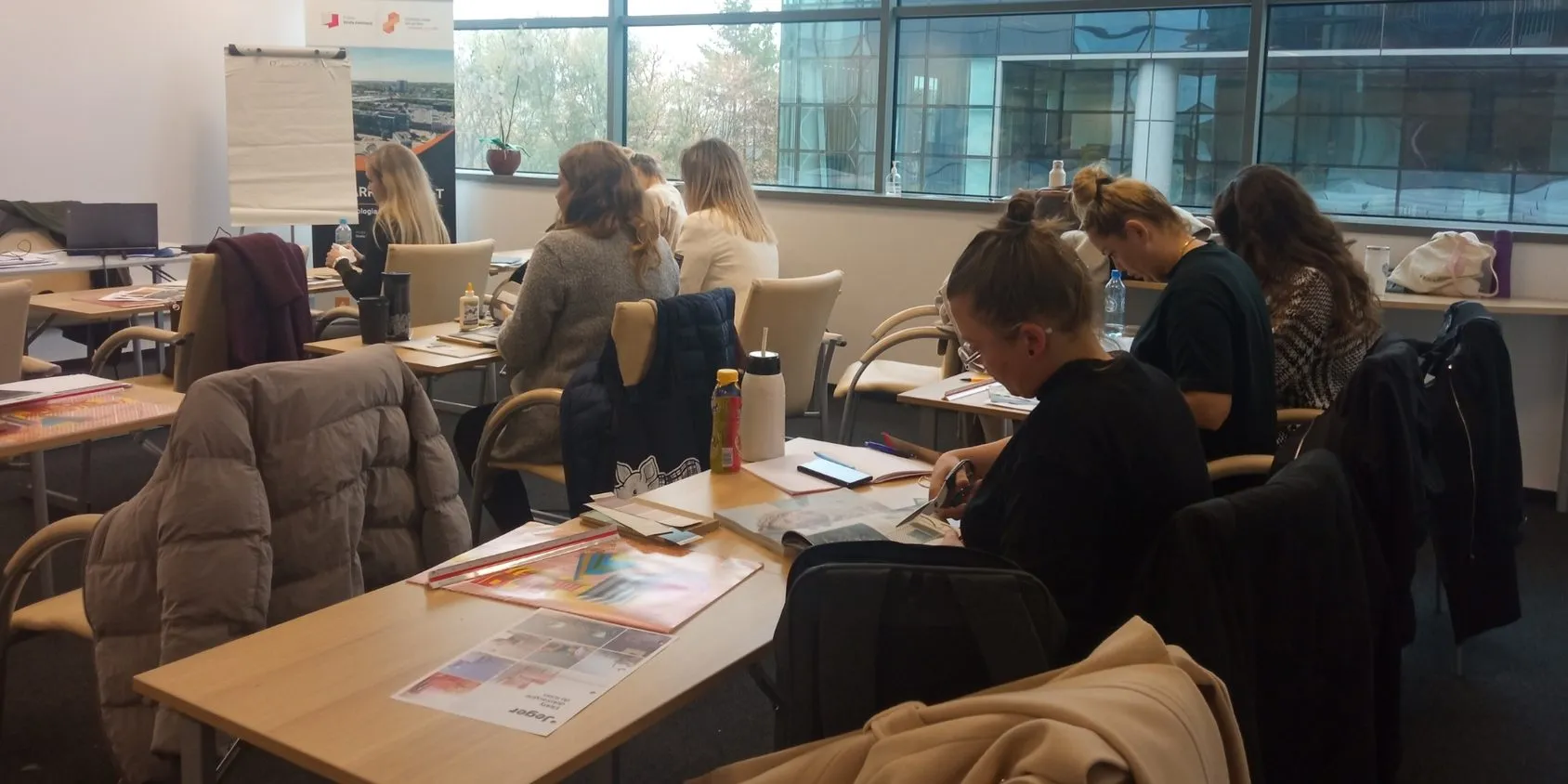
The second point naturally ties in with the third element, which is charisma: the ability to work with participants and an individual approach that makes it possible to really reach everyone. A good lecturer not only passes on knowledge in an interesting way, but also makes sure everyone understands what they are doing and why. We teach so that people actually learn - that's our motto.
We hope today's interview has whetted your appetite for knowledge and for another conversation with Marcin! In the next part, we'll find out when and how the idea for the training came about, what shaped the On-Arch courses as they are today, and… whether matchstick models are already passé.
Stay tuned!