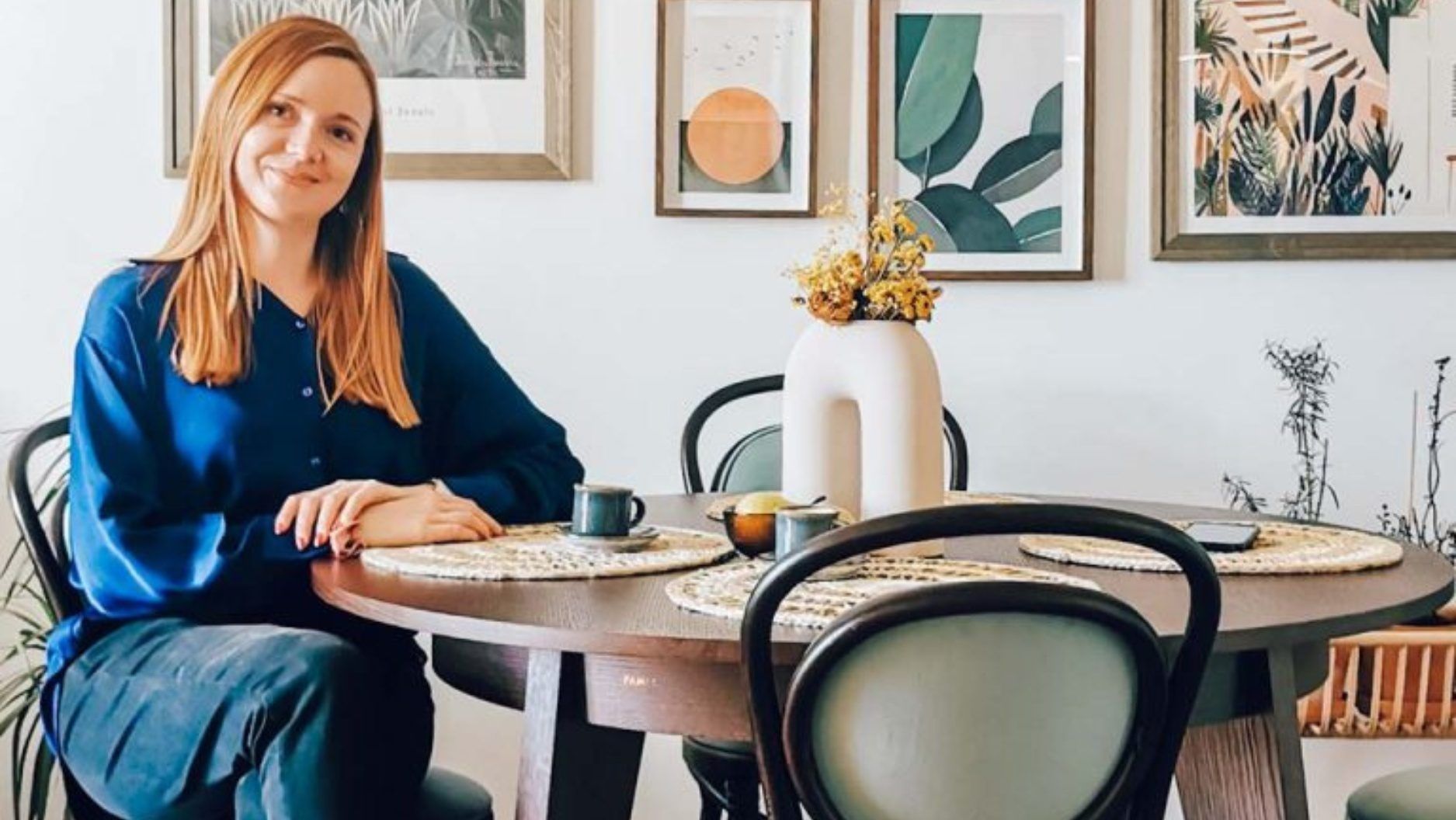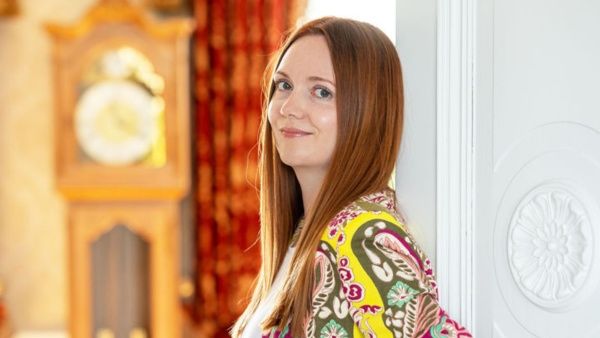
We won't hide it: during our interview with designer Martyna Szulist, we had to stop the conversation several times to have a proper laugh. You can meet Martyna both on building sites, as part of her work at Pracownia Bueno, and at the training courses she has been running with passion for years. Her experiences could easily serve as the script for a TV series that mixes comedy, drama and thriller in equal measure, and she could easily play all the roles in it herself.
Since our blog was meant from the very beginning to be a treasure trove of practical knowledge that gives people new to the profession a slightly easier start, we hereby declare: Dear children, read carefully and don't try this at home!
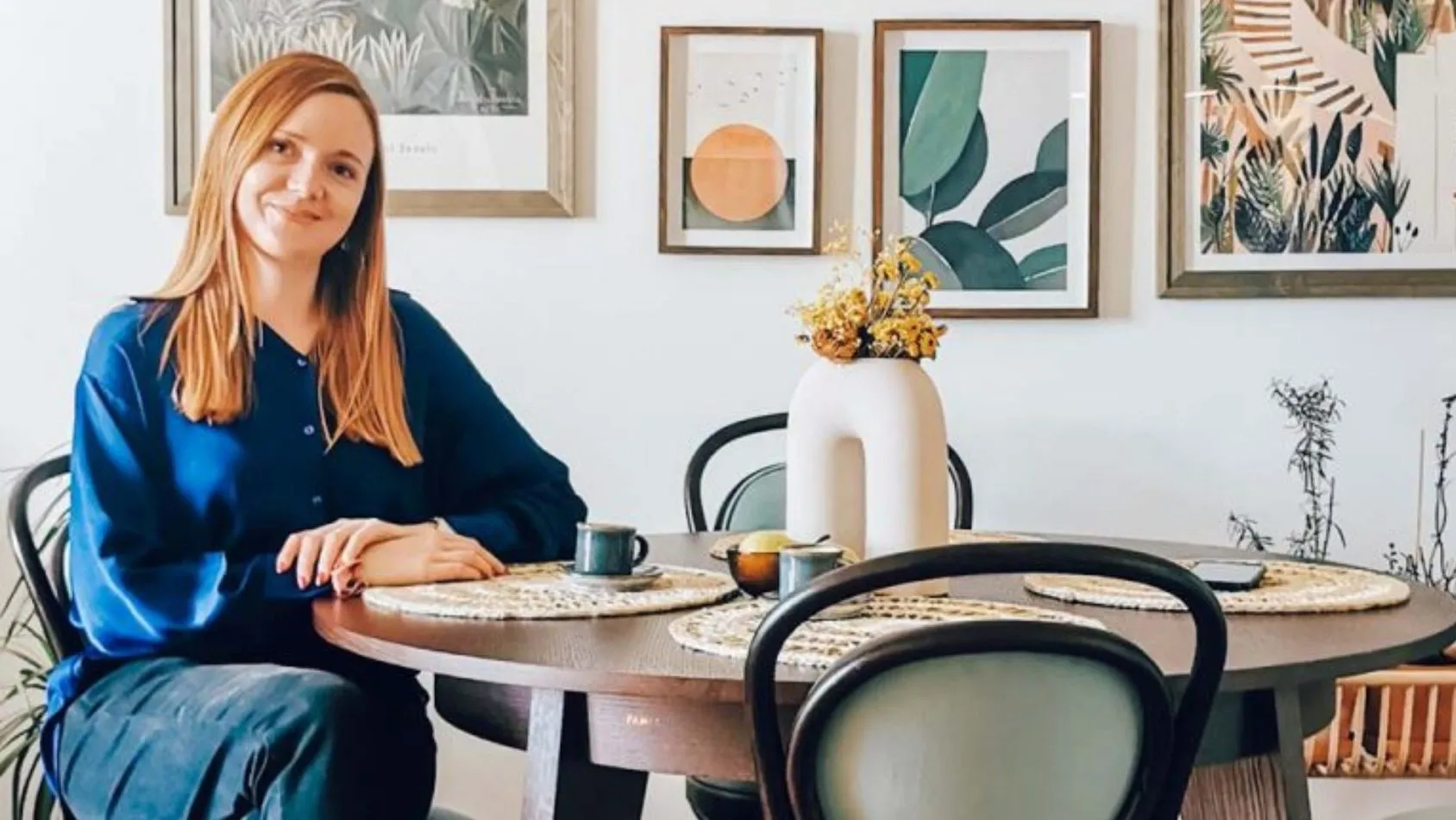
How did your adventure with interior architecture and art begin?
Martyna Szulist: Architecture was always present in my home in some way. My parents studied civil engineering, so there were books on architecture and art history on the shelves. I was naturally surrounded by it from childhood, because I was always drawn to beauty. I don't really know how much of that came from having those books around and how much from my own inner curiosity and the fact that I was very interested in art all on my own, but I knew I wanted to go in an artistic direction.
In our conversations, the question of what makes people choose this particular path often comes up. Upbringing, genes, or maybe natural-born talent? What do you think has the biggest influence?
As for my parents, yes, we had all those art books at home, but they're definitely more technical and far from going into raptures over the beauty of details. So in our family I'm rather the odd one out:) but I stand by my view that our surroundings still have a big influence on our choices.
I was always drawn to art, even though my parents didn't have much to do with it
I remember the story of an experiment in which identical twins were separated and raised in different environments. Despite having the same set of genes, they led completely different lives. That's why I think home, surroundings and access to certain things matter a lot, especially at the start. Later, some inner need has to kick in - my parents have both feet firmly on the ground, yet I was always drawn to art. And I felt that this was something very much my own, mine alone.
How did your parents react when you told them you'd chosen this path for yourself?
That was quite a difficult subject… I really wanted to go to an art high school, but the nearest one was 100 km from our town and my parents absolutely refused. They said my talent wasn't big enough to justify travelling that far.
Ouch… that must have hurt.
Yes, but I have to give them credit: when I finished that wretched general high school and was still dreaming of art, they bravely drove me to all the entrance exams and bought me art supplies. They saw that I was painting and making things every day, and I never again felt that they were holding me back. They had clearly come to terms with the fact that I like to go against the grain in everything.
So what did your education look like?
It was a winding road. In high school I dreamed of stage design, but I didn't get into the Academy of Fine Arts. So I went to Adam Mickiewicz University in Poznań for a year, where I did theatre studies, a related field. A great year - the university was wonderful and (having been to three universities in total) I think it had the highest standard and was the best one I attended.
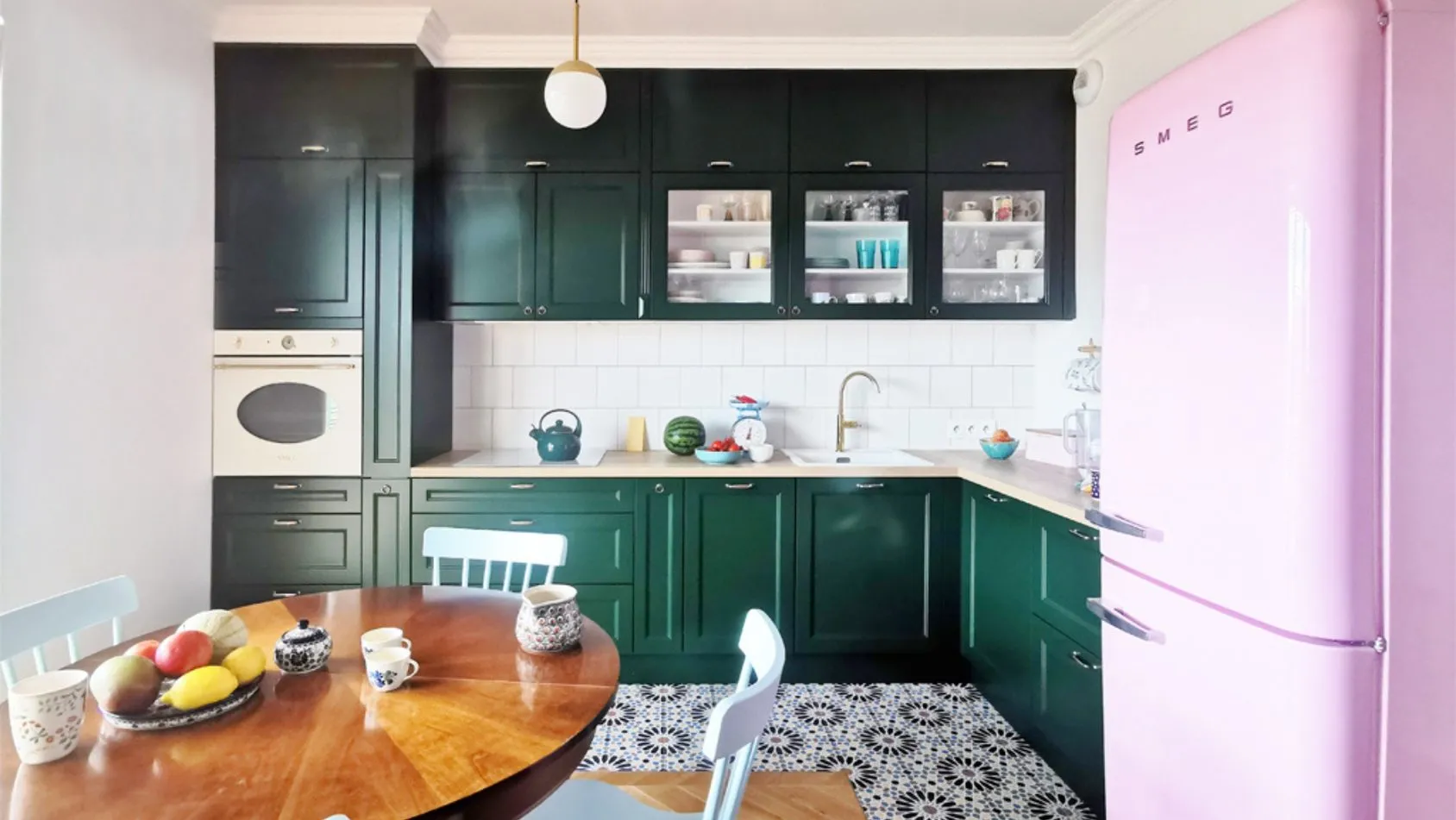
I like to go against the grain.
But something was missing there - theatre studies is about interpreting rather than creating, and I was drawn to creative work, so I tried my luck at the Academy of Fine Arts a second time. Again I didn't get in, and that's how I ended up studying interiors at the Koszalin University of Technology, so that I could work with space. We were the first year of a newly opened programme and served as guinea pigs a bit, but thanks to that experience I got into my dream stage design course for my master's degree.
So in your case interiors were a result of circumstances rather than the goal?
That's how it turned out. At the University of Technology I also realised that there's much more work in interiors than in theatre or film. So I did my Academy of Fine Arts degree totally for myself. It was a matter of ambition and of fulfilling my dreams.
I learned everything the hard way
How do you rate your interior architecture studies?
Socially they were great. I met my future husband there and became friends with my current business partner, with whom I run Pracownia Bueno. I absolutely don't regret those studies, but…
…you had to learn everything in practice?
Yes, I learned everything the hard way.
It's amazing that this is yet another conversation in our series where everyone, no matter which university or course they finished, says that after graduating you have to learn everything from scratch anyway, as if you'd been born the day before.
After graduating I spent a year looking for work and did two unpaid internships. It definitely wasn't the proverbial coffee-making… On the first day, a few other people and I were sat down in front of AutoCAD (which I knew only so-so, but I learned all the commands in a week) and straight away given drawings to do, because the project deadline was coming up. We'd slave away at the computer for 14 hours a day, completely for free, doing things we didn't have the faintest idea about. And these weren't exercises, but projects that went straight to the client…
An internship, Polish style: free labour
It was awful. When I think about it today, I couldn't work like that - take on someone with no experience and put them straight onto a project. But that was the philosophy of that office. I remember that the first time they gave me a project, I was so stressed I didn't know what I was looking at - those coloured lines meant absolutely nothing to me…
Then came the second internship, where I did get to do some conceptual work, but I was told I was hopeless because I didn't speak up. I took it as a matter of pride, and when, out of pity, they offered to let me stay another month and prove myself (for free, of course), at first I agreed. Then I decided I wasn't going to work without pay, and with my own laptop and software on top of that…
Was that the end of the internships from hell?
Yes. I decided I couldn't go on like that any longer, so I set up my own business while I was still in Poznań. I started working with a company that made exhibition stands - the city is famous for its trade fairs, after all. And that was a really good start. At that company they let me prove myself in design, I finally had a say in decisions, and they boosted my confidence that I could actually do something.
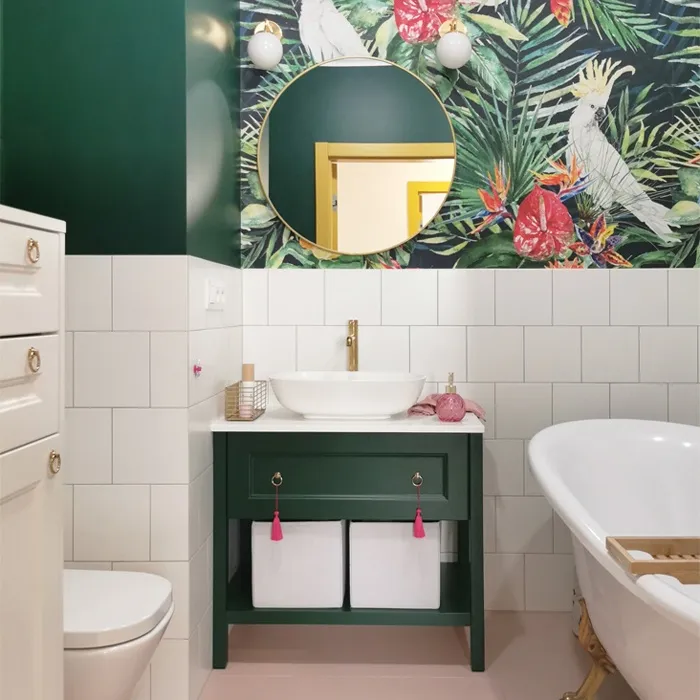
Time to breathe: working for myself
I really loved it and I suspect that if I hadn't moved, I'd still be doing stands to this day. Later I moved to the Tricity, so naturally the collaboration had to die. I've been in Gdańsk for 10 years now and I really enjoy life here.
How did you organise your work when you first started your own business?
I learned practically everything from scratch. Those were completely different times; there wasn't the kind of access to design knowledge there is now. I tried to look for information online, but there really wasn't much. Today interior architects share sample documentation and contract templates, and there are loads of blogs (I run one myself!), courses and practical tips.
On my first bathroom project, my mum checked my drawings.
Back then I spent hours digging through forums to find any hints about what to put in a contract, and then I quizzed my parents about what should go into the technical documentation. On my first bathroom project, my mum checked all my drawings ;)
Once again it turns out that learning to make visualisations and knowing ergonomics is only a slice of our profession; without the skills to organise your work, schedules and the rules of working with clients or contractors, you're left up the proverbial creek without a…
When I look at my first projects today, I have no idea how on earth they got through or what I was thinking back then.
Let's move on to a topic that always interests beginner designers: what was your first solo project like?
Calling it a project is a stretch... As we said, at the beginning I wasn't fully aware of what a project should include, so it was poor-quality visualisations of a flat. I remember finding this client on Gumtree, and before we'd discussed anything, he asked for a quote. I didn't really have anyone to check with, so I asked around in my family, and my brother said: 'A 100-square-metre flat, that's three thousand minimum!'
100 square metres for PLN 500? I'll take it!
So I go back to the client and tell him three thousand, and he goes: 'How much?! Well, I was thinking about PLN 500.' And what did I do? Of course I told him that I'd also thought five hundred, it was just my brother who'd suggested that, so five hundred it is... I know how that sounds, but honestly, what I made wasn't worth any more. Poor-quality visualisations, zero functionality, zero ergonomics... just awful, but at least I don't have a guilty conscience about ripping anyone off.
During our interviews, designers confess their worst professional experiences. Is there anything you could share for our horror corner?
There were a few situations that gave me nightmares. I'm very sensitive and at times it was really hard for me, especially when a client was unhappy about something. The one I remember most is probably a project from a few years ago where I did everything turnkey. I priced it badly, I didn't know what it involved, and I worked with the client's contractors, not mine. The clients looked for faults in everything, even in places I would never have thought of.
Turnkey projects, or how to effectively finish yourself off mentally
It dragged out the whole process on site terribly and weighed on me mentally. The clients complained about everyone and everything: that the Ikea fitter was bad, that something had been laid wrong, but the biggest blunder was made by their contractor who installed the shower enclosure. He redid it several times, it still leaked, so in the end the client had to book a fitter authorised by the manufacturer. Time went by, the complaints grew, and in the meantime her cousin came to stay and together they started finding more things to fix...
As if that weren't bad enough, there was my friend's boyfriend, who claimed to be an electrician, wanted to help us and put up a wall light. Unfortunately he did it so badly that there was another row. It all went on for months, and I kept going over there. At some point I was doing it for free, because the project had long stopped paying off for me, and it was really laughable money: three and a half thousand in total, with site supervision, for the whole flat.
A classic of the genre: the client who haggles after the project is finished
At the end, when I asked for the final payment, the client wrote me a whole essay saying that now I had to convince her to pay me the remaining amount... I decided I had my pride, I wasn't going to beg for that money, and I ended the collaboration. I came to the conclusion that I'm not taking on turnkey projects any more. It all took a big toll on me.
Red flags - are there any behaviours that make you turn down or end a collaboration?
I've never broken off a contract, but there was one situation when my business partner and I went to a "casting"-type meeting. That was unusual, because we normally arrange half-hour introductory video calls online, but that time we decided - for some reason - to go in person. And thank goodness we did, because Mr Client turned out to be an absolute chauvinist.
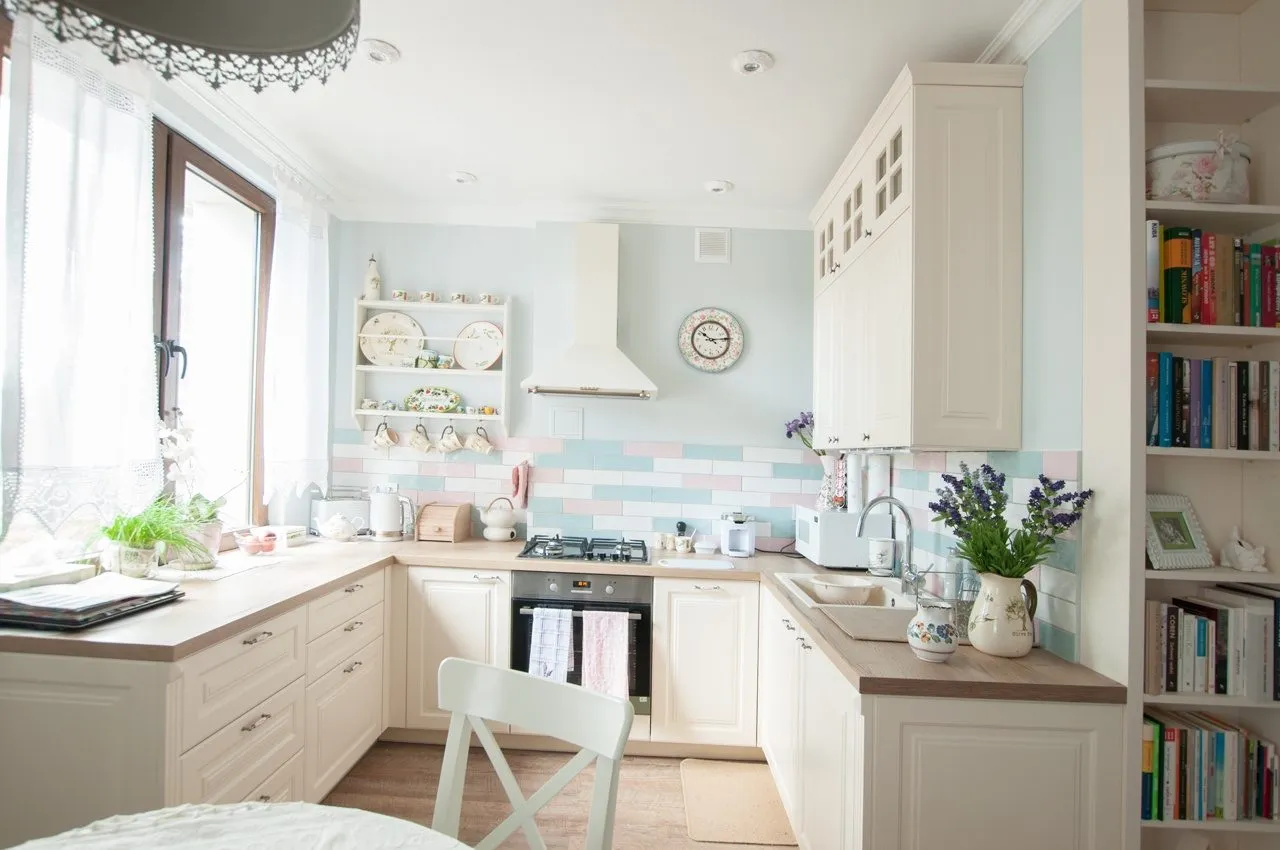
I've never broken off a contract, but…
I'm allergic to people like that; I can't stand working with someone who expects me to prove I can do something just because I'm a woman. I know my worth, and he clearly questioned every word we said, tried to make us look like idiots and tried very hard to prove to his wife that her idea of hiring a designer was stupid. Luckily they decided against it, although we probably wouldn't have taken the job anyway.
This is a good moment to talk about contractors. How do you get on with them when your projects are being built?
It's pretty good now, but at the beginning I came across some real characters with not-so-clever remarks. Plumbers were probably the worst - I even had the impression that a plumber is a whole other state of mind. The truth is, I don't like going onto a site where there's a new contractor. Not only am I responsible for the build, but I also stress about what kind of attitude he'll have towards me.
A plumber is a whole other state of mind
It's really sad that a man just walks in, while we have to wonder what awaits us on the site… But I do have trusted contractors whom I treat as partners, and I really appreciate their attitude and their work.
A trusted team guarantees a good result… but a project everyone is happy with sometimes needs something more:) These are exactly the factors we'll discuss with Martyna in the second part of the interview - we warmly invite you to read it.
See you in the next episode.