The best shopping planning apps that will make life easier, and not only for architects!
Is there anything that unites architects and designers? A universal dream that keeps cropping up in conversations and brings a blissful smile to the faces of those who have just dreamt it?
Indeed there is! The Holy Grail is a smart app for making shopping lists, one that cuts the time needed to prepare a project to a minimum. Rumour has it that the Pritzker Prize comes in just behind it ;)

A simple shopping list, or how to design smart without wearing yourself out
Putting together a sensible list of finishing materials and other products is the key to a successful project. What's more, I get the feeling it's the key to our profession. Hundreds of pieces of information run through designers' heads every day. Dimensions, quantities, dates and other data...
You really need nerves of steel and a pretty good processor to put all of that in order.
I know a few designers for whom improvisation is their daily bread, who only now and then jot something down on their phone and consider note-taking a complete waste of energy, but for many of us, running a project without even a roughly sketched list is a straight road to disaster.

A well-prepared shopping list lets you not only carry out tasks efficiently, but also ensures a good night's sleep. For us, for the contractors and for our clients.
With a smart app you can have all the product information gathered in one place, in a form that makes it easier to plan purchases and share them online (on a computer or a phone) with the other people involved in the project.
Order is a must - the shopping list in five flavours
Anything that can speed up shopping sounds tempting. So I decided to take a closer look at the methods used by interior architects I'm friends with and see how making lists works in practice.
We start with the classics - shopping lists written on a piece of paper, photocopied or photographed on a phone, or copied out (sic!) on the fly by the contractor... You can take my word for it, human ingenuity in the matter of making shopping lists knows no bounds.

Which app works best for preparing a shopping list?
When preparing initial shopping lists, interior architects usually use classic paper planners or take notes on their phone. At a later stage, items are most often typed into Excel tables, and it's worth noting that everyone has a different method of making shopping lists.
Here I'll tell you a story that proves spreadsheets, associated with dispassionate calculations, have another face.
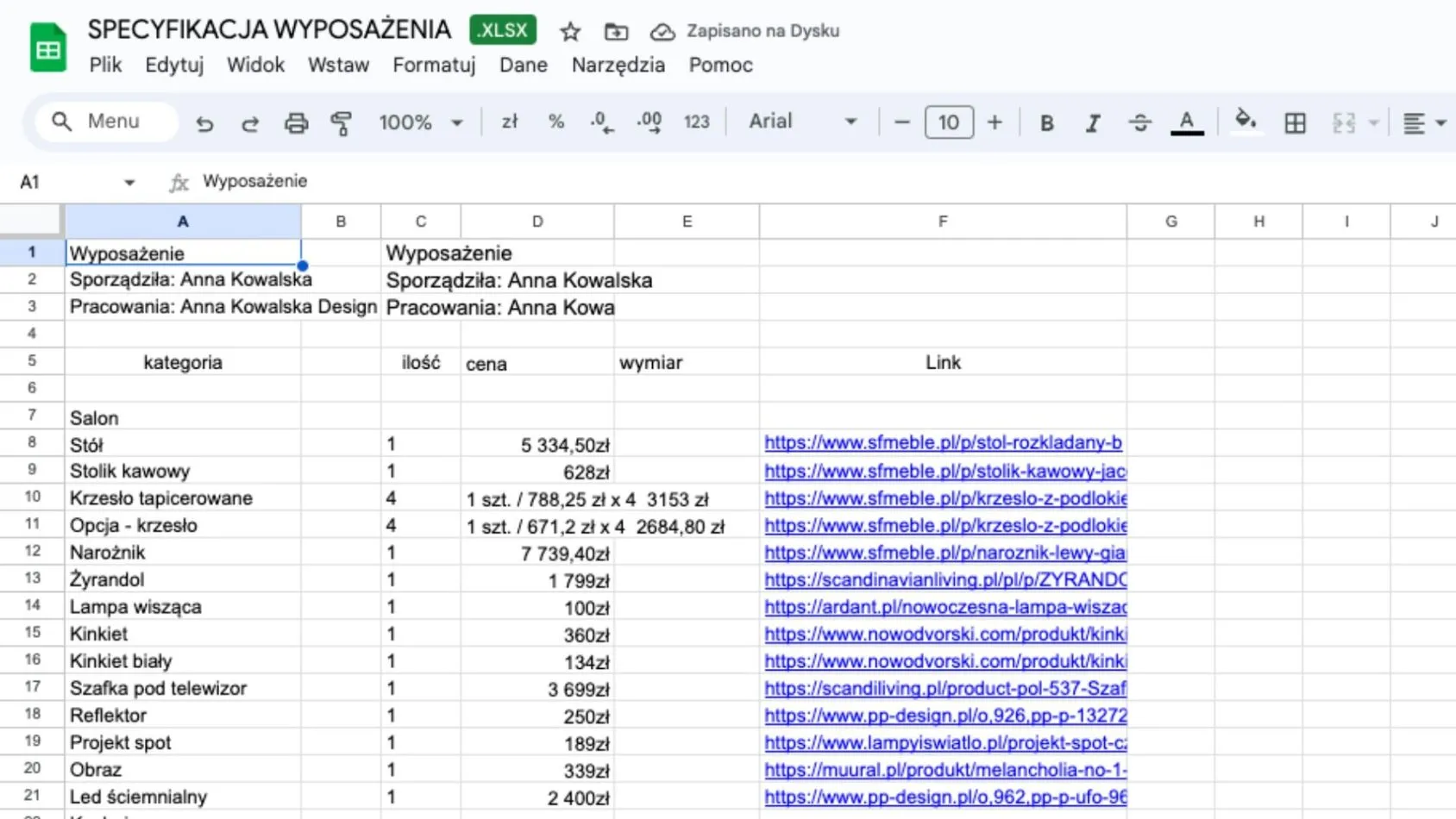
Excel, or emotions beyond the tables
If you think Excel is just a table where you make a pre-construction cost estimate, investor's cost estimates or a finishing works cost estimate - you couldn't be more wrong.
I personally witnessed a regular scuffle break out between the two calmest people I know, in a studio I was preparing a project for. The bone of contention was, of course, the shopping list in Excel, and specifically whose way of cataloguing products was better.

Emotions hidden for years between pivot tables erupted with uncontrollable intensity, the team walked around in shock for the next two weeks, and a huge set of instructions setting out the one and only correct method of entering purchases onto the list went up on the studio wall.
Unfortunately, the example above is not an isolated one when it comes to teamwork. When everyone throws products in any old way, a shared shopping list looks like a rubbish tip. It really makes shopping harder and generates endless questions, and sharing the document becomes torture for minimalists.

More space for yourself thanks to a shopping list? Time to find out!
The question of time is also very important. Probably anyone who has tried to gather items from different shops in a single day knows what I'm talking about. A smart shopping list is worth its weight in gold here!
Checking availability and delivery dates really eats up energy. On the other hand, the more attention we give to the shopping list at the start of the project, the easier it will be to bring our ideas to life and get the shopping done. In this situation, testing alternative solutions is completely understandable, and as it happens, the search sometimes leads to a grocery shop...

Meet the shopping list that lets you fill your fridge and renovate your home
"If something is stupid but works, it isn't stupid". That motto sums up the next methods I heard about while digging into the subject of shopping lists.
People who tremble at the thought of doing everyday household shopping probably know the apps that make it easier to get around supermarket aisles, where you create a virtual list in the comfort of your home, calmly looking at every product.

The most popular tools for making shopping lists
Listonic definitely leads the way here - a simple tool that makes shopping planning easier, in which the customer can choose from three different subscriptions. It's a typical "grocery" app, like Bring or Moja Gazetka, where you can put various products on the list.
Both work in a similar way: after registration, the app lets you add selected products to a simple shopping list. Most apps also have a place for ratings and reviews, as well as loyalty cards, recommended products and information about promotions in a given shop.

Use a convenient shopping list.
Being able to create a separate shopping list for the greengrocer's or the drugstore is a great option that I've used many times myself. In some apps, you can plan various errands in addition to the product list and add data such as a deadline, a contact or an address.
Here, once again, it turns out that the only limit is human imagination; if you're asking yourself whether you can use a grocery shopping planning app to make a renovation schedule, there is only one answer. You can. You just have to get a bit creative.

Hidden advantages of shopping list apps
Instead of soup greens, a friend of mine put furnishing products into the app on her phone. That's how she planned a makeover, and even a preliminary cost estimate for finishing the flat.
Of course, in professional design the apps above won't do the job, but just around the corner there's a solution with which you can take your planning to a higher level.

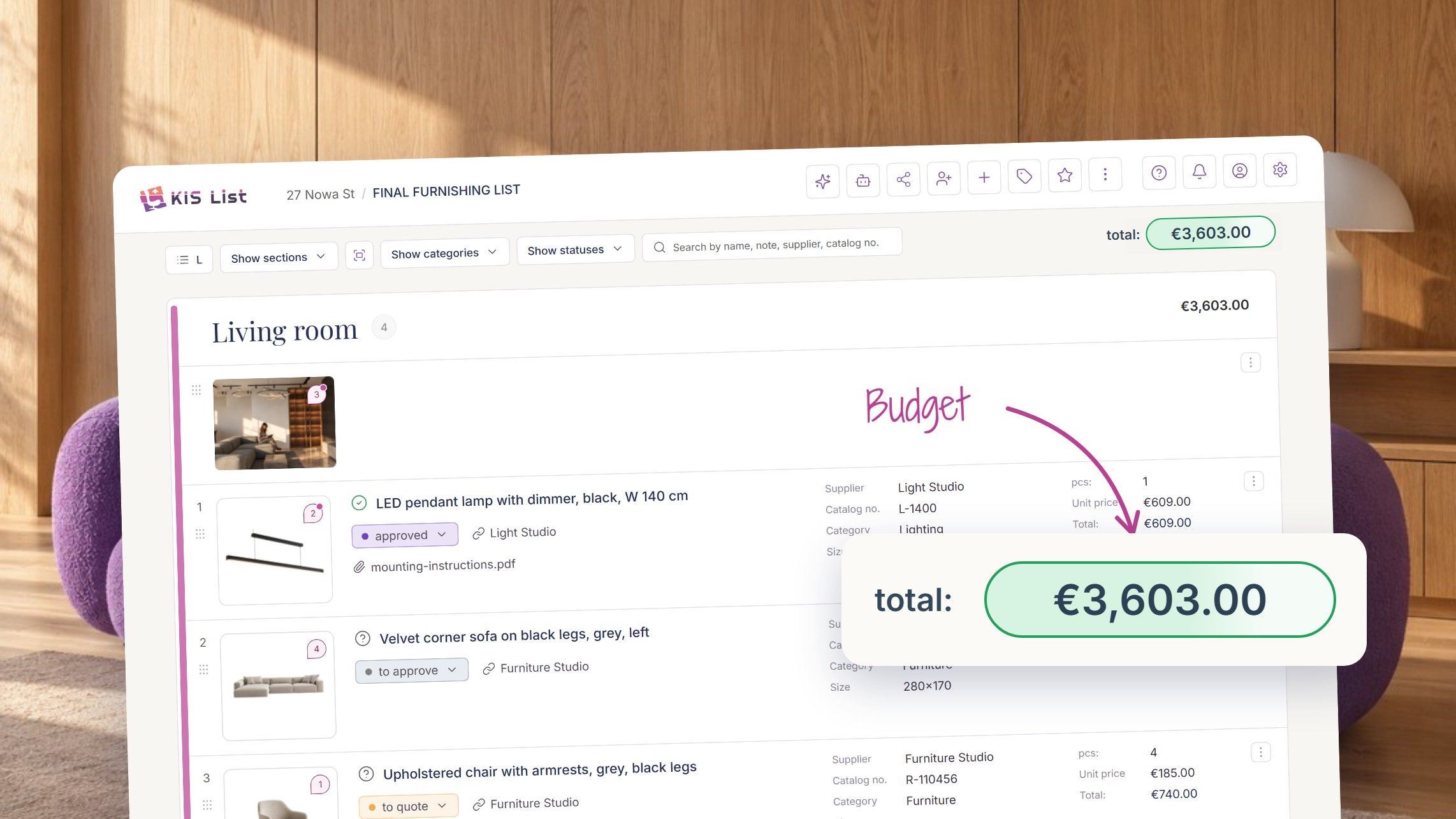
KIS List - shopping lists and cost estimates in one place.
With this app, cost estimating and creating a detailed, clear product list take a moment, and you can calmly get on with other design matters.
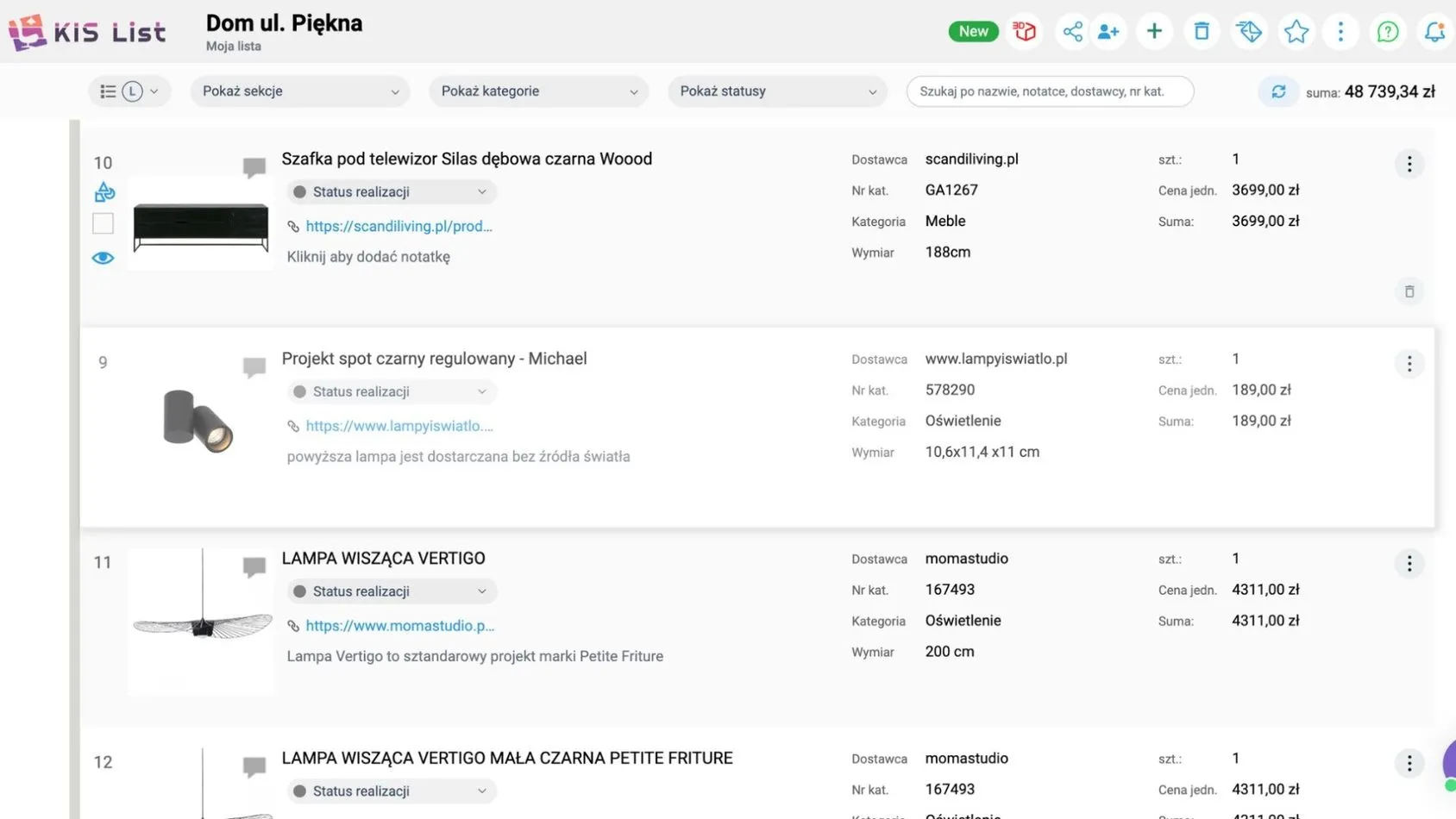
With the KIS List app, the products you choose are added to the list straight from the shop's website using a browser extension that instantly reads the most important data. The information collected this way: the photo, the price, the catalogue number and the link to the page where we found the product, is turned by the app into an attractive list which, if needed, you can switch from a cost estimate to a moodboard.
On the list, you can also add your own notes, share it with your team, and share it with the client as a PDF and online. KIS List is a convenient shopping list and online cost estimating software in one, which complements software for interior designers and makes life easier. Simple as that :)
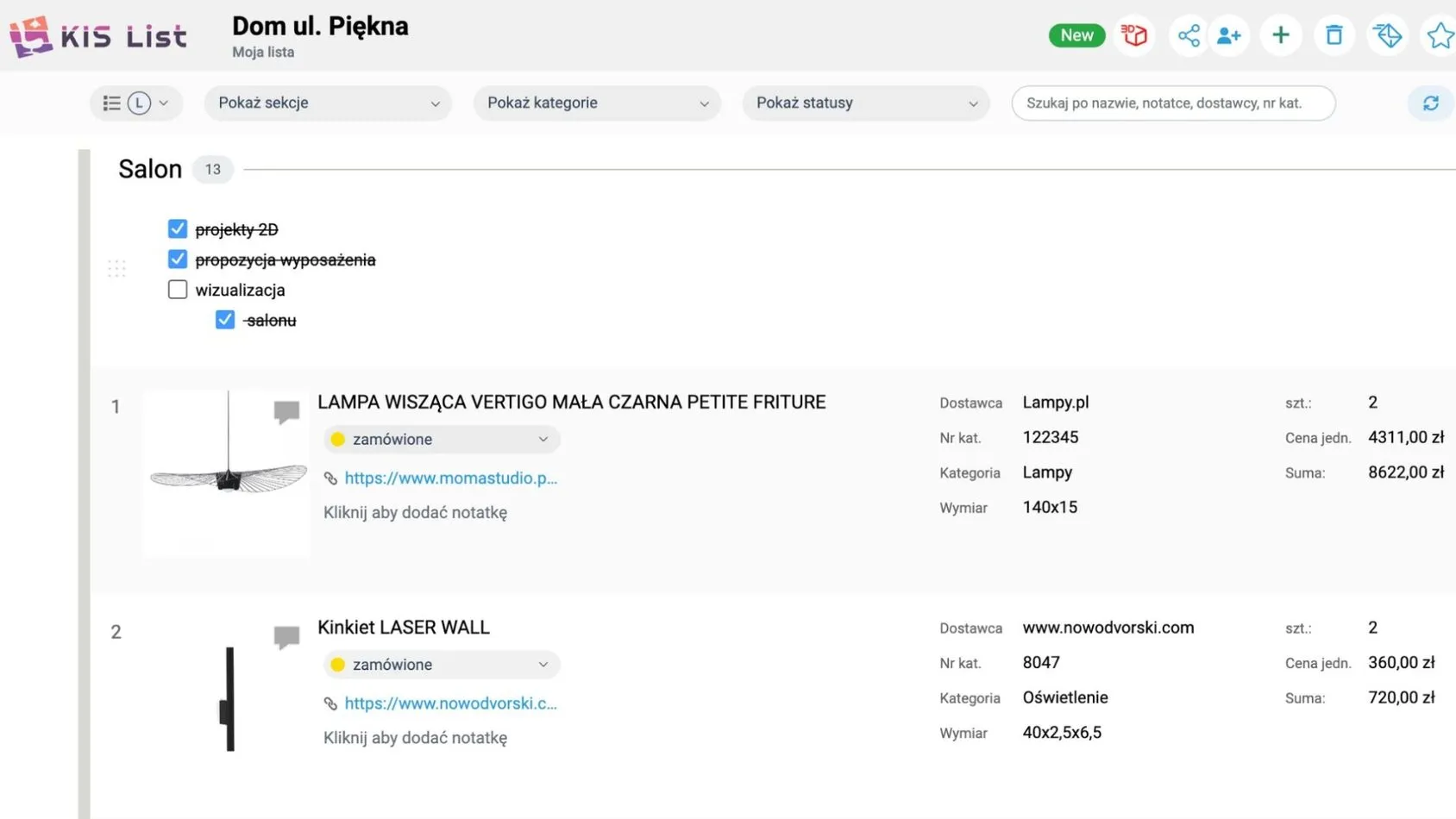
KIS List - a shopping list for architects...and everyone else
And since we're on the subject of using apps not necessarily for their intended purpose, a colleague of ours recently admitted that she sometimes uses the KIS List app to make lists of shoes she has spotted in online shops. And that's great! Well-thought-out shopping is always a good idea.