The client's budget and the interior design project.
Working with the client's budget at the very start of a project is the first step that lets us adapt our vision and the client's to the financial reality.
Knowing it, we can offer the client furnishings within their reach right from the start, and deliver a project that has a good chance of success.
That's one of the reasons why talking to the client about the budget for the interior design project and preparing the first detailed project cost estimate at the very start of the collaboration is so important. Not doing so carries many risks, which I wrote about in one of my articles.
Combining interior design skills with skilful management of the client's finances helps us keep a balance between creativity and economic reality, which is the key to success.
What's more, adapting the project to the client's finances increases the value of our services and builds our reputation as a professional who understands and respects the constraints a given project brings.
But the question arises: how do you work with a client's budget, especially at the very start of the collaboration? How do you plan all the expenses and manage the budget effectively?

In this article, I'll share three tips with you on how to work with a client's budget from the very first meeting. These are methods that have worked for me for a good few years now.
I believe they'll be helpful for you too.
1. Set a budget for individual rooms, and even for individual furnishings.
Setting budget limits for individual rooms is one of the most effective methods of estimating the costs of an interior design project.
With it, both you and the client get a more detailed insight into the costs of finishing a given room. Among other things, this makes it possible to pin down the client's expectations of the interior design project more precisely.
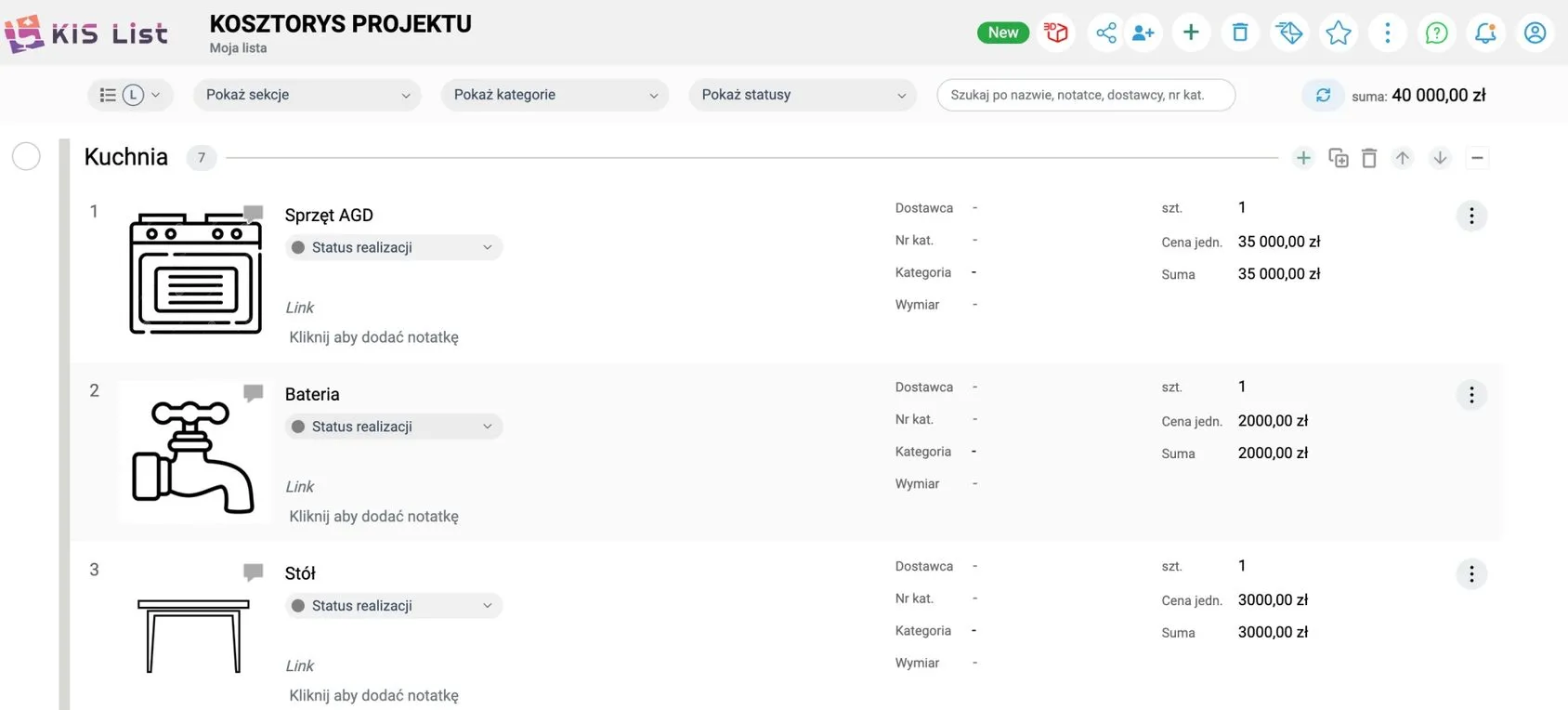
Presenting a cost estimate with set budget limits for particular rooms, and even for a specific furnishing or interior finish, lets both us and the client identify areas where compromise is possible.
What I mean is a situation where the client, having seen the costs, may decide to invest more in a particular part of the home, for example the kitchen or the living room, than in the bedrooms, which makes it possible to refine the overall budget even more precisely.
The client can decide whether they'd rather spend more on a stone kitchen worktop or an expensive freestanding bath.
When preparing a breakdown like this for the client, it's very important to offer the client furnishings in the right price range, matched to their budget, which was set at the very start of the collaboration.
What's more, it's important to include the construction work in the budget too, for example the extent of electrical alterations or the number of partition walls to be demolished – in other words, everything that has a significant impact on the cost of the project.
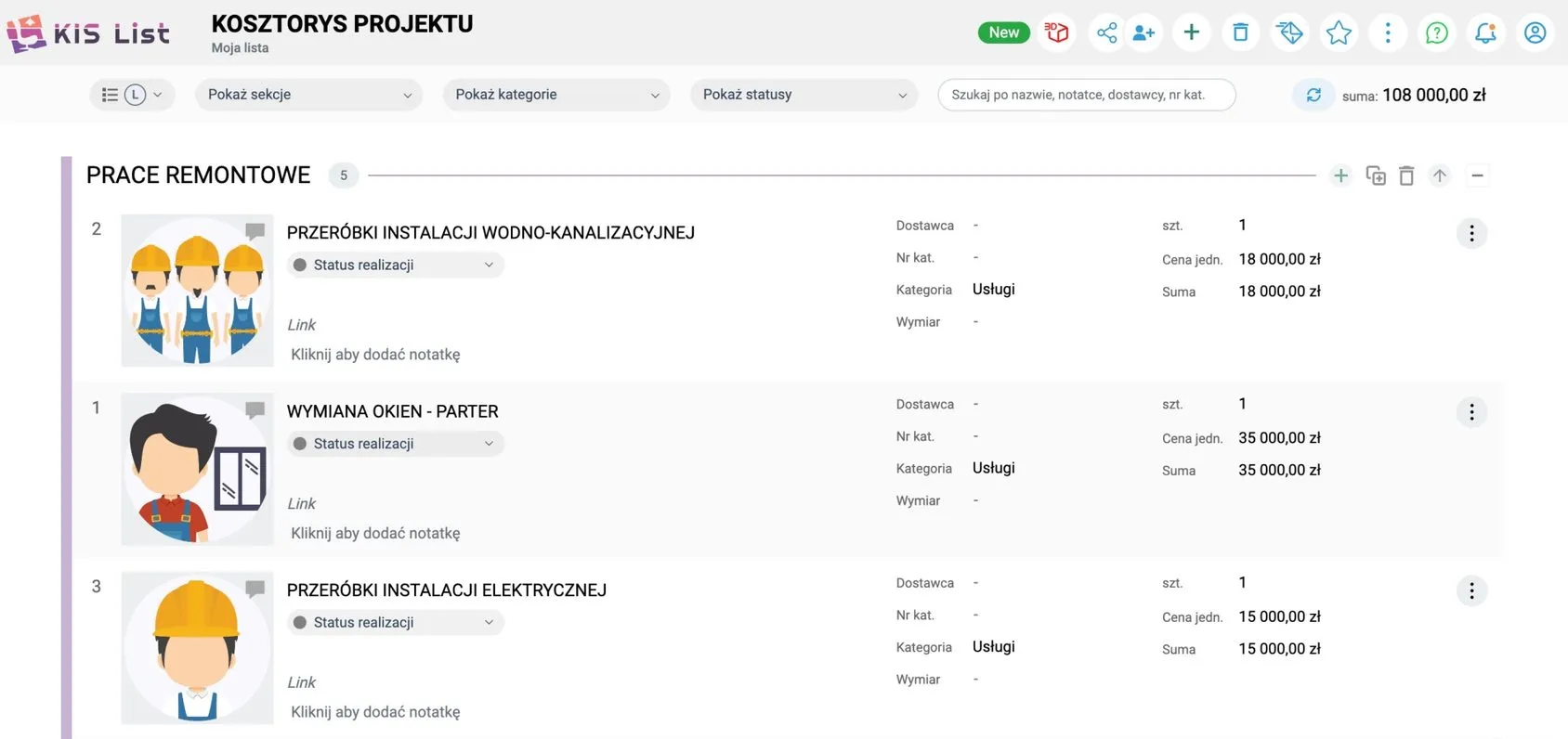
Working with the budget in KIS List
The ideal tool for preparing an interior design project budget broken down by room and by individual furnishing is KIS List, the app for creating shopping lists and cost estimates.
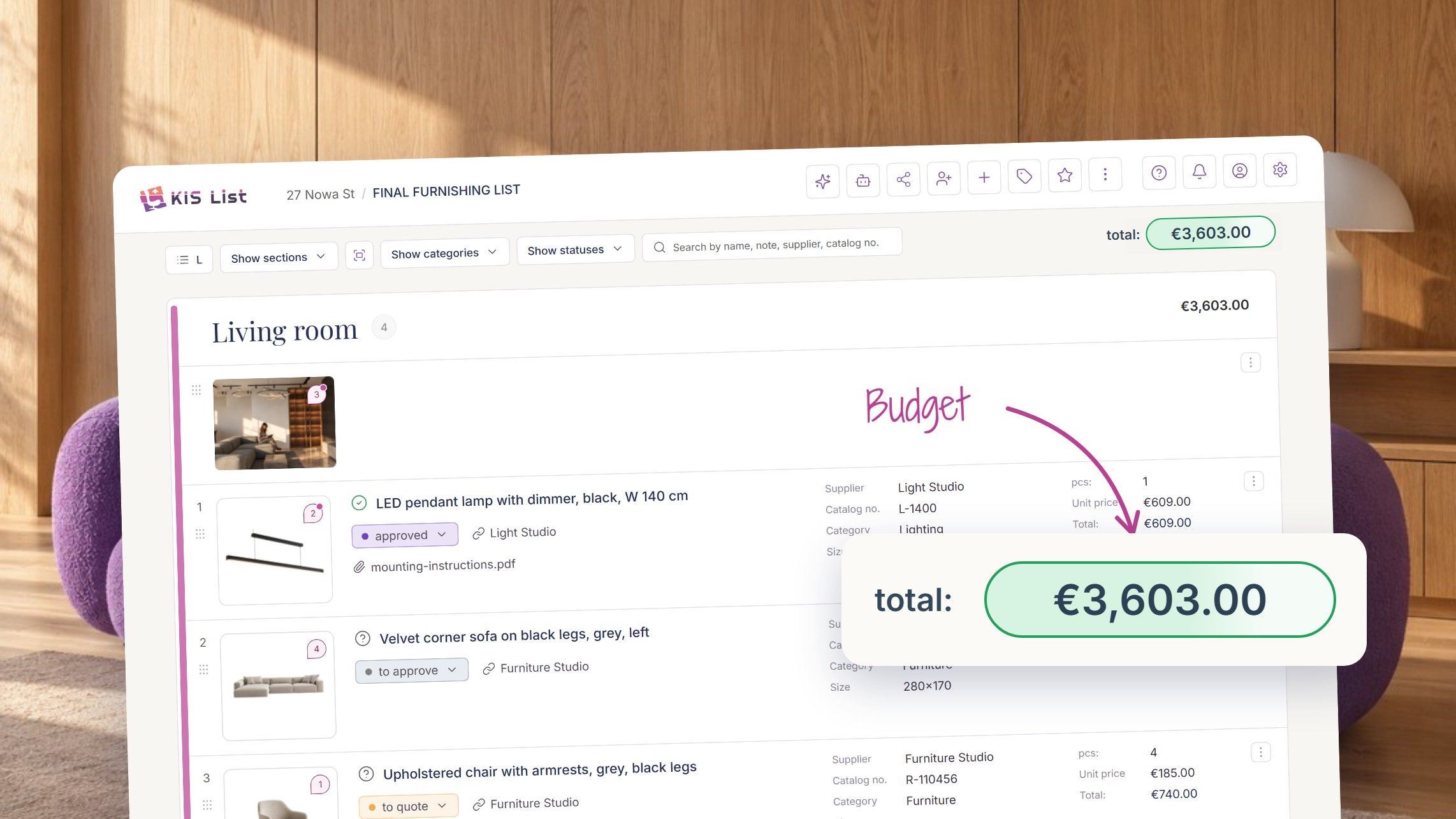
Thanks to its features, as early as when you're planning the budget for individual rooms, you automatically get not only the cost of the whole project, but also the cost of individual sections, i.e. the rooms of the project.
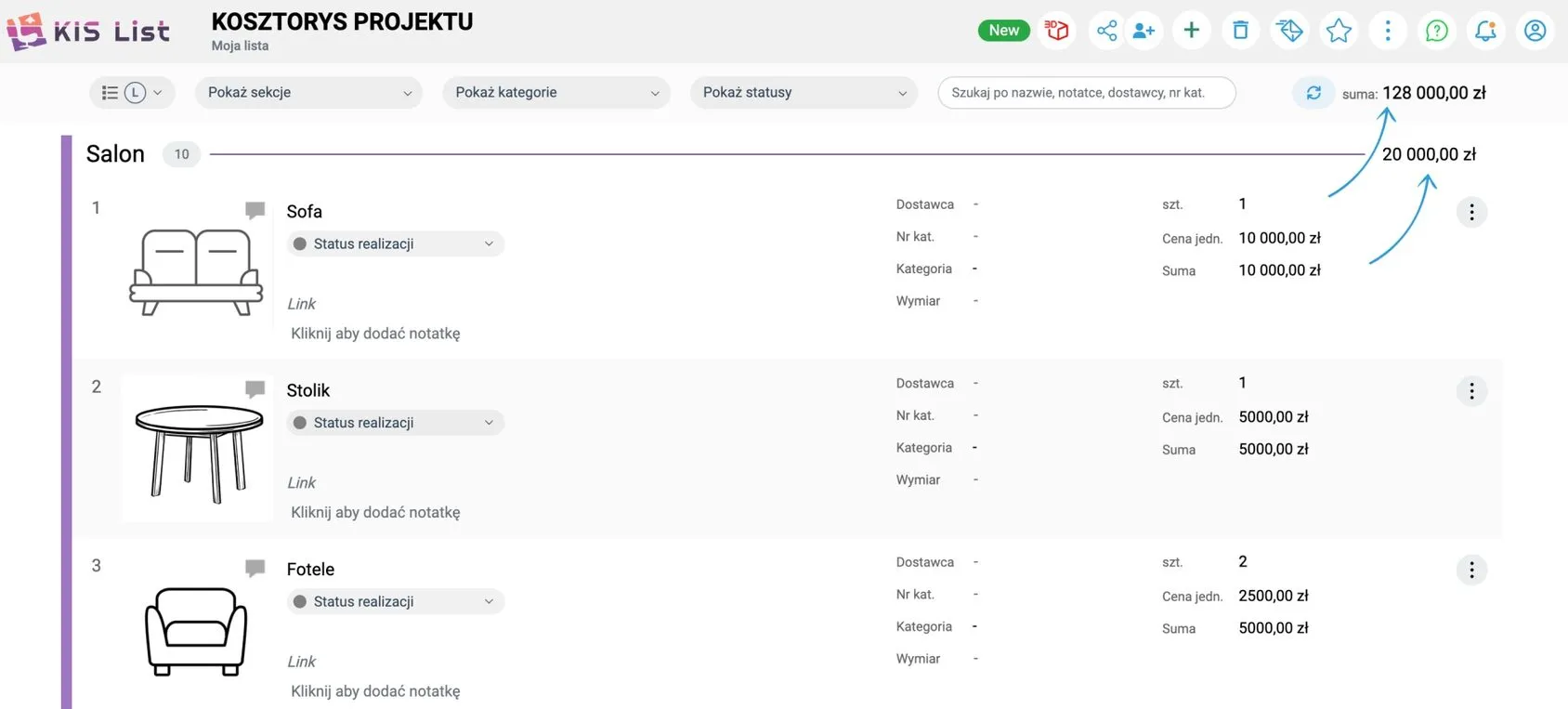
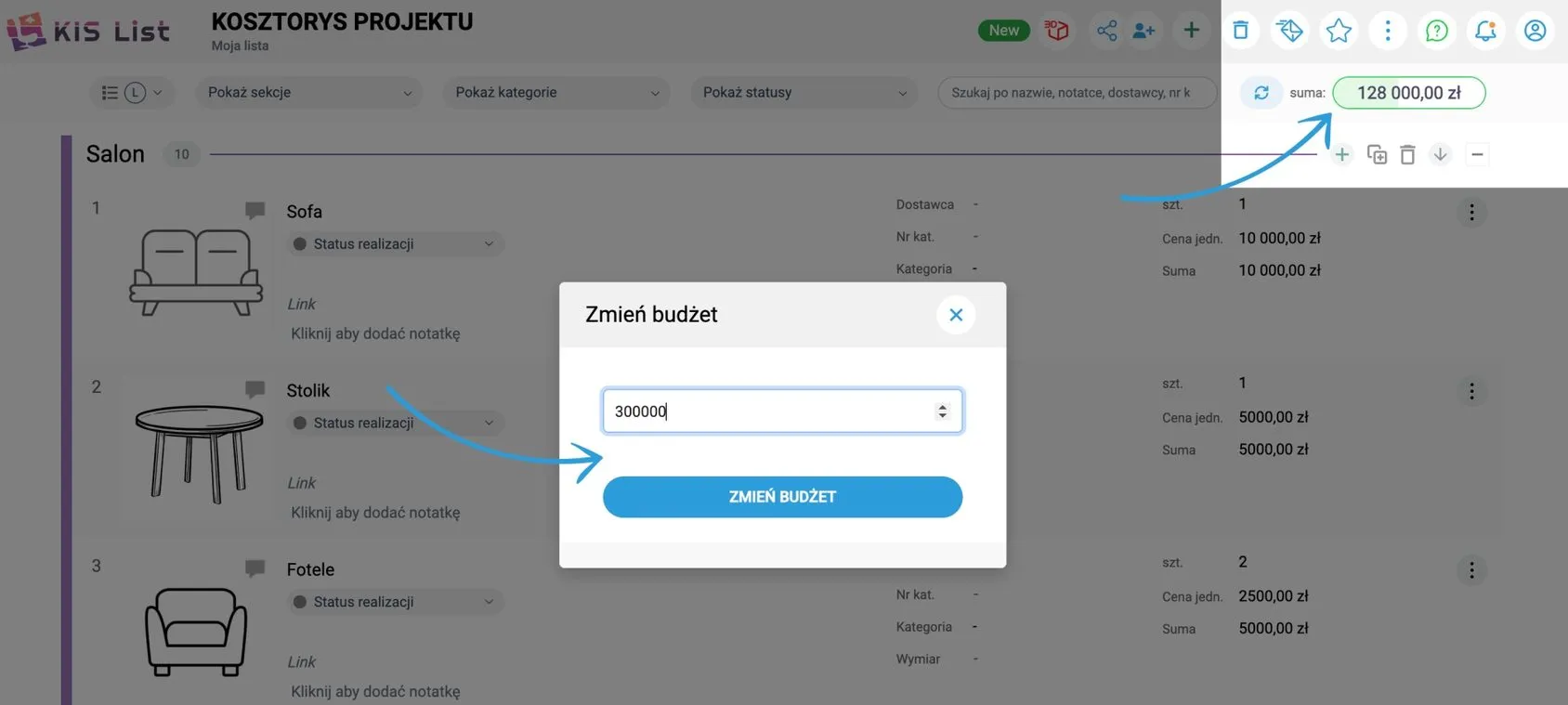
You can also set a budget for the whole project, which lets you keep track of spending across the entire project as you go.
What makes working with a budget remarkably easier is being able to create a shopping list template for an interior design project in KIS List.
On a list like this, you can include all the items you should take into account when dividing up the budget. That way, not only can you be sure you won't forget anything, but you also don't have to create the same list from scratch for the next project.
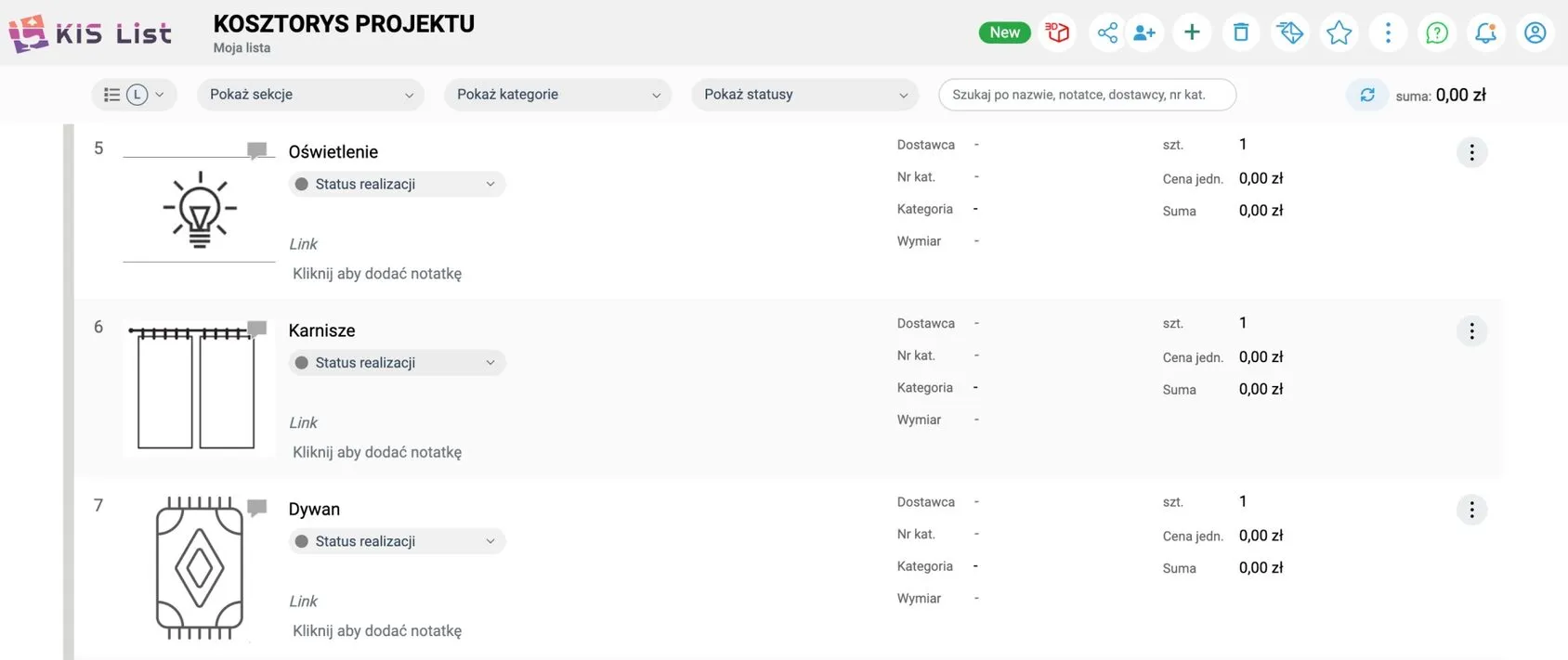
This way of working is recommended by Agnieszka Pasieka-Adamek - a KIS List ambassador - who has developed a detailed "shopping list template for an interior design project" for use in KIS List.
2. Monitor and balance your spending
Once you've settled the budget the client wants to spend on individual rooms and furnishings, there comes the moment when we start working on a concrete shopping list - one that contains real products.
At this stage, it's very important to keep monitoring and balancing the project costs.
I know from experience that even if you agree a budget with the client and provisionally agree on particular furnishings or materials, the situation can change while you're putting the shopping list together.
Clients get inspired by various furnishings they find in a shop or online and, often forgetting the agreed amounts, choose more expensive options.
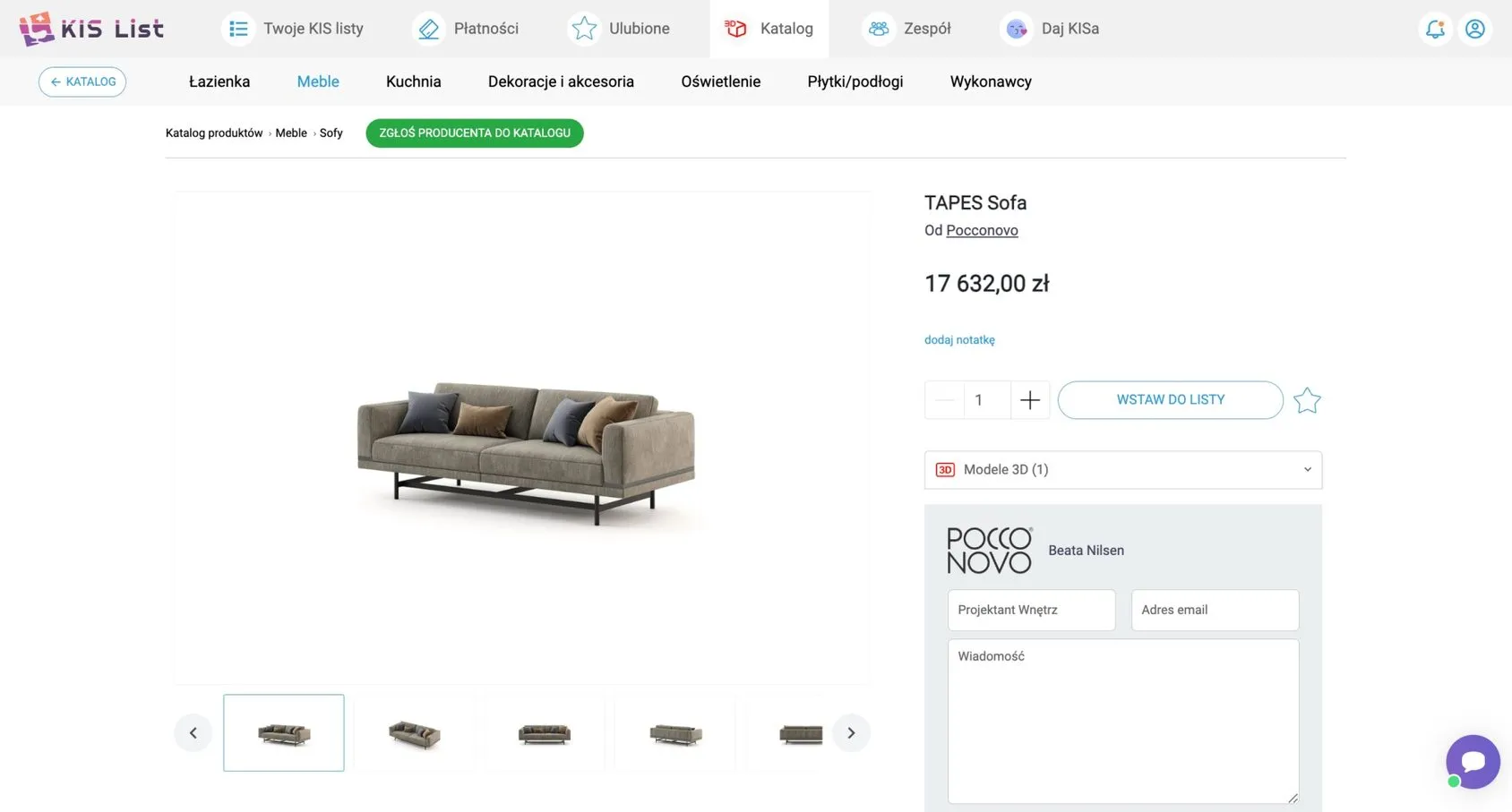
In this situation, remember that you, as the designer, face the challenge of monitoring the changes being made and of confronting the client's changing expectations with their financial reality. And most importantly, you're the one responsible for protecting your own interests.
At moments like these, it's worth reminding the client of the consequences of their decisions for the project's total budget.
The client should be made aware of how the changes they make affect the budget and what the consequences might be (not having enough money to buy them), and, most importantly, they must give their consent for the item to be added to the project.

Also important when it comes to monitoring and balancing the budget is the fact that as an interior designer, you don't have full control over which renovation crew or contractors the client chooses, which can affect the costs of delivering the interior design project.
Price differences can be significant depending on the client's location and the availability of building crews.
That's why, when planning the budget, it's important that you agree with the client on an average amount for individual items, based on your experience or on consultations with contractors.
But remember that these amounts are approximate, and the final quote will depend on the contractors the client decides to work with.
Notes and comments in KIS List - the designer's safeguard.
Whenever you make any change to the budget previously agreed with the client, it's worth making a note of it, to protect yourself in case of any misunderstandings or complaints.
Although you know the client's dissatisfaction stems from their own decision, the client usually directs that dissatisfaction at you. After all, we're the professionals who advise not only on interior decor, but also on financial matters.
That's why it's very important to record every change to the interior design project budget and to put in writing information such as the average prices of construction services included in the project. This is where KIS List comes to your aid.
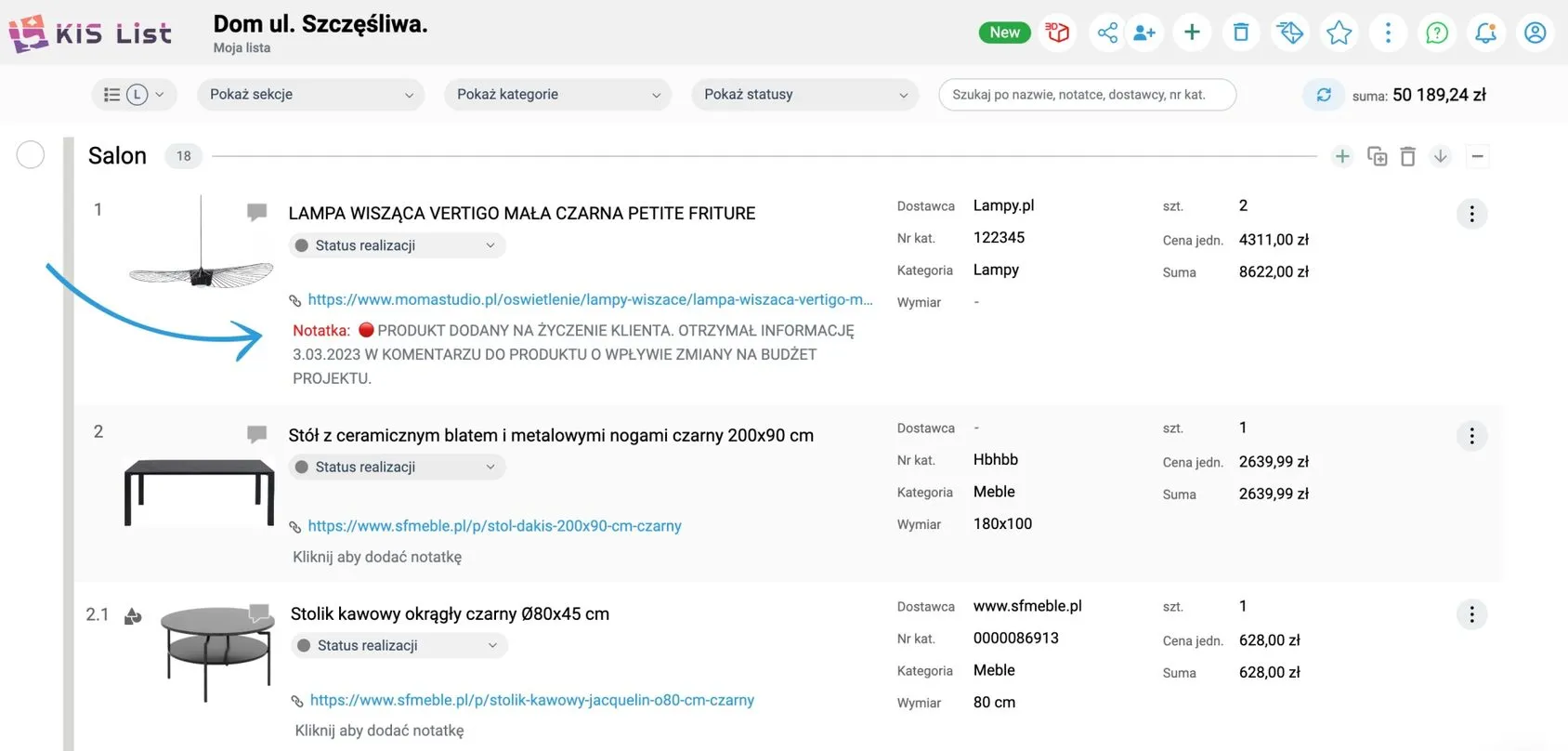
When your client, aware of all the consequences, agrees to add an item to the shopping list you're creating, remember that in KIS List you can add a note to the product saying that this particular item was added to the project at the client's request.
It's worth noting that they were informed of the effect this change has on the budget.
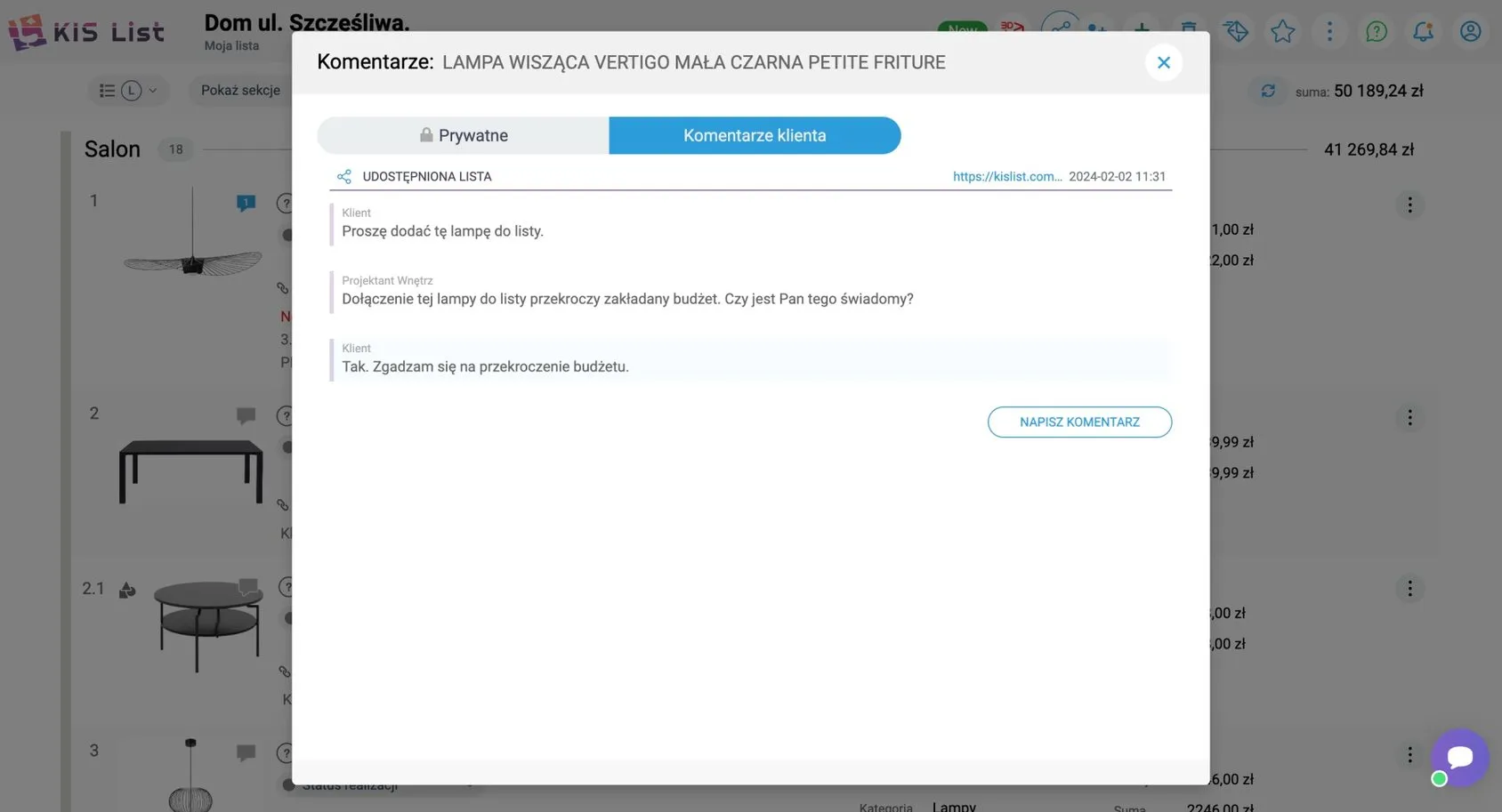
You can also use the option to add comments to individual items on the list and ask the client to confirm the change made at their request.
That way, you not only have written confirmation, but also the exact date and time the client made the decision.
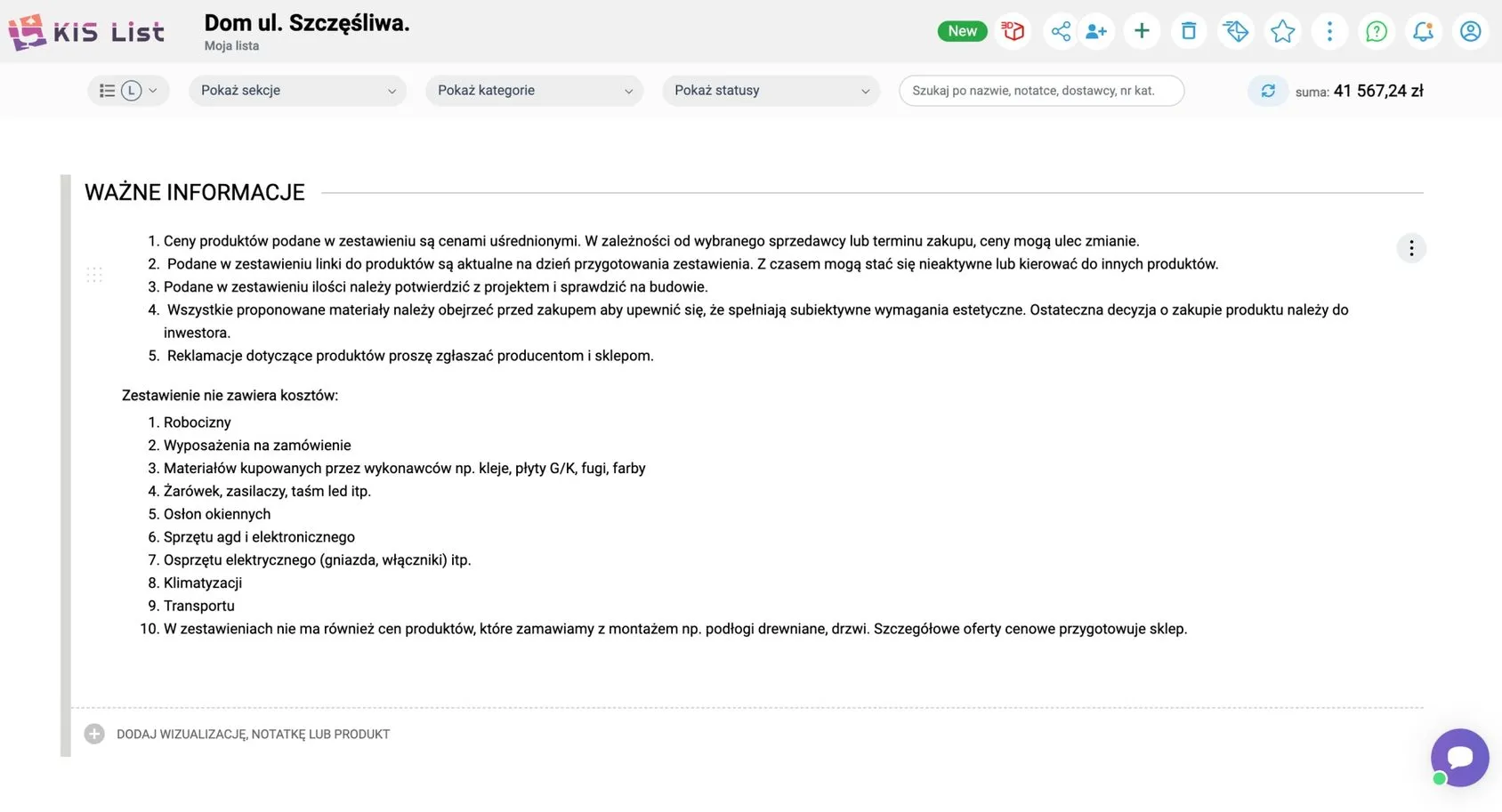
What's more, in KIS List you can add notes to the whole list. In a note like this, you can record everything agreed with the client, as well as any important information, whether about the expected prices of construction services or the fact that the client is ordering furnishings themselves.
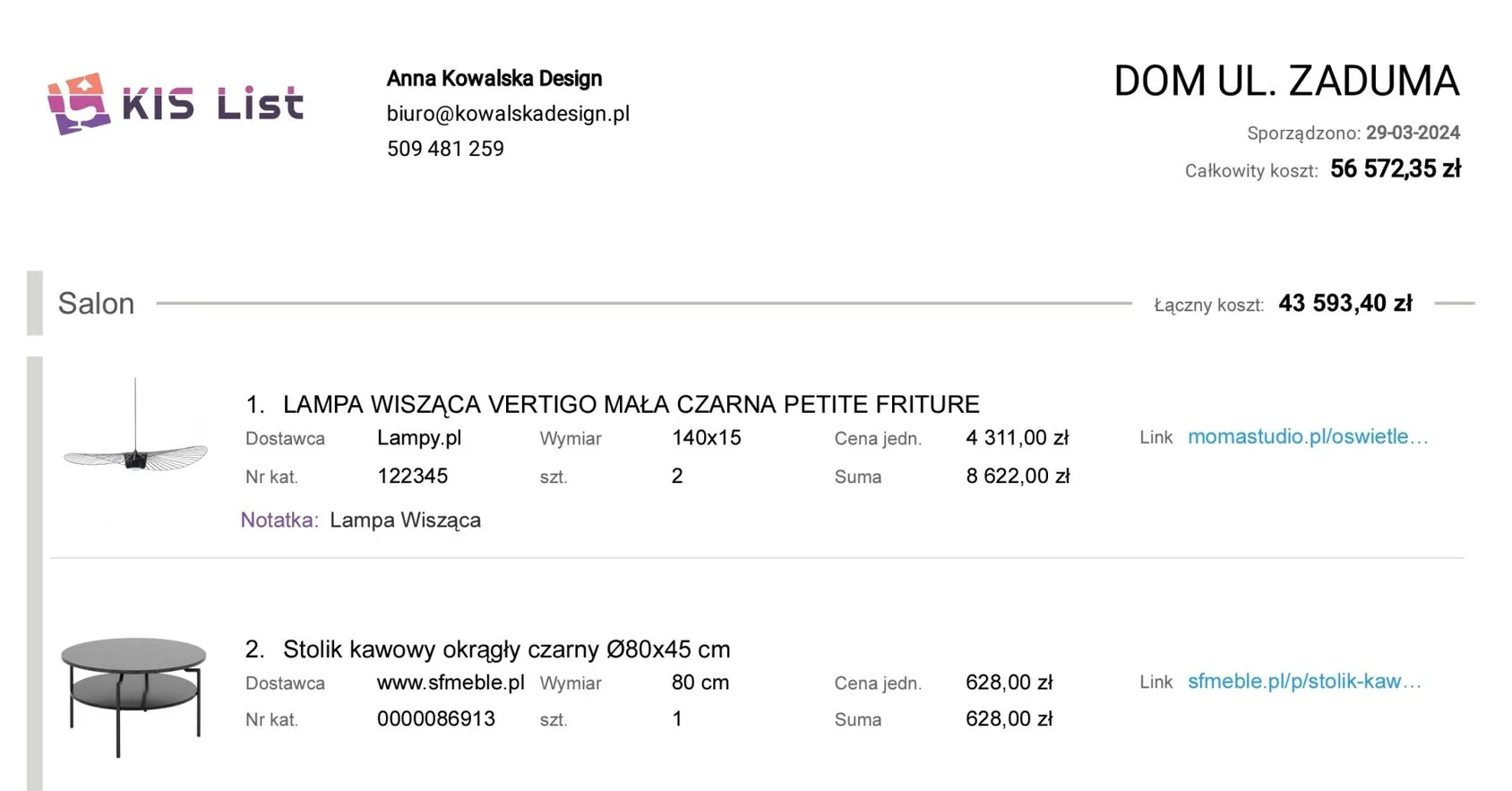
Your client will also receive all these notes when you share the shopping list prepared in KIS List with them, which gives you better protection in case of any misunderstandings.
3. Have a contingency plan
Unexpected expenses can come up in almost any project. For example, hidden problems we couldn't have foreseen may come to light during a renovation, and fixing them is necessary and costly.
Let's face it!
In today's economic reality, a shopping list on its own can be out of date a month after you've prepared it, because the prices of goods and services keep changing.
That's why it's very important, when working on the budget of an interior design project, to protect yourself against any unexpected situations.

Every project budget, even the most detailed one, is an estimate. That's why it's worth setting aside part of it (usually 10 to 20% of the whole budget is recommended) for unforeseen situations.
When discussing the budget with the client, it's important to let them know this. Explain to them why it's important to have contingency funds and in what situations they'll be used.
Setting a contingency amount in the project also protects you. It lets you stay flexible in managing the project, gives you room to make changes and reduces the risk of stress caused by unexpected expenses.

Building a financial buffer is especially important when you're at the start of your career as an interior designer.
When you don't know the market well, it's very easy to make a mistake. But over time, as you gain more experience, your ability to set a realistic budget will definitely grow.
What's more, a financial buffer for unforeseen situations shows professionalism and care for the client's interests, which builds your reputation as a reliable and responsible designer.
It also lets you create a project that not only meets the client's aesthetic expectations but, if you don't use up the whole budget, lets them feel they've saved money thanks to you.
Keeping track of the contingency budget with KIS List.
When you work in KIS List, you can create a section on your shopping list for all the project items that were paid for from the contingency budget. That way, you can keep full control over the budget, monitor spending and balance costs.
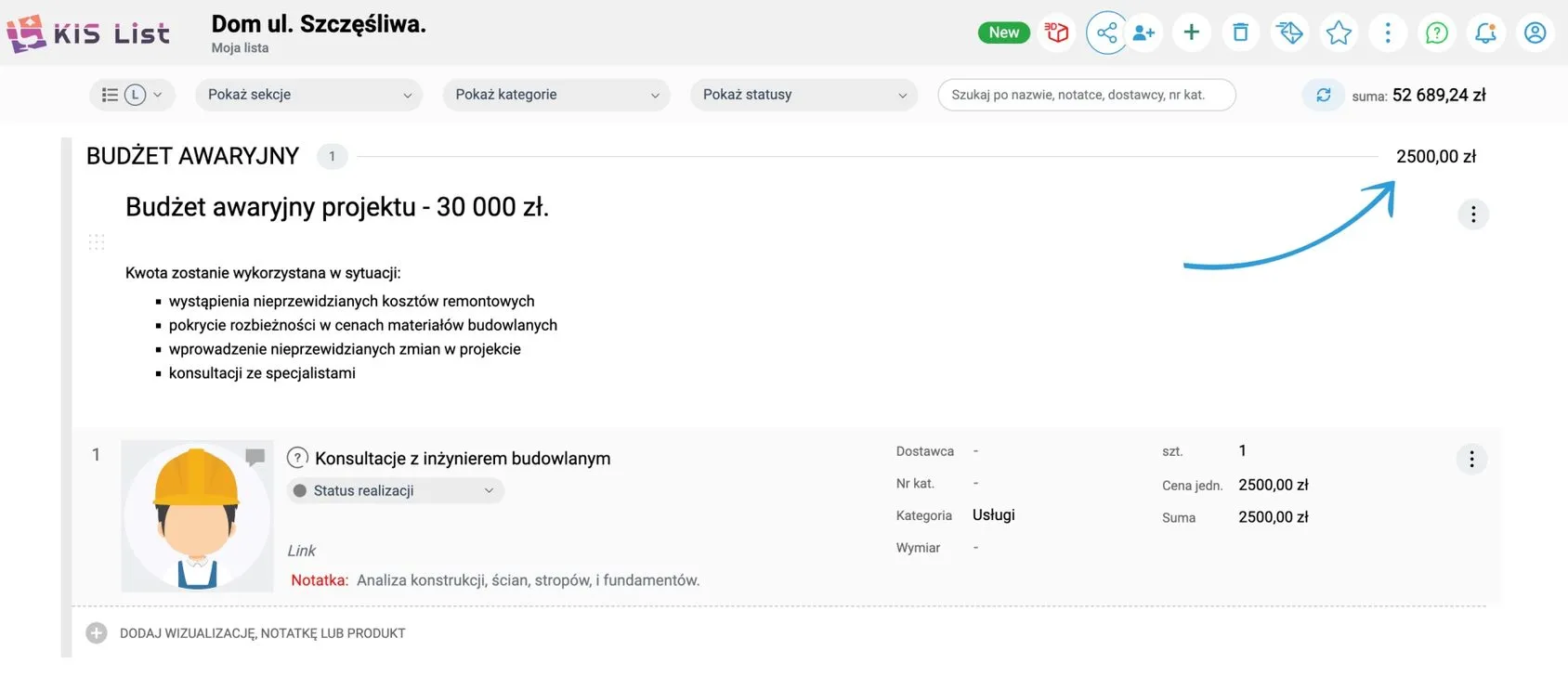
Just as importantly, you can record the fact that a contingency budget has been set in a note in that section, where you put its amount and describe the situations in which it can be used.
This will help you keep the project's finances in order and stay transparent with the client, who will also get access to the information about the reserved funds when you send them the shopping list.
Remember that people tend to go over budget, especially as a project develops and new ideas or features come up. Clients often opt for extra upgrades during the project, which naturally increases its scope and cost.
That's why recording and keeping track of contingency funds is so important.

The interior designer - an expert in design and finance
Our job as interior architects is not only to create beautiful spaces, but also to manage the project's finances effectively.
Preparing a budget and sticking to it, being ready for unexpected expenses and communicating clearly with the client are our everyday reality and the road to success.
Adapting to the client's changing needs and expectations while keeping the budget in check is an art, and mastering it makes you not only a good designer, but also a trusted adviser.
That's why it's worth taking the time to refine every element of the project that affects the budget the client wants to spend on it.
It's worth preparing for the unforeseen, recording every change and "keeping an eye on" the client so they don't end up going over their own budget.