Everyone knows what a designer is like? Nothing of the sort.
Every person is a story, and there is simply no such thing as the one right path in this profession. To take on the legends and myths, we are starting a series of interviews in which we will talk honestly and without sugar-coating about the realities of our profession.
School or practice? Art or craft? First commissions and successes, spectacular blunders and red flags, and above all the tips each of us would have liked to hear at the start, but had no one to ask… We are preparing a real survival guide for you, one that gives beginner designers a chance to avoid the mistakes we have already made, and lets experienced ones feel they are not alone in this universe :)
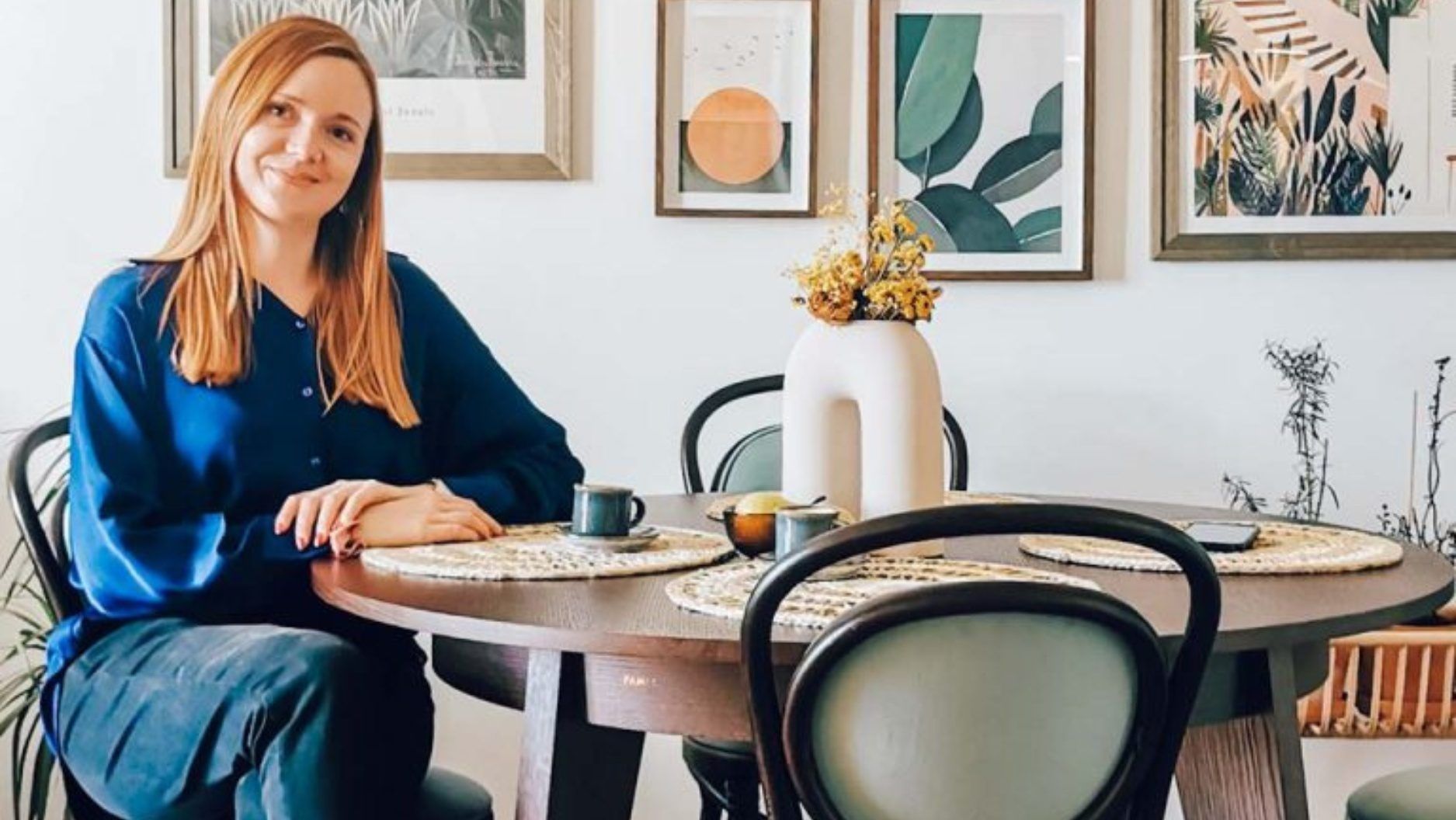
We begin with a conversation with Magda, co-founder and co-creator of KIS List, whose path to becoming an interior architect was more than unusual.
A design gene? Upbringing? The X factor?
Is there some factor that makes a person want to take control of space?
Magda: Good question. Nobody in my family had leanings like that, so genes and upbringing are rather out of the question, but as a child I had artistic inclinations. At the Palace of Culture and Science there were great art classes that really developed the imagination - instead of the usual painting or drawing, we collected twigs and made compositions, we made brooches and belts. It really interested me and I truly loved going there. From an early age I also had a fondness for order - I wanted everything arranged in the right way, and that has stayed with me to this day :)
Did you decide then that you would become a designer?
Not at all! I didn't think about it in the slightest, even though decorating interested me more and more. The first conscious moment I remember is when I was 18 and started buying interiors magazines. At first, of course, "M jak mieszkanie", later all the other titles that came onto the market. I'd rush to the newsstand and literally devour those magazines from cover to cover.
That's when I started catching myself "scanning" an interior the moment I walked into a place - analysing the lighting, the layout, the furnishings. Even so, back then I would never have thought I could work in design.
Where did you see yourself?
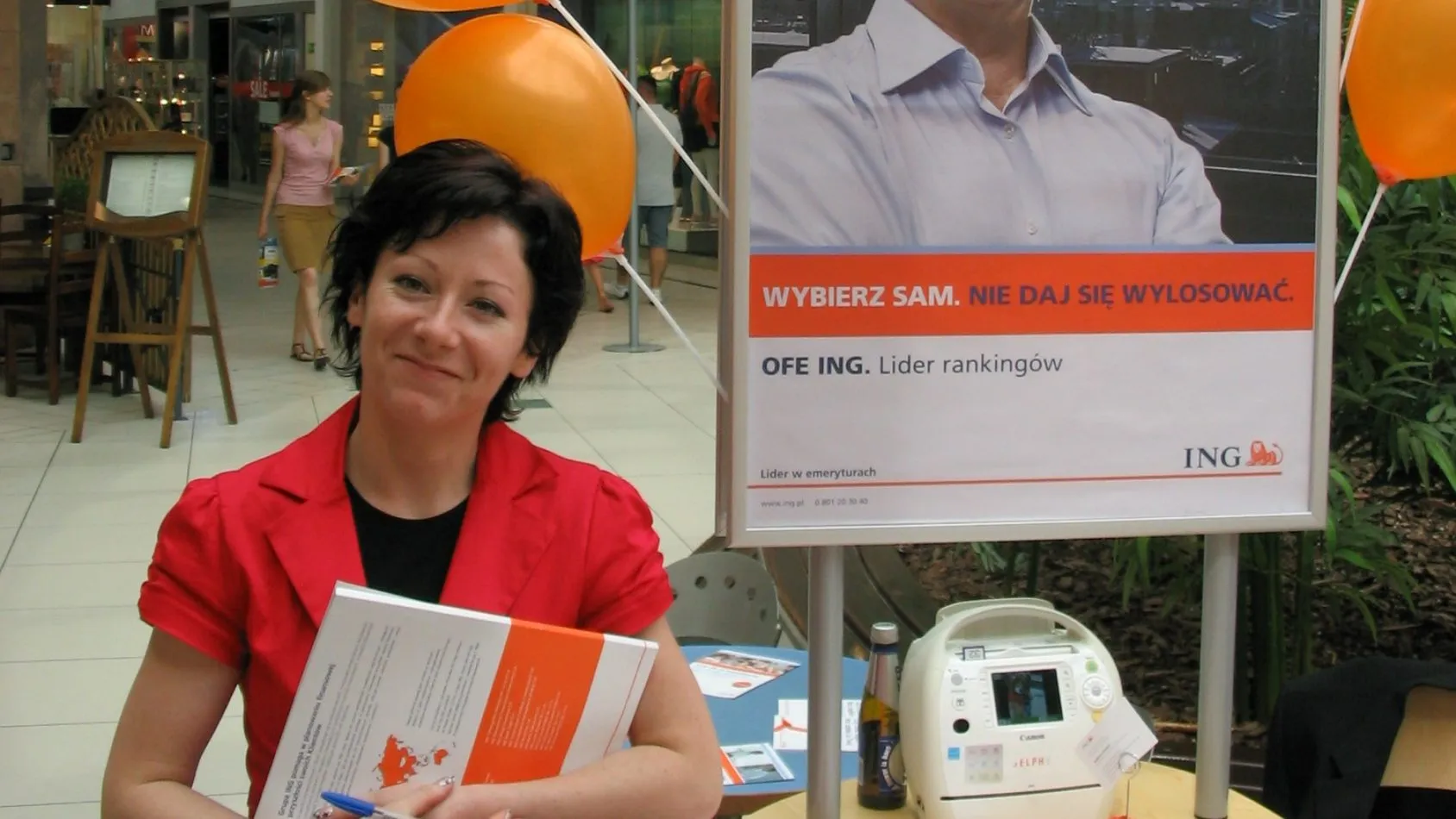
I never had that thing where I saw my future in specific colours. It was more like: wherever life throws me, I'll give it a go, and as it happened, it threw me into a bank.
I can't be a designer, because I can't draw.
Not exactly the obvious route, then. Didn't you think even for a moment that maybe interiors after all…?
I had always been convinced that I couldn't be a designer, because I can't draw. That was the barrier - even though I was really drawn to it, whoever heard of a designer who can't sketch... I kept devouring interiors magazines, and when we got down to renovating our first flat, I was so into it, so emotionally involved, that I couldn't sleep.
As soon as I closed my eyes, I'd picture what I'd put where and how it would all look in the end… I simply lived for it. But the renovation ended and I dutifully went back to the bank, where I sold all kinds of products: insurance, accounts and so on.
Did you like it?
Let me put it this way: I was pretty good at it ;). I was even starting to find my feet, but at some point the business got really tough; those were the days when competition appeared, many customers were leaving and it was hard to keep up the results your pay depended on. In short - it was a job that gave you no sense of security, and I knew I had to change something, because the pressure was crushing me. Unfortunately, everywhere they wanted me in sales, while I felt more and more that it wasn't for me.
The turning point came when I met a friend who worked at another bank. It turned out that not everywhere was so dire - her customers still wanted to meet and talk - you didn't have to force insurance on them. Bear in mind this was 15 years ago and the world really looked different. Today a job like that is pretty hardcore, but back then I decided that maybe I'd give it one more try… and after a few weeks, having done the training, I quit.
Everything seemed OK, but deep down I felt that despite the change of surroundings it was still the same patterns, the same way of working that I didn't feel my best in. Paradoxically, changing to a better job made me decide to give it up.
Did you feel relief?
Definitely. Especially since the most important things were happening on the side, on building sites - at that time we fitted out two flats. The first one, which I've already mentioned, we did on our own, but for the second flat I had the idea that this time we'd do everything professionally and hire a designer. Somehow it didn't occur to me that I could handle it myself, so Robert asked around among friends and a recommendation led us to two young women. We started working with them, and since I had more time then, I got really heavily involved in the project.
I had great fun analysing the proposals, whether something suited us and how it would work in a given space. At first it went smoothly, but over time they started giving us functional layouts that were a bit off the wall; I mean, the ideas themselves were nice, it was putting them into practice that was the problem. For example, the kitchen cabinets banged into each other when you opened them, the passages were too narrow… typical functional blunders, which I was already very sensitive to back then.
But OK, together we worked out the functional layout, moved on to the visualisations, and that's where it turned out that, unfortunately, we were completely at odds on aesthetics. We weren't really keen on the designers' proposals, and when I showed my own ideas and comments, they were reluctant to take them on board (which I fully understand today), and in the end we reached the point where we terminated the contract by mutual agreement. The designers also recommended a crew to us, and everyone went their own way…
And they all lived happily ever after?
Almost ;). Along the way, that recommended crew pulled the classic trick on us: they took the deposit and ran. It turned out the designers had worked with them only once, online, and that one time went well, but the second, not so much. It was one of the first painful lessons, and I stick to it to this day - never recommend anyone you haven't completed at least a few successful projects with.
In the end we managed to finish the renovation with other contractors, and it turned out great.
Was it satisfying?
It was! So much so that when the subject of looking for a job came up again, Robert said: listen, but didn't you want to become a designer? And there I was, singing the same old song: me, in design? I can't even draw… but suddenly, with Robert's encouragement, something clicked. Actually, why not? I had just finished my second project, with full site supervision, from A to Z. Everything turned out the way we wanted; I'd pulled it off. Why shouldn't I give it a try?
I gave up on sales, this time for good, and prepared a plan. Literally - I wrote down what I had to do to become a designer: learn a visualisation program, refine my detailed designs, set up a system for working with clients, do the marketing…
I prepared a plan of what I had to do to become a designer.
You did something nobody talks about at university: you thought not only about the vision, but also about reality. How long did it take you to prepare for your first project?
About six months. As for the technical side, I picked the visualisation program I liked best, and then I simply sat and worked at it until I'd learned it. In the meantime I read everything I could find on ergonomics and functionality, and I learned what working drawings should look like from documentation I got from designer friends.
Functional layouts came naturally to me, and I also had experience of working with crews - both the good ones and the not-so-good. At the same time, it was very important to me to really figure out the whole designer-client process. I'd had experience with designers myself, so I knew what I'd like to change, what was good and what needed improving.
And then the marketing! I knew I had to get myself out there online. A website is the foundation, so I built a portfolio based on projects for made-up clients. I had to win clients somehow, so I signed up on homebook and various groups, anywhere I could leave a trace - a business card or a portfolio.
Did it take off straight away?
For the first six months there were a few enquiries, a few quotes, until a client came along who decided, based on my portfolio, that I had a great deal of experience :). I decided not to talk her out of that belief, and that's how it all began.
They say you never forget your first project. Is that true?
It's true, especially one like that… That flat was one of my biggest challenges. When I walked in for the first time, I didn't have even a second to think about the space, because I immediately started thinking in a panic: damn, how do I measure this?! There was maybe one right angle in the flat; everywhere else they were either obtuse or acute. I really had no idea how to go about it. Robert and I even bought a special tool for measuring angles and… in the end we gave it away, because I never needed it again.
Maybe every designer gets a set quota of angles for life, and you used them all up on your first job?
Possibly :). Really, it was a challenge. One - how to measure it, two - how to draw it up, so we also brought in a friend who helped us.
Robert: Luckily the client was so polite that she left during the measuring and we were on our own, so we didn't embarrass ourselves too terribly.
Magda: That's true, most clients usually hover over you during the measured survey and keep chatting, and here the emotions were running so high that I could barely concentrate on breathing :)
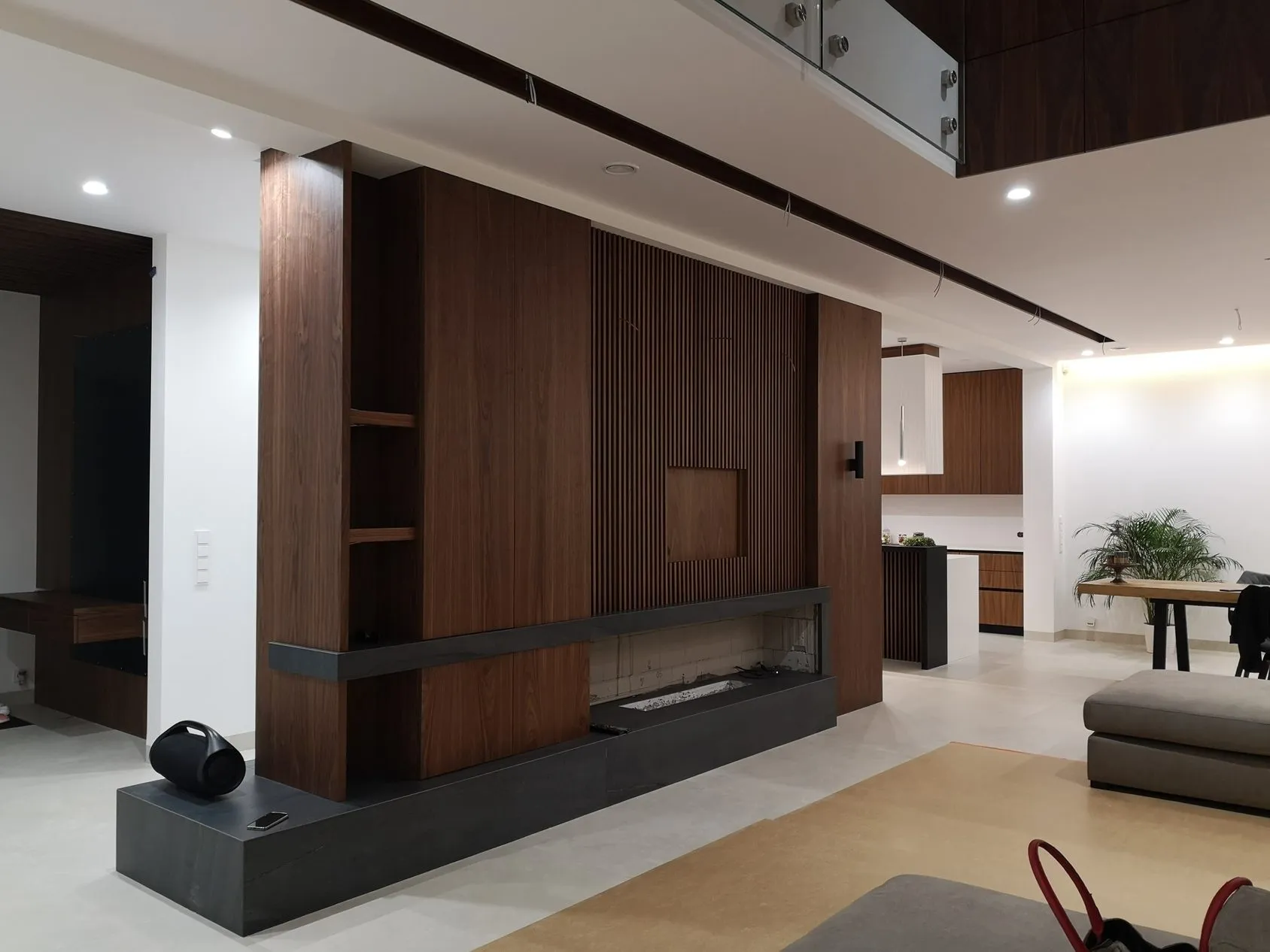
Back then I worked on an "all or nothing" basis, so on top of the design I also had the site supervision. First job, no proven crew, no contractors - we got all our friends involved in the search, and after a few meetings it clicked. We found really great contractors and a joiner, thanks to whom we managed to deliver the project exactly as I had imagined it. The clients were very happy, and so was I… only I was quite ill from it afterwards. Nothing seemed to show, but the stress really took its toll on me and various nervous symptoms appeared. Only after some time did I understand that it was the body's natural reaction to over-commitment - back then I hadn't yet joined the dots.
After my first project, I knew this was it!
After your first project, did you know this was it?
Yes, at that point I kept up the momentum. More jobs came pouring in, I felt more and more confident and coped better and better, and what's more - a clear vision of what my whole business should look like began to take shape.
I don't know whether it was down to my so-so experience of working with designers or that inner need of mine for order, but with each project I really did put it all in order, step by step. The six months of preparation, during which I learned the technical side but also analysed and organised the whole process of working with clients, let me start out fairly calmly.
What was your priority in that first stage of work?
I knew I should guide clients from start to finish. There was always a thorough brief, shopping trips together, looking at inspiration and materials. In fact, I stick to that rule to this day and can't imagine leaving clients to their own devices ;)
I realise you can prepare a concept based on photos downloaded from the internet, even if you've never seen those things in person, but I have the feeling it only seems to save time; sometimes it works out and the client is happy, but more often the photo says one thing and reality another, and the designer is left with yet another concept to work up.
My sales experience came in handy.
Some designers have great ideas and beautiful visions, but can't cope at all when it comes to working with clients - and yet that's 50% of success in this profession. Did your sales experience affect how you talked to clients and organised the whole process?
Yes, I think it may have helped me, both when interviewing clients and in building longer-term relationships. I knew you had to discuss everything thoroughly and be honest at every step - for example, if I was working with someone new and untested, I said so straight away. The same went for materials or manufacturers.
When you take on site supervision, you take on a huge responsibility, and there's no room for anything left unsaid. Sometimes you want to help someone out of the goodness of your heart and you bend over backwards to recommend someone, but just let something go wrong… even if you're not supervising, we all know who'll get it in the neck first.
The designer's fault: the house special on every building site. There's a saying, "a satisfied client will recommend you to one person, a dissatisfied one will tell twenty people about you", and in this profession it probably holds 100% true?
Definitely. Once, in a Facebook group for architects, a woman wrote something that really stuck in my mind - when things are going well, clients will send you hearts and praise everything, but let just one thing, even a small one, go wrong, and that's it. Whatever the cause, on a building site it's always the designer's fault, full stop.
Can you design interiors without having gone to school for it?
Time for a topic that polarises the world of interior architecture like no other: can you design interiors without having gone to school for it?
I'm living proof that you can, but I believe you can skip school in only one situation: when you knuckle down on your own and learn everything. No easy ride.
Some of my friends, seeing that I'd managed to break free from a "normal" job, started hinting that maybe they'd try it too. I offered to share my materials and introduce them to the subject, but I quickly noticed we were talking about two completely different things. For most people, designing equals decorating; rarely does anyone remember that a design means planning the lighting, the wiring and plumbing, the functionality - hard issues like these, which are - for me at least - more important than the decorating stage.
From the very beginning that's exactly what I focused on; after fitting out our flats, I knew the sockets had to be in the right places and the skirting boards fitted so the doors could open - all of it has to work. You really have to prepare thoroughly for design work, so I'm not surprised that many people say school is a must. I believe that people who think broadly about the profession and have an inner drive to learn all of it will manage without university. But for people whose idea of design comes from makeover shows, putting their knowledge in order is essential.
Perhaps, in that case, it would be worth stressing the difference between a designer and a decorator more strongly - many people see them as the same, though in practice they are two completely different professions.
On top of that, there's the question of designs being correct, that is, done by the book. A great example here are the founders of Akademia Dobrego Projektu, whom I warmly greet and congratulate, because they're doing a great job. And how did it start? With blunders, of course :).
They took up the torch of education because they spotted how many mistakes there were in professional designs shared in groups for architects - by people with degrees and experience. It turns out that knowledge of ergonomics and basic functional principles is still lacking; evidently not everyone opens their Neufert, and a great many designers focus on beautiful visualisations, overlooking how practical the solutions are. And we're talking about qualified architects here.
Another issue is the availability (or rather unavailability) of materials on design. We have Neufert's handbook, there are the women from ADB, but that's still really not much when it comes to methodology. How did you learn to do designs, and where did you get your knowledge from?
When I started learning, I analysed other designers' documentation and treated it as a model. Along the way I read everything I could get my hands on, because I really wanted to know the principles, those hard rules and standards we talked about. You mentioned Neufert - that was my bedtime reading ;)
I bought and studied everything that had to do with design. I also made my own mini handbook, in which I collected the things that mattered most to me and described tests: for example, I measured various sloping ceilings and prepared simulations of what would fit under them and how. I had a very strong need to test everything first-hand; I felt that was the only way I could really learn to design properly.
The reality of a designer's work isn't always rosy.
It seems that the ability to gauge the potential of a given space - like drawing - is a talent, and you simply have to have it. This raises further questions: is it possible to turn talent into a business and keep the joy of creating? Can you reconcile your own expectations with the hard reality of the building site? How do you organise your work to avoid drama and sleepless nights?
We'll talk about that in the second part of the interview, which will appear on the blog very soon, and now we're all ears: what were your beginnings in the world of interior architecture like?