We gave the first part of our interview with Martyna the working title of the Horror Corner.
Today we talk about far more pleasant topics and those events in an interior architect's life that make us feel our work has meaning.
Do you remember the first project where you thought, "this is it, I've made something great"?
Martyna Szulist: I think it was the design of an apartment not far from where I live. It was my first real makeover. We knocked down partition walls, there were layout changes, and that's when I really felt that I truly enjoy doing this. In general, I love makeovers where you can see the result and I have a sense of agency. Of course, they involve more work and stress, the collaboration takes longer and I usually underprice it, because you should charge more for that kind of tinkering with renovations, but the satisfaction and that client who is happy after the changes… that's something wonderful.
I love interior makeovers because they give you a sense of agency.
We talked earlier about the clients – those rare specimens – with whom things didn't work out, but to be honest, it's been a long time since I worked with someone I didn't like. Most of them are really nice people who respond brilliantly to what I've come up with for them. I have very fond memories of a project in Gdynia, where the clients gave me the chance to design the interiors of five apartments in a modernist building.
It was a truly brilliant challenge. Admittedly, I'd probably do that project a little differently now ;), but to this day I have a huge soft spot both for those interiors and for the clients, who became our friends.
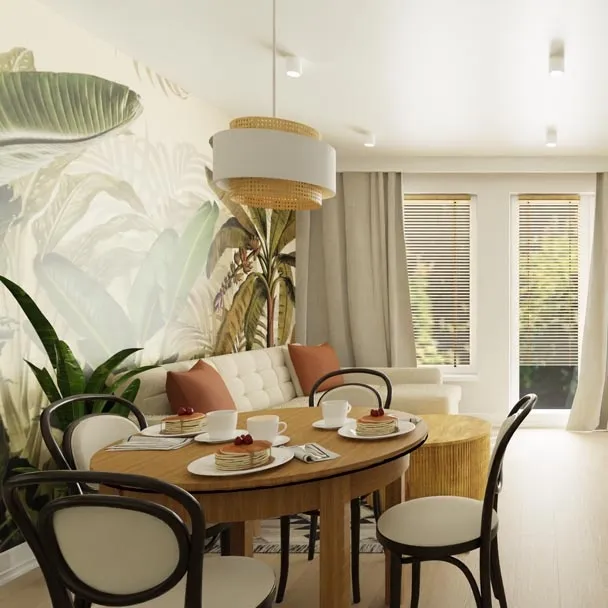
It's been a long time since I worked with someone I didn't like.
Do you feel proud of your completed projects?
Oh, that's another tough topic, because I don't know the feeling of pride – the word seems an overstatement to me. But there are moments that make me feel I know why I do all this. I once went to see a client to check on the progress of the complete renovation of her apartment. For the first time I saw the space after all the walls had been moved, and I was shocked myself at how much the changes I'd proposed had paid off – the apartment seemed enormous. The client left such a lovely review, saying that they live and feel better in the apartment I designed, and I finally felt that this work had meaning. For many years I hadn't felt that meaning…
...because with a designer or without one, people will furnish their homes anyway?
It was only with this project that I saw you can really help someone live better. Styles, patterns, colours – lots of people have some feel for it and will manage, as confirmed, by the way, by the number of people who decided to become designers after furnishing their own home. But that's not enough. There's a huge amount of technical knowledge without which you won't create a good design, and that's where the difference lies.
With this project I saw that you can really help someone live better
So is design an art or a craft for you?
Both! But I think the two have to exist side by side. For me, function matters most and that's what I put the greatest emphasis on, but obviously aesthetics are very important too – I won't create an ugly design.
Speaking of ugly things - which interior design trend do you consider the biggest crime against aesthetics?
Definitely the so-called Polish glamour… and day-and-night (zebra) blinds! As for the first style, it reminds me of cold, cheap interiors meant to look expensive. I find it hard to believe that something like that caught on. I do hope, though, that people confuse it with modern classic, which, in turn, is very pleasant and fairly timeless.
Polish glamour and zebra blinds, or design nightmares
Zebra blinds are banned in my work. Luckily, I don't come across clients to whom I'd have to explain why I'm not keen on them.
Another thing is decorative stone – I call it slate, but in general these are faux-stone facade cladding panels that have little to do with decoration.
So how do you fight the glamour style and the "slates"? Is there something that will always work, everywhere?
In my opinion, it's the Parisian apartment style. I try to aim for it, although I most often design in an eclectic style: strong colours, intense interiors with a Spanish feel. I love it, but I'm also aware that such bold colours may get boring one day. And the Parisian apartment style is always in fashion.
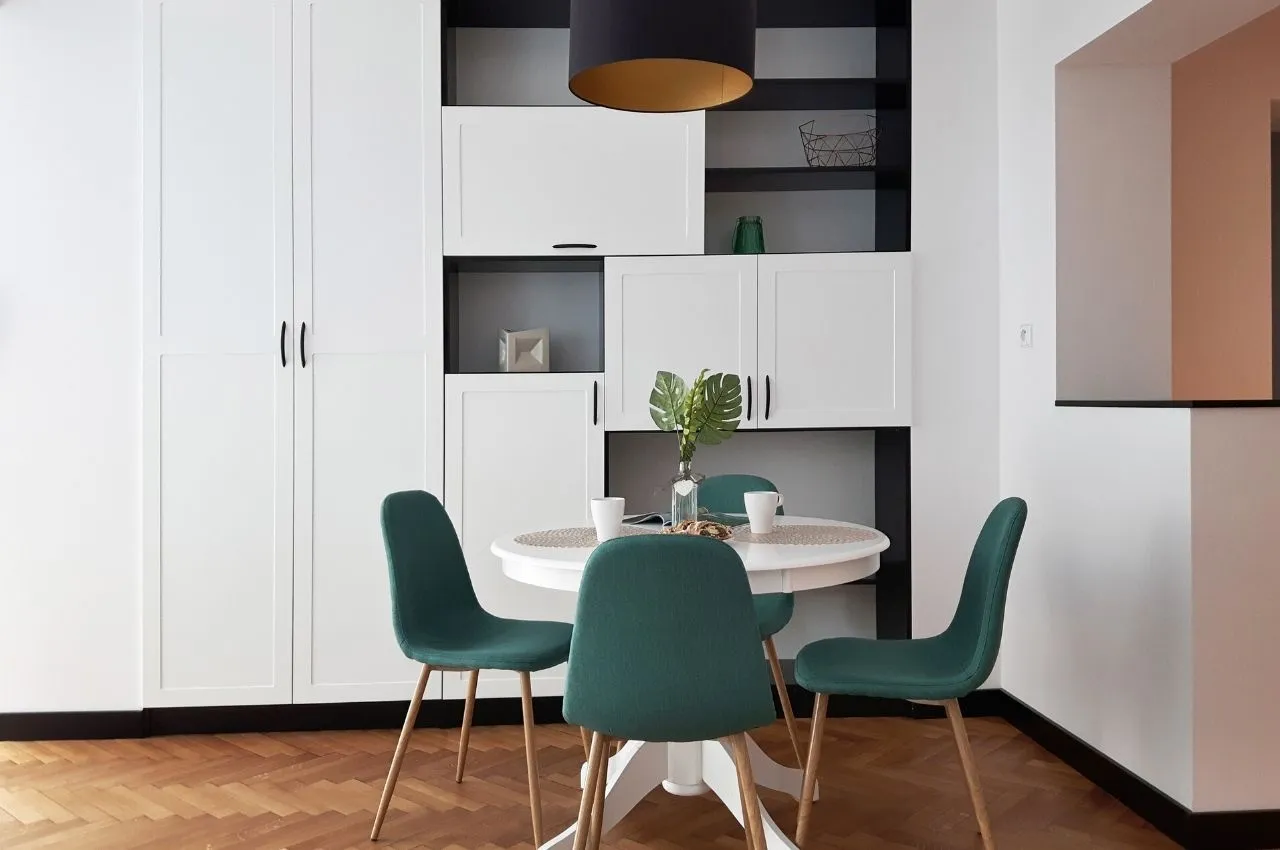
Classics above all!
A look at your website quickly shows that design projects are only part of your business. You run training courses, you have your own online products… you clearly work on many fronts. Is that a result of your personality, or more a response to the needs of today's market?
I think both. I get bored quickly, so I can't be stuck behind a desk all the time. You have to sit on a project for months, or even years. I do a design before the house is built, two years later it's being built and it turns out something needs fixing, something is no longer on sale, and your head is working on one subject the whole time. It's easy to burn out. I need other stimuli, that's the first thing, and the second: classic income diversification. Not only do I have fun both running courses and preparing templates, but it's always extra money.
Training courses mean new stimuli and diversified income
I think you really do need a very particular nature to shut yourself away with nothing but design projects. If someone has a lot of energy, like me, they have to channel it in different directions. The nature of our profession is also such that sometimes for three months you have so much work you can't remember your own name, and then two months without any new contracts. I can't sit still in situations like that, I have to do something, so I fill that time with extra activities.
What made you take up training?
I noticed that I'm good at passing on knowledge. I like giving tips to beginner designers and helping them. When yet another person came to me asking for some training, I had the idea of running classes teaching the pCon software. Later I added creating the templates I mentioned, for proposals and moodboards, for interior architects, who, as we all know, never have time for anything. I'm also planning a series of products on kitchen design, because that's my pet subject.
I like giving tips to beginner designers and helping them.
Speaking of time, we have a few questions about organising your work; it's time for the hits and misses of the studio. Is there anything you can wholeheartedly recommend, or definitely advise against, when setting up a workplace?
Maybe let's start with the duds :) When I was setting up my business and got a grant, I bought an A3 printer. Great stuff, except I didn't have enough money for a laser one, so I chose an inkjet. That was a huge (literally) mistake – yes, it came in handy sometimes, but the problem with it is that when one cartridge runs out, you have to replace all of them. Besides, the printer makes an unholy racket before it does anything, and it takes up half the room I set aside as my studio. In the end my parents took it to their place, and it's sitting gathering dust in the attic.
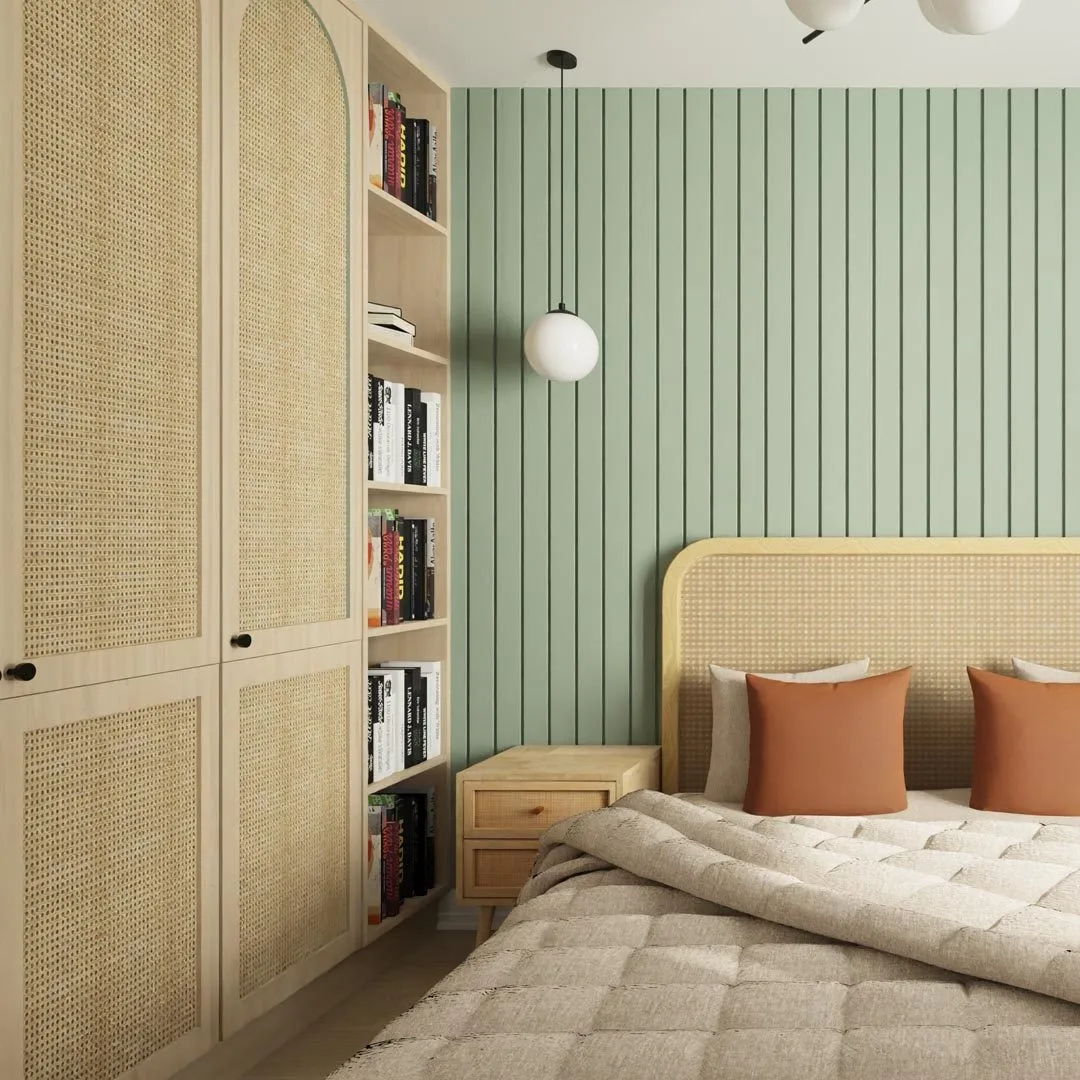
Hits and misses in an interior architect's studio
Another complete dud was ordering 300 folders with my logo, when in the meantime I changed my visual identity and contact details. The folder has my private phone number on it, the colours don't match – at least the surname is the same. I use these elegant folders to organise projects, but the box is still under the bed and I don't know if I'll manage to use up its contents – I still have more than half left.
So let's move on to the hits.
Definitely a good laser measure. Maybe not necessarily the big one that scans the whole room, because apparently it's quite inaccurate. My husband uses them at work, and even though they have scanners worth thousands of euros, apparently they're not very accurate. Then again, there are spaces you can't measure with an ordinary laser measure, so then you have no choice.
A laser measure, an NCS colour fan and a deep desk are the basic kit
Maybe it would have come in handy for that first project of a 100-square-metre apartment for PLN 500.
I don't think I even measured it! It also took me years to understand that you need a deeper desk. Admittedly, I work on a laptop all the time, but this year I'd really like to buy a desktop computer. Yes, a desktop is definitely a good idea. It's certainly worth investing in a good chair, too.
What do you never leave the studio without?
My NCS colour fan. I also dream of a colour reader, which I'll certainly buy one day. All these tools are quite expensive. The NCS alone costs at least PLN 1,000, and if you want to equip your studio with other colour fans too, the amounts get outrageous.
You use KIS List; what do you find the app most useful for?
Definitely for creating shopping lists; for now I mainly use that option. I make a list, send the link to the client, who marks what they like, done. Especially compared with working in Excel, where you also have to type in a formula and make sure you don't make a mistake somewhere, because then the whole quote won't add up… We all know how much work that is. Whereas here it's neat; if I don't like something, I can hide it, if I change my mind, I can show it again, or delete it. Brilliant.
Rule number one: don't forget about yourself and your needs
If you could go back, with your current knowledge and experience, to yourself at the start of your journey, right after graduating - what would you tell yourself?
Right. Choose a different profession ;) But seriously, first and foremost: "Think about yourself, not about making sure everyone else is fine". With our skills, we'll always produce a good design, but it should never come at the expense of your mental and physical health.
And any practical advice?
Always take payment upfront! I know it can be hard to get past at first – we feel we don't have enough experience and don't deserve it, but there will always be some shark who, seeing that someone is just starting out and doesn't know how the world works, simply won't pay. I've been burned by this more than once, so for a few years now I've had an upfront payment system and I only start work after the deposit.
Watch out for the sharks!
It used to be that the client would call, I'd go to the site, measure, calculate everything, and only then send the contract based on that. That worked up to a point, but then came a time when, after my visit (for which I charged nothing), the client went silent and didn't answer the phone. I decided I couldn't let myself be taken advantage of like that.
We recently talked with Magda Knappe (link) about the notorious "get-to-know-you" meetings where clients tried to extract ideas. Not only did you feel like you were going to some kind of casting, and lose half a day, but the clients never got in touch again - after two hours of such a consultation, they more or less knew what to do.
That's why I say: change professions - become a dentist, for example, since nobody haggles with them:)
Acting and design? You can combine the two
Have you ever wondered what you would do if you weren't designing?
Definitely something to do with film. I was drawn to acting and it's still in me, but when the pandemic came and the whole film and theatre business ground to a halt, while I had a lot of interiors work at the time, I kept telling myself I'd chosen well. Sometimes I appear in a TV show or play a bit part, but that's a hard way to earn a living too.
And can you sometimes do a bit of acting at a meeting?
Yes! You can really prepare well for it, because once you've read plenty about emotions from an acting perspective, it's easier to read people and their intentions later on.
And that comes in handy not only in design…
That's true; Martyna reminded us how important the psychological side of design is. After all, it's not just space planning, but also constant contact with another person and their emotions. Join us for the next conversations in our series, where we will certainly touch on this topic.