Preparing a cost estimate - the starting point of a successful collaboration.
As an interior architect, you know how important a functional layout and well-chosen furnishings are for creating a design for a flat that not only looks stunning, but also meets the client's expectations and needs.
It's because of this creative side of carrying out interior design projects that the vast majority of us chose to become interior architects. It's especially in this part of the design process that we find fulfilment, bringing our aesthetic and functional visions to life in response to the client's needs.
However, the design process also includes a part that doesn't always bring us as much joy as designing interiors itself. Our work also means investor's cost estimates, the pre-construction cost estimate, the finishing works cost estimate and, of course, difficult conversations about the client's budget.

Understanding the client's financial means is a sign of professionalism, but also the foundation for building trust and satisfaction for both the interior architect and the client.
As each of us knows, clients are often not fully aware of how much a design project costs for a flat or a house.
Without precisely defining the starting budget, it's hard to create an interior design that both meets aesthetic expectations and is realistic to carry out.
The responsibility for this lies with us as interior architects.
So let's talk about the budget.

"What is your budget for this project?" - the interior architect's first question.
Many factors make up the cost of an interior design project.
It depends not only on the floor area of the property, but also on the type of building it will be carried out in, how complex the interior is, the extent and quality of the interior's current finishes, which renovation works need to be done and, most importantly, the style in which the client would like to furnish their interior.
All of this, in turn, adds up to a whole range of costs: contractors' fees, the prices of building materials, the renovation, the full scope of works, furnishings and our own services.
That's why talking to the client about the budget is the beginning and the foundation of a successful collaboration.

The cost of a design and the budget taboo!
The vast majority of clients don't realise how much it costs to design a flat. What's more, many of them are reluctant to talk about the budget they've decided to set aside for the renovation, the interior design scheme or, generally speaking, the whole project.
Most often this comes from a fear of naming too high an amount, which could lead to more expensive solutions or products being proposed, or too low an amount, which could result in worse proposals. Some clients may also feel uncomfortable saying openly that they simply can't afford something.
However, without a clearly defined budget, it's hard for us to create a design for a flat that not only realises the client's vision but is also within their reach.
That's why our job is to steer this conversation so that the client feels comfortable, while making them aware that a clearly defined budget is essential for creating a satisfying interior design and the perfect cost estimate.
A conversation about the client's financial means should be where we start the collaboration. Otherwise, we expose ourselves to a whole range of unpleasant consequences.

"This interior architect has no idea!" The consequences of working without knowing the budget and the cost estimate.
Not having an honest conversation with the client about the budget brings a whole range of consequences.
And they affect you above all as the interior architect, because from the client's point of view you are the expert who was supposed to help them make their dream of the perfect interior come true.
The 3 biggest risks of designing interiors without a defined budget.

1. A cheaper version of the interior design gets built.
You've probably heard more than once, or experienced yourself, that you prepared the perfect design for a client, fully matching their vision and needs. The happy client thanked you for a successful collaboration and went ahead with the build on their own.
Feeling fulfilled and satisfied, you went back to your daily tasks, waiting for photos to see how the client had got on with the project.
And then, suddenly, a surprise. You look at the photos and nothing matches: in place of the products you chose, you see different, cheaper ones. Is it still your design?
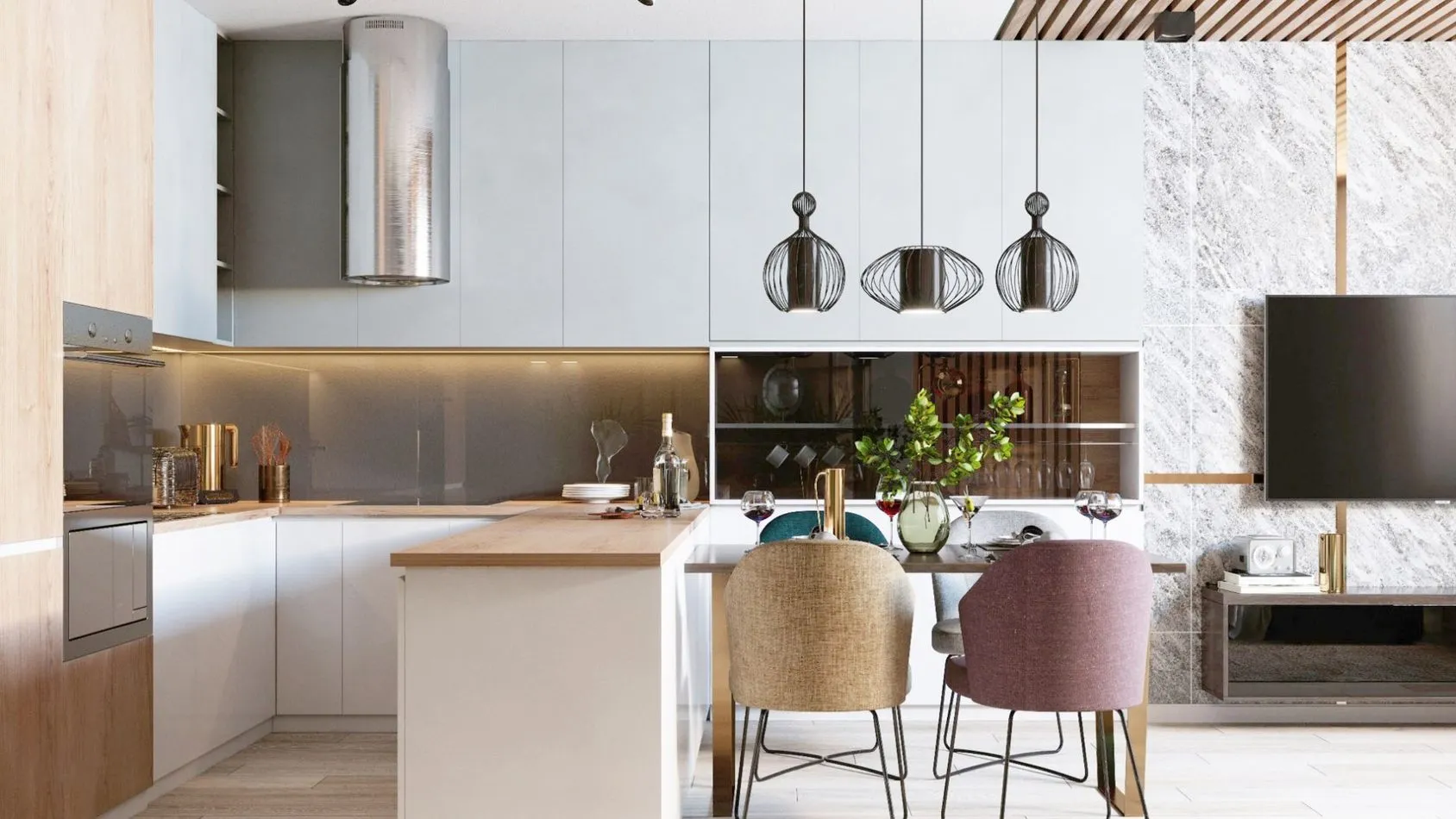
Something went wrong…
The most common reason for this is not having a big enough budget to carry out the design. And although you may have taken every step to find out how much the client wanted to spend on renovating the flat, it turns out you didn't quite reach an agreement.
In a situation like this, disappointment is inevitable. On both your side and the client's. You feel that your design has been ruined, even though it's your calling card, and the client may feel disappointed with working with you.
What's more, they may be ashamed that they were forced to replace the often high-quality pieces you selected with cheap, less attractive substitutes. It's a completely different shopping list.
You both come away with a bad experience of working together. However, it's mainly you, as the interior architect, who bears the consequences of a failed build. It's their flat that will be your calling card. It's the client who will talk about you to family and friends or review you online, accusing you of an unworkable design that didn't match their means.

2. An unattainable design.
Depending on the client's budget, the items in a cost estimate can be radically different. Clients with limited means can count on economical solutions and budget materials, while those with a bigger budget will get a furnishings list that includes higher-quality, more prestigious pieces.
And what happens when the client's budget is a big unknown to you?
In that situation, you risk having the design you've prepared for the client turn out to be financially out of their reach, which will frustrate and disappoint them and, in turn, reflect on you. After all, you're the interior architect.

A high project cost guarantees a disappointed client.
Creating an interior design that, although visually attractive, may turn out to be financially out of the client's reach leads to a situation where they face the dilemma of either spending more to carry out the design or giving up part of it.
This leads to disappointment and a feeling of having been misled.
It also leads to an unhappy client, because they had to spend twice as much on the interior design, or they're still living in an unfurnished flat, waiting for the funds that will let them finish it.
For you as an interior architect, it carries the risk of losing your reputation and future commissions.
And, of course, of being unhappy with yourself - after all, we didn't become designers to create designs for the sake of designing, but so that they get built.

3. Never-ending interior design.
It's probably happened to you more than once that a client enthusiastically approved the furnishings you proposed, as if the product list had no prices on it. But over time, as the cost of the project grew, they started backing out and changing their earlier decisions.
They have every right to do so, but for us as interior architects it's a project we have to start again from scratch, looking for cheaper alternatives for the interior finishes.
All the effort you've put in as a designer so far and the time you spent preparing the cost estimate go to waste.

But I want to make this design happen…
A huge risk that can affect us directly when we prepare a design for a client without knowing their budget and without an approved cost estimate is when the client becomes very attached to the vision we've presented. When they fall in love with the design and keep looking through the visualisations we've sent them.
But even though they know the design they've been shown is out of their reach, they want to have it built at all costs - only cheaper. So that it's a "good price".
In that situation, they expect us - after all, we're the experts - to prepare the same design for them, but with cheaper equivalents.
And in reality, we start the whole project all over again.
Browsing shop websites all over again, sending out enquiries in search of cheaper alternatives for furnishings, new contractors and other materials so that the product list is complete - that's a mountain of extra work.
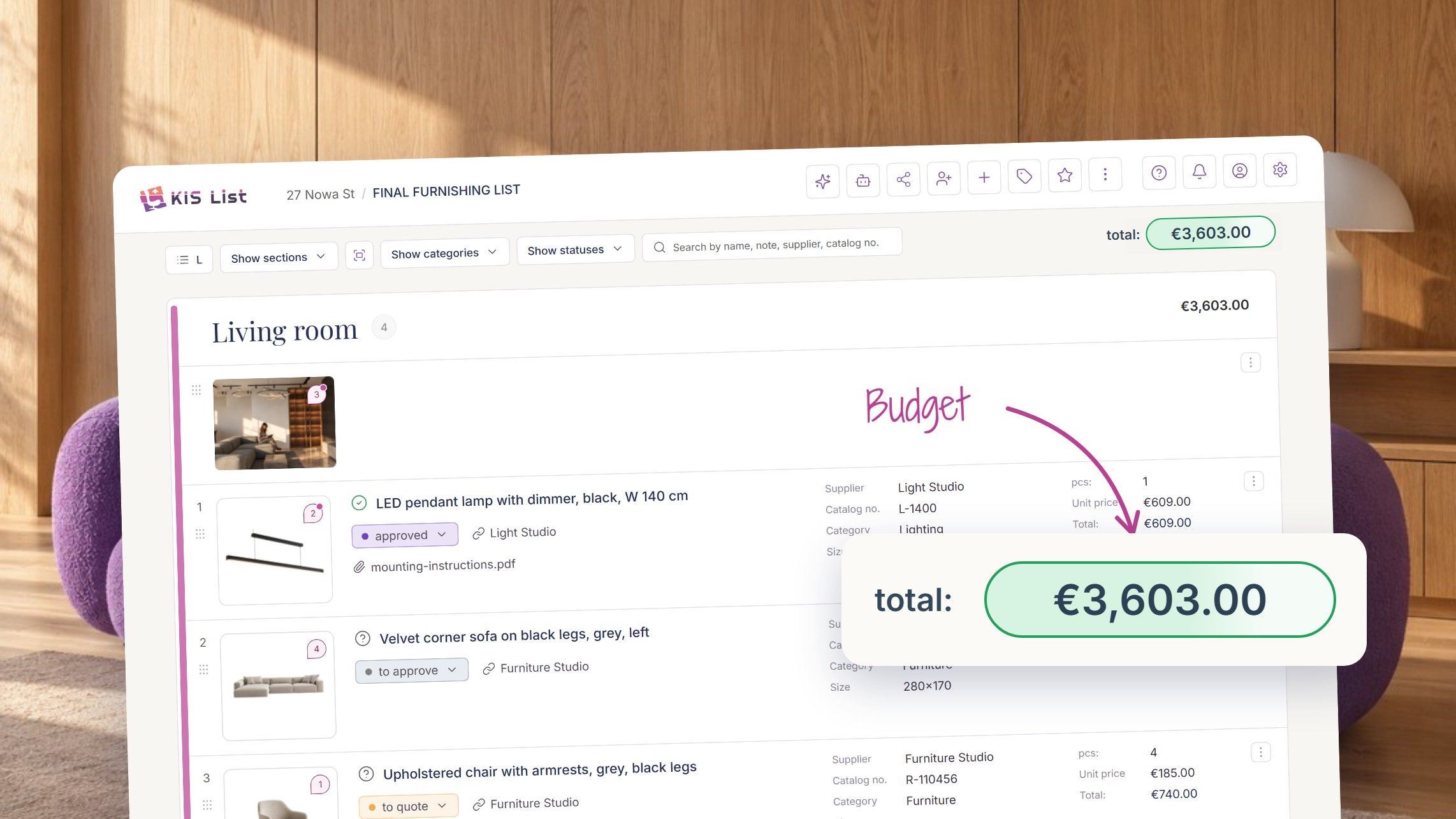
And although KIS List, the app for making shopping lists, lets you create a project cost estimate faster than an unattractive shopping list in Excel, you can't avoid the time you have to spend finding products that are "the same", only cheaper. In short, you start the design process all over again.
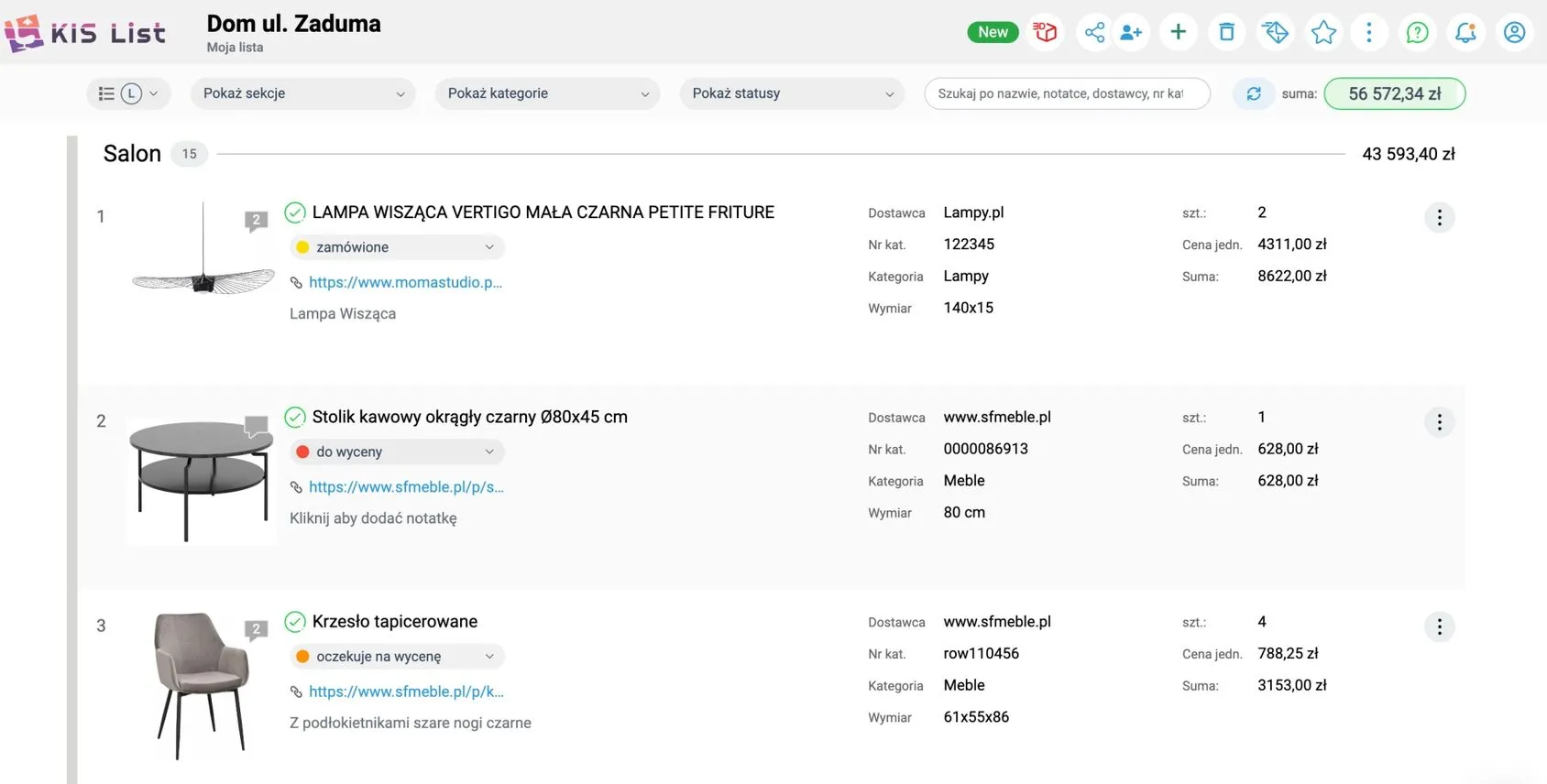
But as you know very well yourself, another problem can be that expensive lamps or tiles may not have cheaper equivalents.
In that situation, we as interior architects lose a great deal.
- First, we have to spend the same amount of time again on the design process, preparing a new cost estimate and visualisations.
- Second, we lose credibility with the client when we can't present a cheaper version of the cost estimate for finishing a flat.
- And third, the client may feel cheated.
The budget conversation is the most important thing at the start of a collaboration.
Our work as interior designers is a service for a client who comes to us because we are professionals who can help them create a beautiful interior that fulfils their vision.
We take on a lot of responsibility, which is why it's essential to first find out what financial range we have to work with, so that in the next step we can prepare a perfectly tailored cost estimate for carrying out the project.
The cost estimate - the budget "in black and white"
By spending enough time on preparing the cost estimate, taking into account, among other things, the floor area of the property, contractors' fees, and the cost of furnishings, the renovation and the full scope of works, we can show the client the real costs included in the project.
That's why a conversation about the client's financial means is fundamental.

What should a project cost estimate include?
A cost estimate should include all the expenses needed to carry out the project.
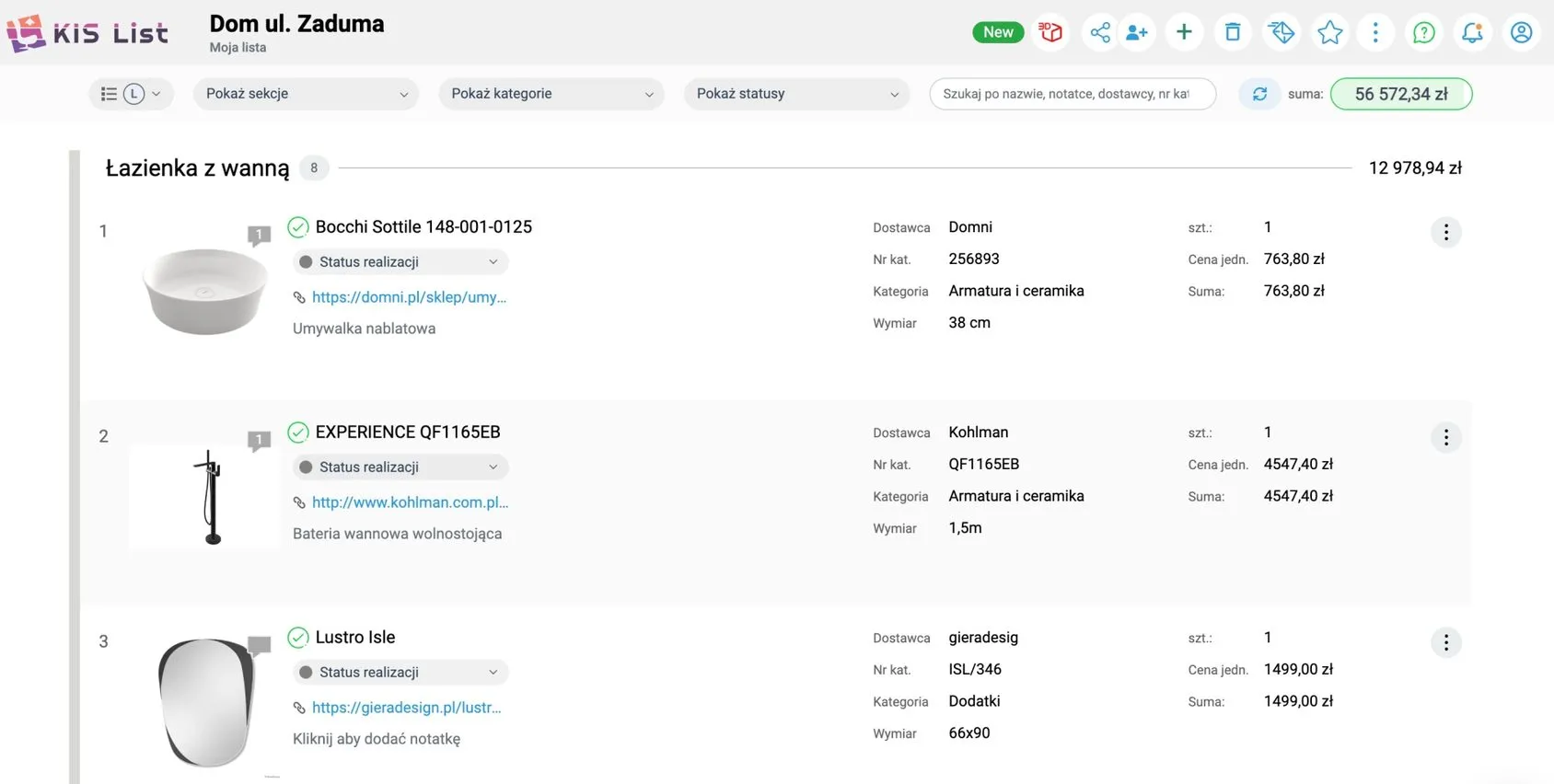
Among other things: the cost of our services as interior architects (the price of visualisations, design supervision, the price of technical documentation), the cost of the renovation, building materials, lighting, furniture, tiles, flooring, windows and so on. Everything that affects the cost of finishing the interior.
The cost estimate should also include all additional expenses, such as replacing the windows or the heating. You can include all of this using KIS List, online cost estimating software, and its smart shopping list.
At this stage, it's also worth pointing out to the client that finishing an interior without a designer always costs less and is simpler, as it usually doesn't involve sophisticated solutions or complex combinations of materials, and the costs don't include the interior architect's fees.
Also, construction work carried out to an interior design will always be of higher quality and cost more, to achieve the intended effect and avoid damaging expensive materials.

How can you streamline preparing a cost estimate?
Preparing a cost estimate doesn't have to be time-consuming.
You can streamline your workflow by preparing a cost estimate template in KIS List, the software for interior designers, where you gather all the key items a project should include.
That way, after your first conversation with the client, you'll quickly prepare a cost estimate without having to write out every element of the project and you won't miss details like buying power sockets or skirting boards.
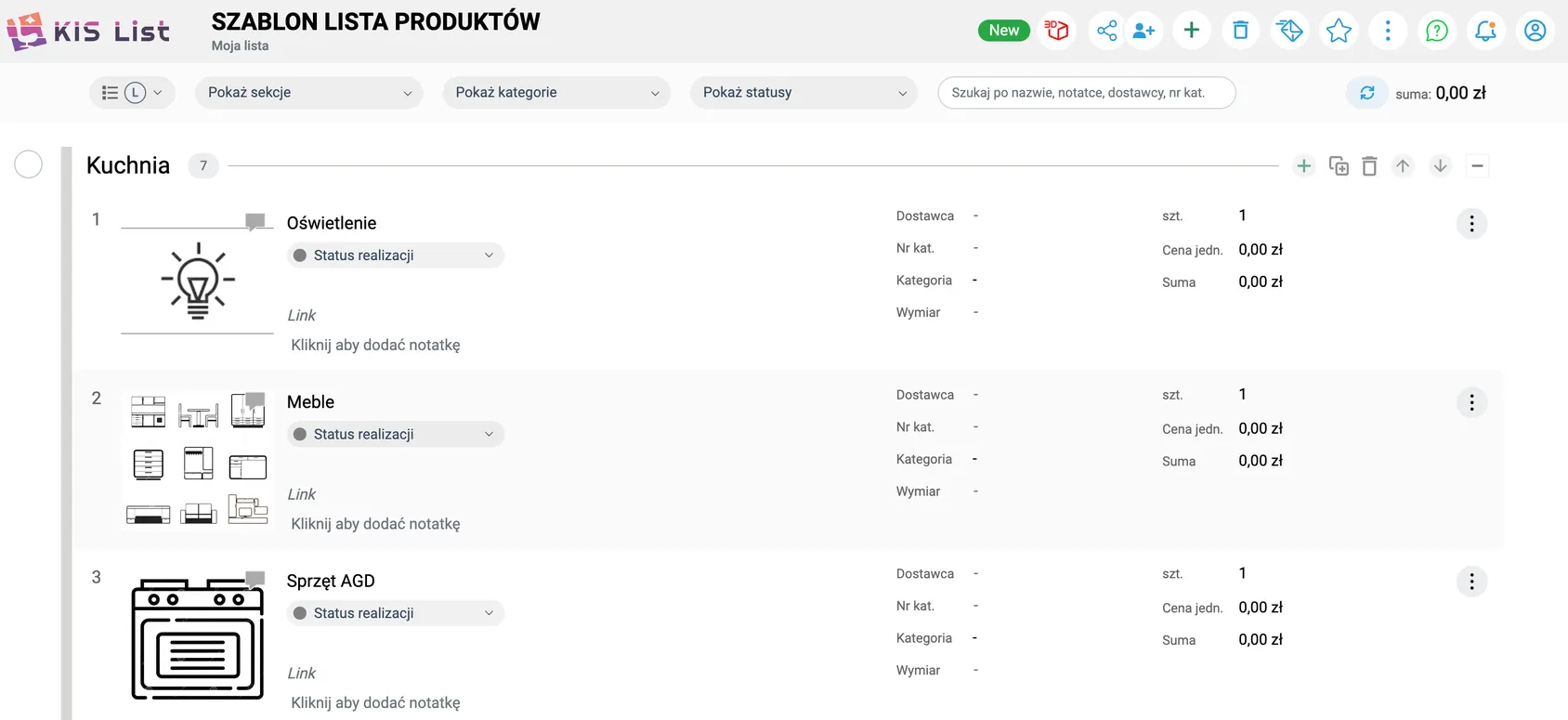
By presenting a detailed project cost estimate, you minimise the risk of client dissatisfaction caused by unexpected expenses that may come up while the project is being carried out.
The cost estimate backs you up when you need to explain why some furnishings or renovation items are more expensive and others cheaper.

You can't get anywhere without knowing the budget!
Settling budget matters at the very start and showing the client the reality they'll face when the designs for individual rooms are carried out guarantees you a successful collaboration.
What's more, it helps you avoid misunderstandings that may arise at the start of the collaboration, and unpleasantness after it ends.
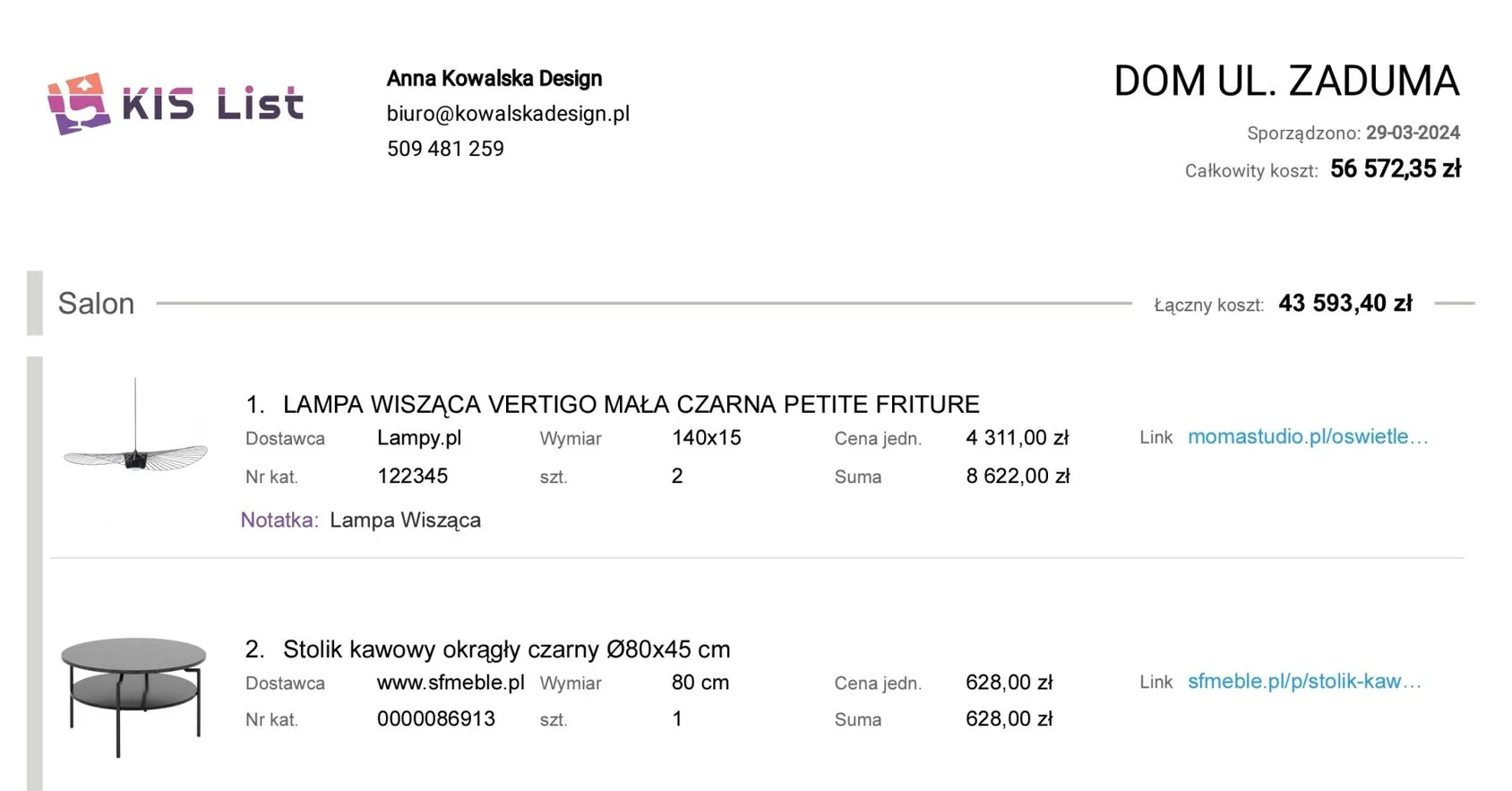
By talking about the budget and preparing the design based on it, we present ourselves as experts. It's our job to help the client understand how much the scope of works will cost for their dream interior to see the light of day.
Talking about costs can be difficult. During a panel discussion at the first KIS Masters Community Meeting, Agnieszka Pasieka-Adamek said:
Clients are often afraid to say that they simply can't afford it.
But that doesn't mean the budget conversation is unnecessary.
It's this conversation that sets the direction for the rest of the collaboration, guarantees the success our design can achieve and lets us find fulfilment as interior architects. And that's exactly what we're after.