Planning your week. How do you do it effectively?
You've probably worked at the weekend more than once, or spent 12 hours on a project in the middle of the week. No wonder. Interior design is quite a dynamic job, where something always pops up, something needs changing or refining, or you simply need to coordinate the building crew's work. But the question arises: does our work really require such great sacrifice?
Interestingly, as interior designers we know perfectly well that the efficiency and success of a project depend on a well-prepared project schedule. We know the risks that a poorly thought-out schedule brings.
Good planning is the key to a project's success. On the other hand, though, we forget that a project's success depends to a large extent on our own, individual organisation.
Without good time management, it's easy to fall into the trap of overwork, working at weekends or on holidays. Most often this results in lower creativity, permanent tiredness and dissatisfaction with your work, and from there it's a short step to delays in the project and an unhappy client. Time to change that!
In this article I want to share some tips with you on how to plan your work week so that every day you find time to rest and recharge your creative batteries, and successfully run even several projects at once.
What does a weekly work plan give you?
The benefits of planning your week in advance are an endless list of advantages. First of all, it's a remarkable tool that will help you sort out your weekly priorities and prepare mentally for the tasks ahead. What's more, the sense of purpose and direction your plan gives you will let you keep your energy and motivation high.
Here are the 5 most important benefits of planning your week that will help you work more efficiently.
1. Increased Productivity.
Planning your tasks for the coming week will let you manage your time more efficiently, because all the tasks you have to do are gathered in one place. This makes it more likely that you'll reach your maximum level of productivity as you work towards completing specific, clearly defined tasks.
2. Flexibility towards unplanned tasks
With a work schedule in place, you can see clearly how tight your schedule is and how much room there is in it for changes. When extra tasks come up, you can quickly judge whether you'll find room for them, while being sure that you'll complete the plan you set.
If it turns out that adding new tasks threatens the tasks you've already set, that may be a signal that you should, for example, say no to the client or put the extra work off until later.
As a rule, when we add more day-to-day tasks to a finished plan without considering whether they'll get in the way of the goals we planned earlier, we expose ourselves to working overtime or at weekends, and that's hardly what we're after.
3. Minimising the backlog
A well-prepared weekly plan protects you from overdue tasks piling up. Following your weekly plans keeps your work in order and lets you stay in control of it, so tasks don't pile up.
4. You protect yourself from burnout
A weekly work plan will give you stability and protect you from taking unplanned or inefficient actions that can bring a sense of chaos into your work. With a plan, you reduce all stress factors to a minimum and feel in control of what you do. What's more, regular planning lets you balance work and private life.
5. Free weekends
When you plan your work week, you manage your tasks and time more efficiently. As a result, you focus more on specific work, protect yourself from putting tasks off, and in the end gain time for yourself and free weekends. And with a plan for the next week, you don't have to think about what awaits you on Monday.

A weekly work plan, greater productivity.
In our job, planning work in advance is crucial to maintaining high productivity and the quality of our services. A schedule of our individual work, set out in advance, lets us avoid situations where we don't know what to do next.
This matters all the more because every aspect of our work, from preparing a cost estimate to sorting out organisational matters with the building crew, requires focus and precision. A well-prepared weekly plan prevents the paralysis caused by too many responsibilities or overanalysis, which most often shows itself in not knowing what the next step is.
Thanks to conscious planning, we can avoid wasting too much time wondering about our next actions and how much time we need to do them. What's more, with our tasks planned out, we'll spare ourselves the stress of feeling that we have too much "on our plate".
Knowing your schedule, you're less prone to distractions, because you know what you have to do and how much time you need. All of this translates into more efficient work and higher productivity, which is extremely important in the interior design profession, where meeting deadlines and the quality of the projects are crucial.

How do you plan your week?
The process of planning your weekly tasks has two stages: preparing to plan and the planning process itself. So let's look at the individual phases and the steps that lead us to an effective weekly plan.
Preparing to plan.
When you start planning, you need to choose the right planning tool (system) and set your priorities.
1. A planning system.
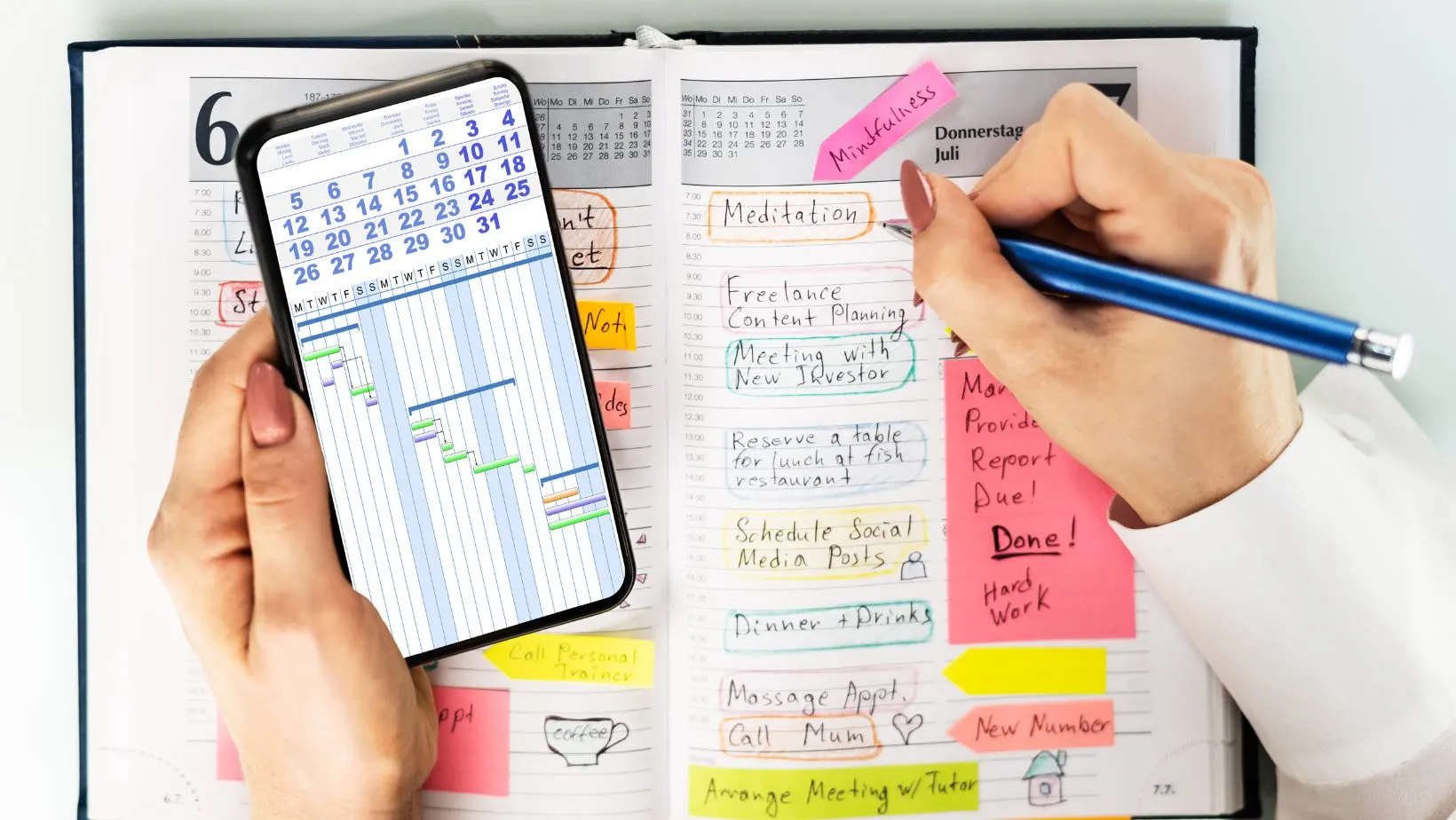
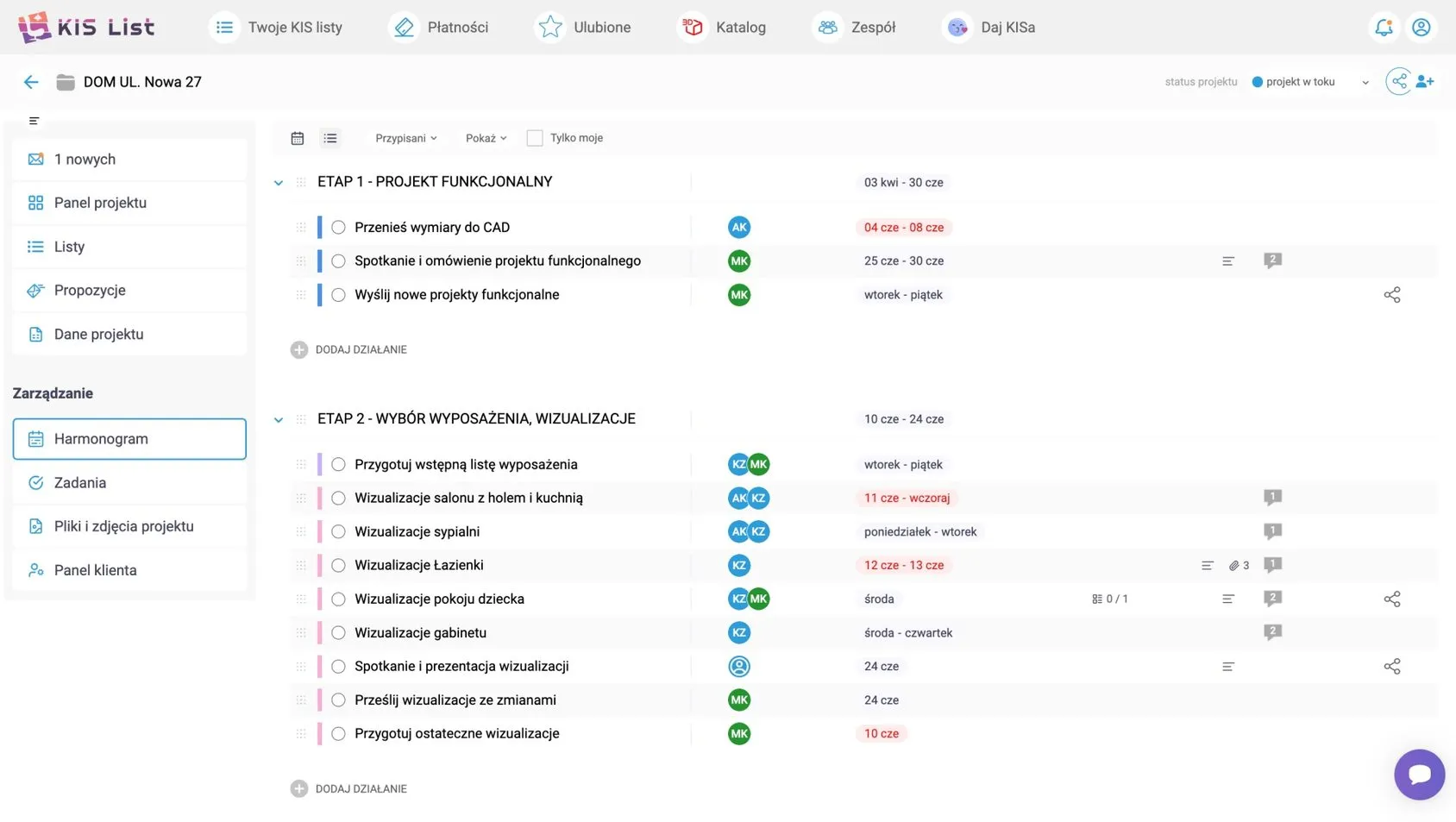
When planning your work week, it's worth using tools that let you track your progress, collect your planned tasks and set priorities. It could be the notepad on your phone, a calendar or a paper planner. You can also use the schedule you create within a project in KIS List for your planning.
It's important that you always have this tool at hand, track your progress on tasks and even record the time you spent on them, so you can plan the following weeks more and more efficiently.
Remember that having several management apps is like communicating with a client over several different channels. Chaotic and inefficient. That's why it's worth making sure your planning happens in one place, in one tool, so you don't complicate your work.
2. Setting priorities.
Setting clear priorities for the coming week is key to focusing your energy on the most important tasks. Setting priorities is very important, especially in our work as interior designers, and above all when we're running several projects at once. For example, we'll put ordering the kitchen fittings, which the supplier needs a month to deliver, higher in our priorities than ordering a rug the client will wait 3 days for.
Without a clear plan for your priorities, it can be hard to decide which tasks should be done first and which can be put off or handed over to someone else.
In KIS List you can give a priority to every task within a phase in the schedule, so when you open the tasks tab, you can filter your to-do list by priority.
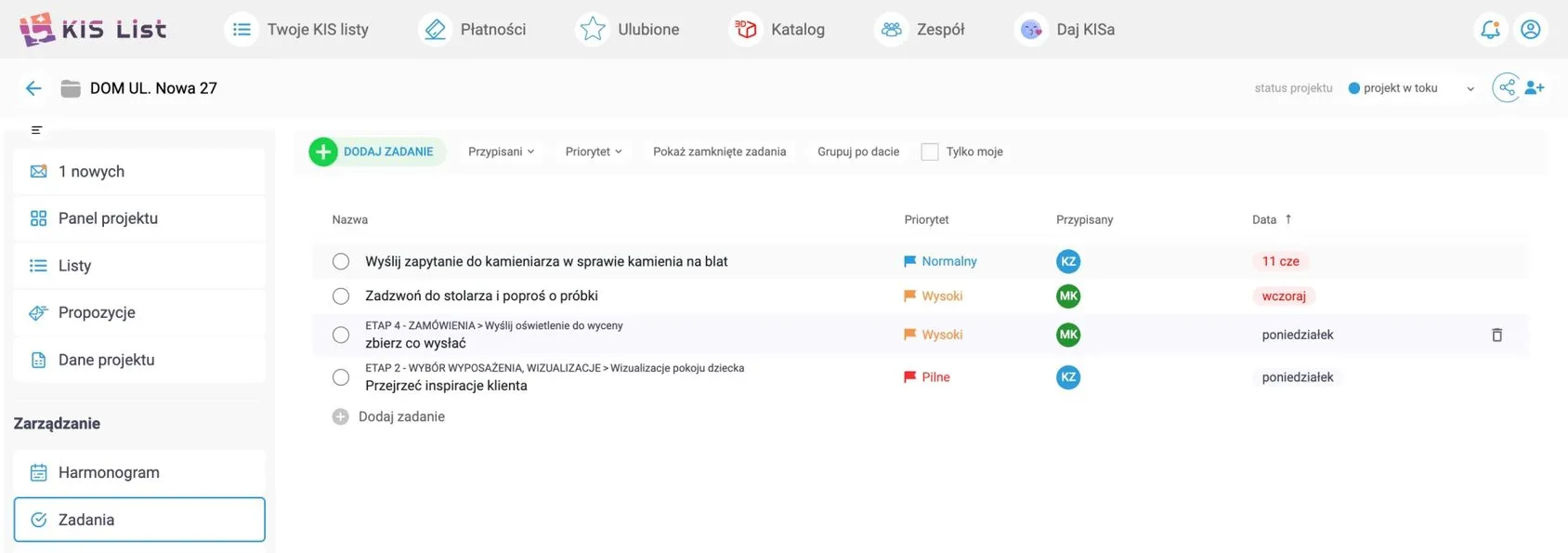
Planning
Once you've chosen the tool you'll plan your work in and set your priorities, it's time to move on to the planning process.
3. Gather all the tasks you need to do.
The first step in organising your work is to write down all the tasks you have to do. Go through every project, every project timeline, your whole design process, and write down all the tasks you need to complete.
You can do this in KIS List by creating a to-do list for each project and then combining it with your other written-out lists, building one comprehensive note with the tasks to complete.
Treat it like a brainstorm - at this stage, don't focus on setting priorities or the order of tasks. Just write down everything you think you need to do.
4. Identify the tasks that have a set date.
Once you've made your to-do list, check whether it includes any time-bound tasks that need to be done on a specific day or at a specific time. If you find tasks with a set time, block out time for them so they get done by the required deadline.
Also mark them so that you're aware they're tasks that can't be moved. If you use the to-do list in KIS List, you can mark these tasks by changing the text colour.
5. Plan the remaining tasks.
The next step is to plan the tasks that don't have a fixed time. Start by planning the tasks you've given the highest priority, and then plan the rest.
If the best way for you to plan is to set out in detail the time slot you intend to devote to each task, feel free to break your tasks down by the hour or arrange them as a bulleted list. This is the moment when you can put the tasks from your to-do list into the schedule.

6. Plan your days off.
The work of an architect or interior designer is above all creative work and attention to detail. Without proper rest or breaks during the day, we can very easily slip into inattentiveness or an inability to think productively.
That's why it's important, even when you finish your daily plan sooner than you planned, to make sure you don't overload your schedule. It's easy to plan too many tasks, which can lead to unnecessary overload.
When planning your work week, don't forget to include free time in the plan. It could be a relaxing morning or evening routine. It's important to have days when you can simply rest, relax or spend time on what you enjoy.
7. Plan at the weekend.
The weekend is the ideal time to think over the past week with a clear mind and plan the next one. That's why it's worth finding a moment during your days off to sit down calmly and plan.
A well-prepared plan will let you get down to work efficiently on Monday, which will give you a productive and motivating start to the week.

Planning is the key to calm and efficient work.
Planning your work week in advance is a method that will help you stay creative every day. The effects of planning your work will protect you from unnecessary stress and from feeling overwhelmed by the number of tasks, and will let you work productively every day while gaining time for yourself. A well-planned week is a guarantee of success on Monday morning. It's the certainty that each of your projects will be completed on time and to the highest possible quality.