Interior design - a process that requires organisation.
In our profession, where multitasking is an everyday reality, it's easy to feel overwhelmed by your responsibilities.
As interior designers, we have to manage different aspects of our work at the same time – from interactions with clients, through creating visualisations, to coordinating with suppliers and contractors. Each of these elements requires focus, precision and, above all, excellent organisation.

However, many of us, even the most experienced, can run into difficulties keeping our work in order, which often leads to an inefficient use of time, and in the longer term to frustration and professional burnout, which our profession knows all too well.
Understanding and identifying the mistakes that cost us more work is key to improving our productivity and our overall satisfaction with the profession.
In the article below, drawing on more than a decade of experience, I'd like to point out the 5 mistakes that most often made me work far too much.
1. No set design process.
I remember days when I didn't know which way to turn. I knew I had a lot to do, but the stress of not knowing where to begin paralysed me so much that before I did anything at all, I'd waste time wondering where to start.
That's exactly what working without a well-thought-out plan for the design process looks like.

When you work with a plan, you'll immediately notice a significant improvement in your efficiency. Writing out the individual steps of a project is like a map that keeps the whole process smooth and consistent – from the initial consultations with the client, through creating visualisations, to the final arrangements with suppliers and contractors.
This way you avoid chaos and an inefficient use of your valuable time.
Working with a plan also translates into greater client satisfaction and better end results for your projects.
By writing out the individual stages of the interior design project, you can keep the client up to date on realistic deadlines and progress, and earn their trust along the way.
What's more, a plan like this will let you better assess the risks and potential obstacles along the way to completing the project.
Organise your interior design process.
The KIS List app is a tool that makes this task much easier, with features for adding notes and to-do lists to the shopping list you create for a specific project.
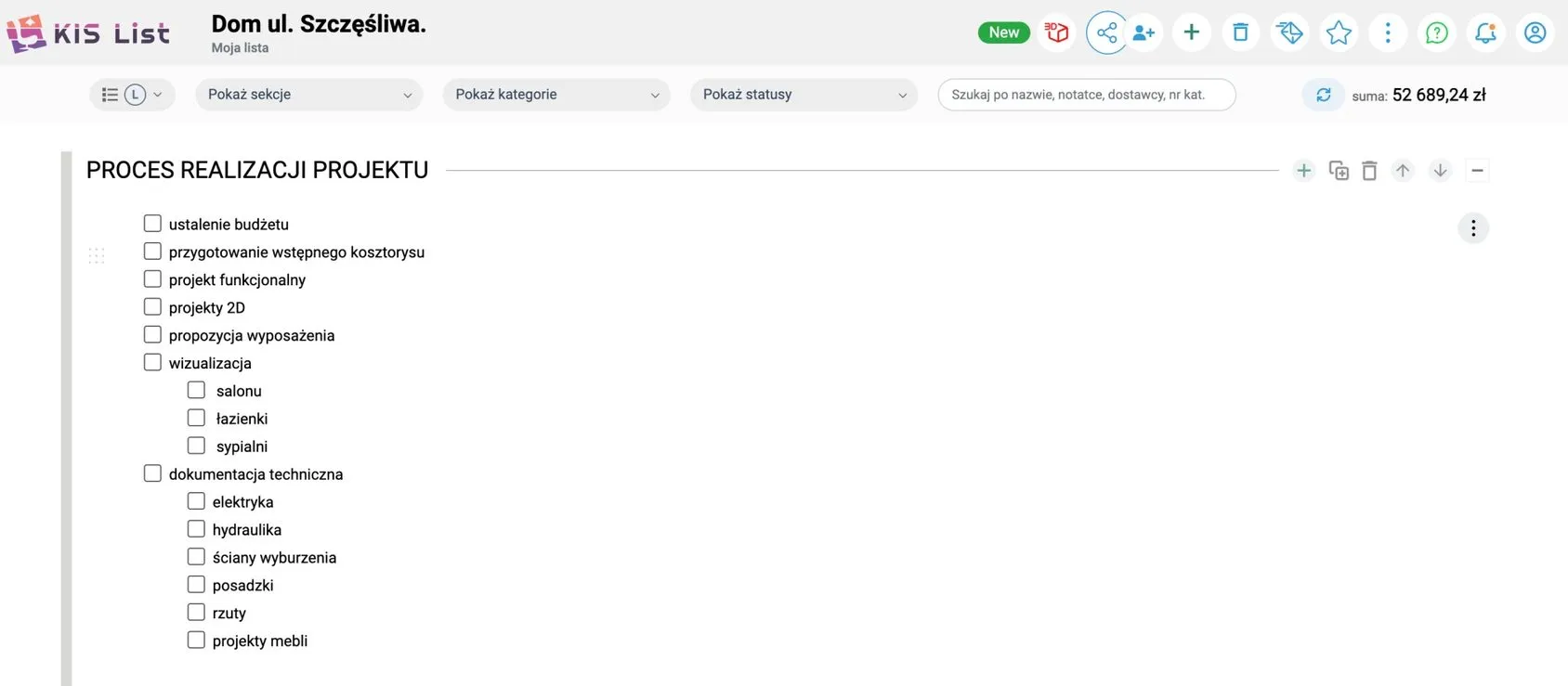
This way you can collect all the important information and manage your process plan in one place, which will definitely make managing it easier and help you stay calm when tasks pile up.
2. Scattered communication with the client.
A text here, an email there, oh and a phone call first thing in the morning. One client — three communication channels. Just reading that sentence makes my head spin.
Having many different channels of communication with the client, supplier or contractor causes a lot of confusion. Worse still! Sometimes it won't even let you switch off from work in your free time, because the client will message you on one channel one minute and another the next.
Multiple communication channels lead to information chaos. With so many emails and phone calls, important information and arrangements get lost in the thicket of back-and-forth, which not only eats up your valuable time but affects the whole project.
All it takes is one small oversight, one key decision not noted down, and there's your problem.

One of the best solutions is to use the same communication tools with all your clients. So it's worth naming a communication channel at the very start of the collaboration and sticking to it throughout the project. This will let you keep order and control over the exchange of information and arrangements.
Client communication in one place.
The need to streamline communication with the client and bring it into one place/tool was the main reason behind the feature for adding comments and approving and rejecting products on the shopping list in KIS.
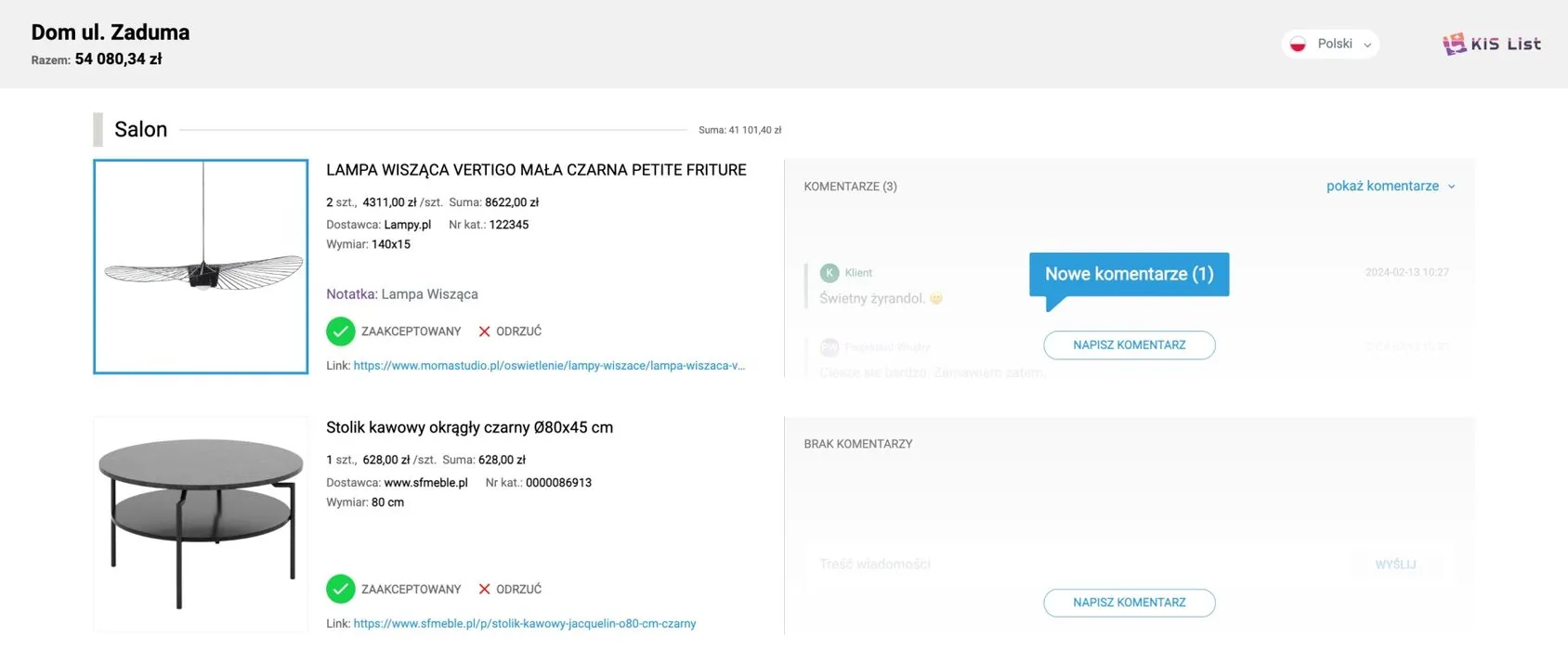
What's more, in KIS List you can create a project made up of several lists and use a private chat to communicate with the client.
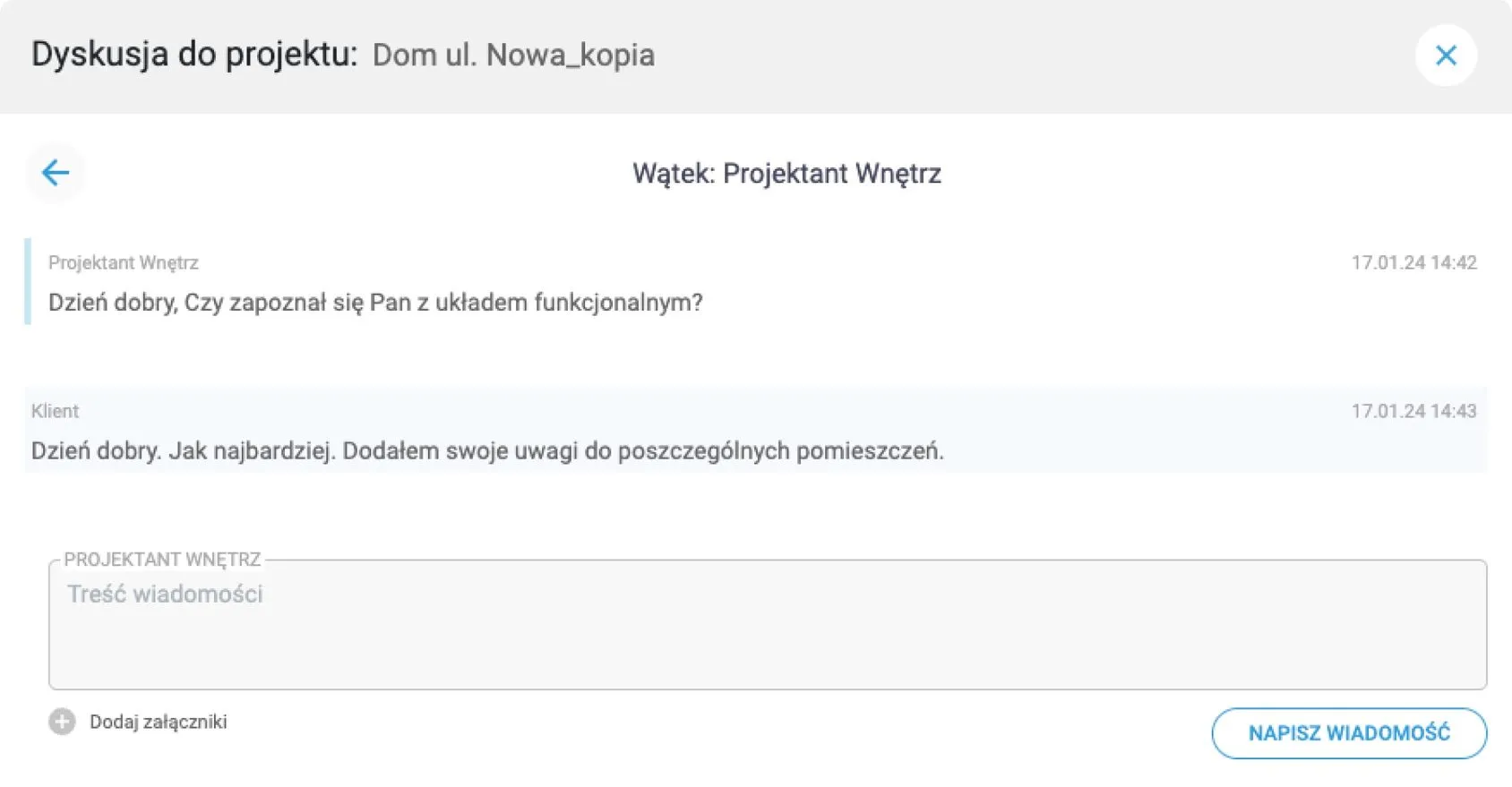
Thanks to this, I always have everything agreed with the client in one place, and both the client and I can see it, which definitely brings clarity and order to our communication.
A well-organised communication process isn't only convenient for us, but also for our clients. Keeping communication in one place builds trust and professionalism in the relationship with the client, and we don't waste time jumping between messaging apps.
3. Creating cost estimates and shopping lists from scratch every time.
Every project, and so every cost estimate and shopping list, contains repeating elements. Whether you're working on a house, a flat or another interior, there will always be spaces such as a bathroom, bedroom, living room or kitchen, and in them a washbasin, bed, sofa, cooker hood, sockets or skirting boards.
So why create these documents from scratch?
Creating every cost estimate or shopping list from scratch is time-consuming and inefficient.
That's why it's worth creating templates that you'll only need to modify and adapt to a specific project.
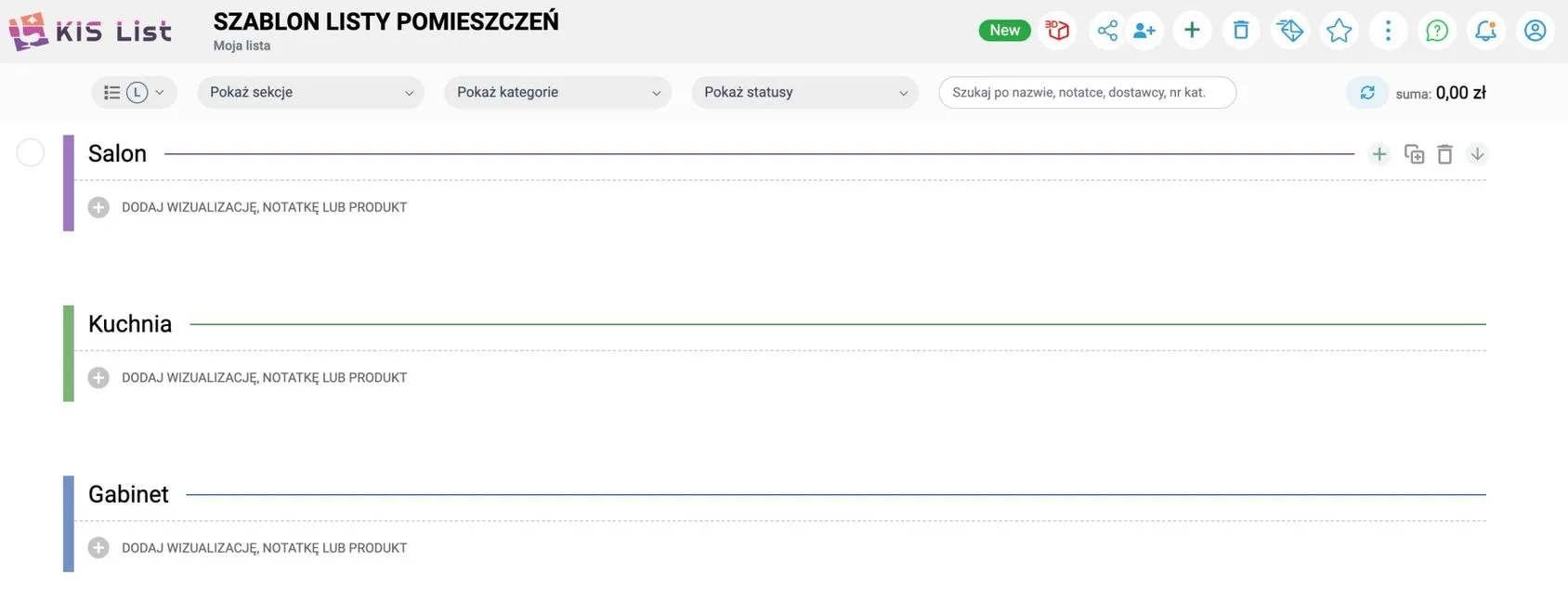
Using templates doesn't just save time, it's also a way to ensure consistency and accuracy in every project.
In a template like this you can include all the elements of the project, especially the "small" ones, such as sockets, curtain rails or skirting boards, so that when you create a cost estimate, you won't leave any of them out.
Shopping list template in KIS List.
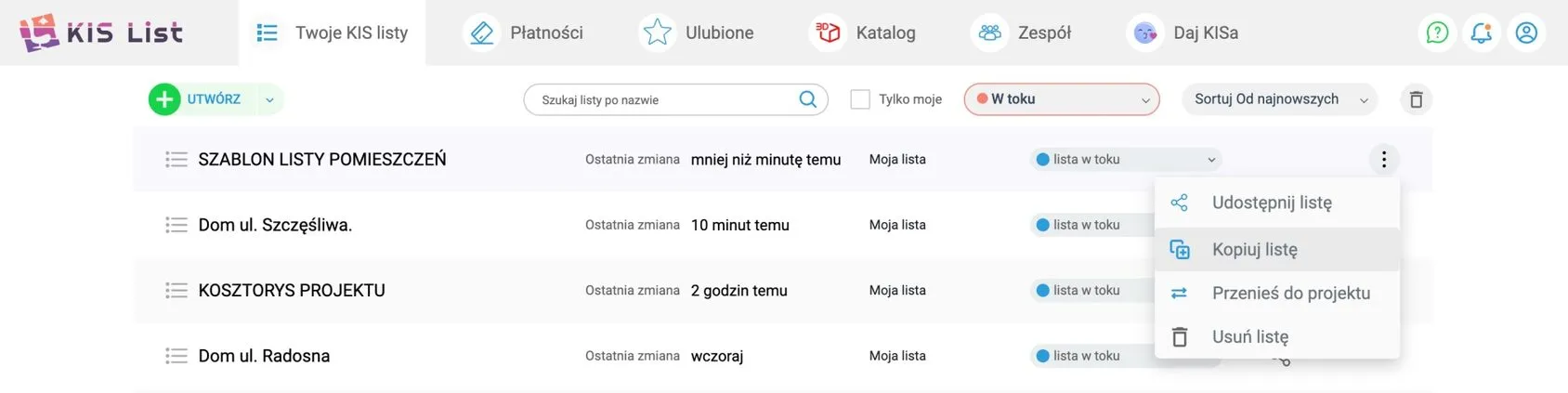
KIS List works great in this role. You can turn any list you've created into a template to use for your next project.
When you start a new project, all you need to do is copy the list that serves as your template and adapt it to the needs of the current job.
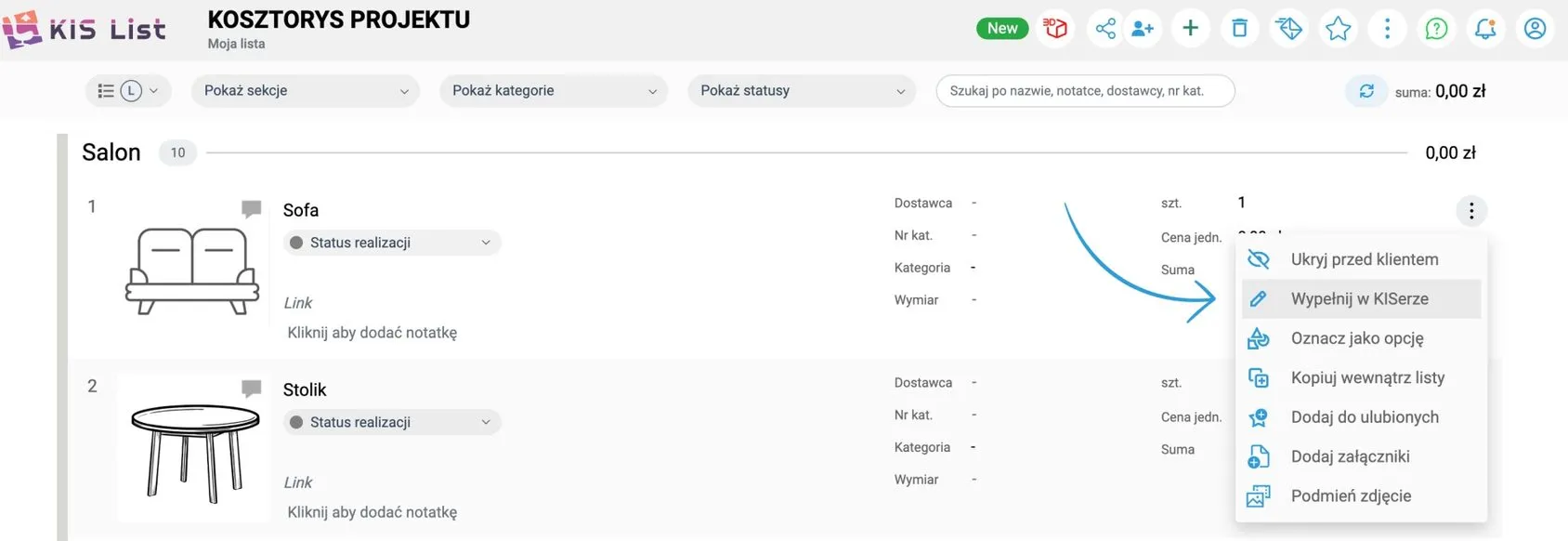
What's more, once you've created a template list of the essential products, you can fill it in automatically with the KISer extension.
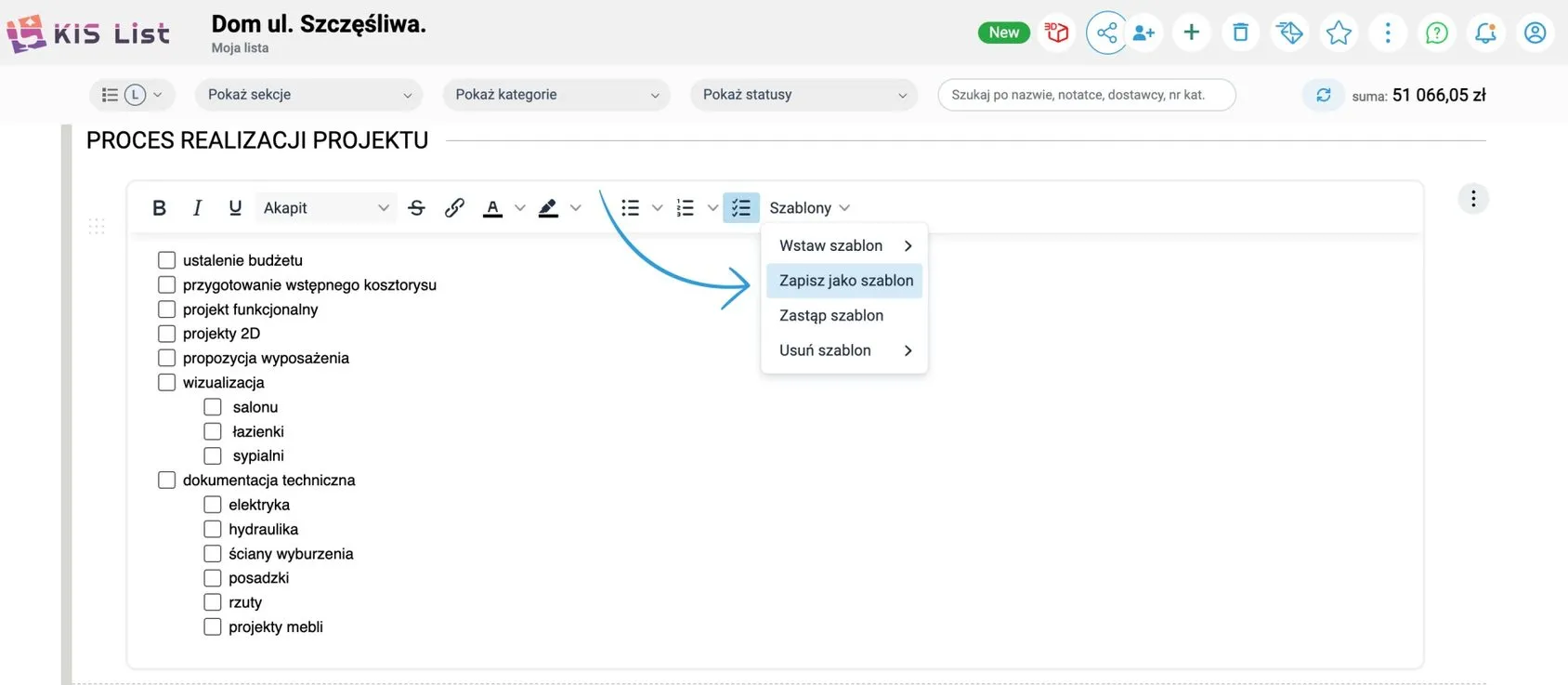
You can turn your design process into a template too.
In KIS List you can save it as a note template and automatically add it to the shopping list for a specific project. That way you don't have to create a to-do list from scratch every time and, most importantly, you streamline your work.
4. Waiting for the client's decision.
The client has to make decisions. As you well know, without them the project won't move forward.
That's why getting the client to make decisions within an agreed time is extremely important. Without it, running the project smoothly is impossible, your efficiency drops and the risk of delays grows.
Waiting for the client's decision disrupts the whole rhythm of your work. Missing information throws the project into disarray and often leaves you frustrated.
So don't be afraid to remind the client that time is running out and to expect them to engage in the design process.

It's worth agreeing deadlines with the client and discussing their role in the project at the very start of the collaboration. Our clients often don't know what working with an interior designer looks like, nor do they know the process they'll need to be involved in.
That's why it's important to raise this subject at one of your first meetings with the client, and to include clauses in the contract on the time for making decisions or providing the required documents.
This gives us grounds to require the client to keep to the set deadlines.
Decision deadlines in KIS List.
In KIS List, when you send proposals to the client, you can set a decision deadline. This is the period in which the client can approve or reject the products on the shopping list you've sent.
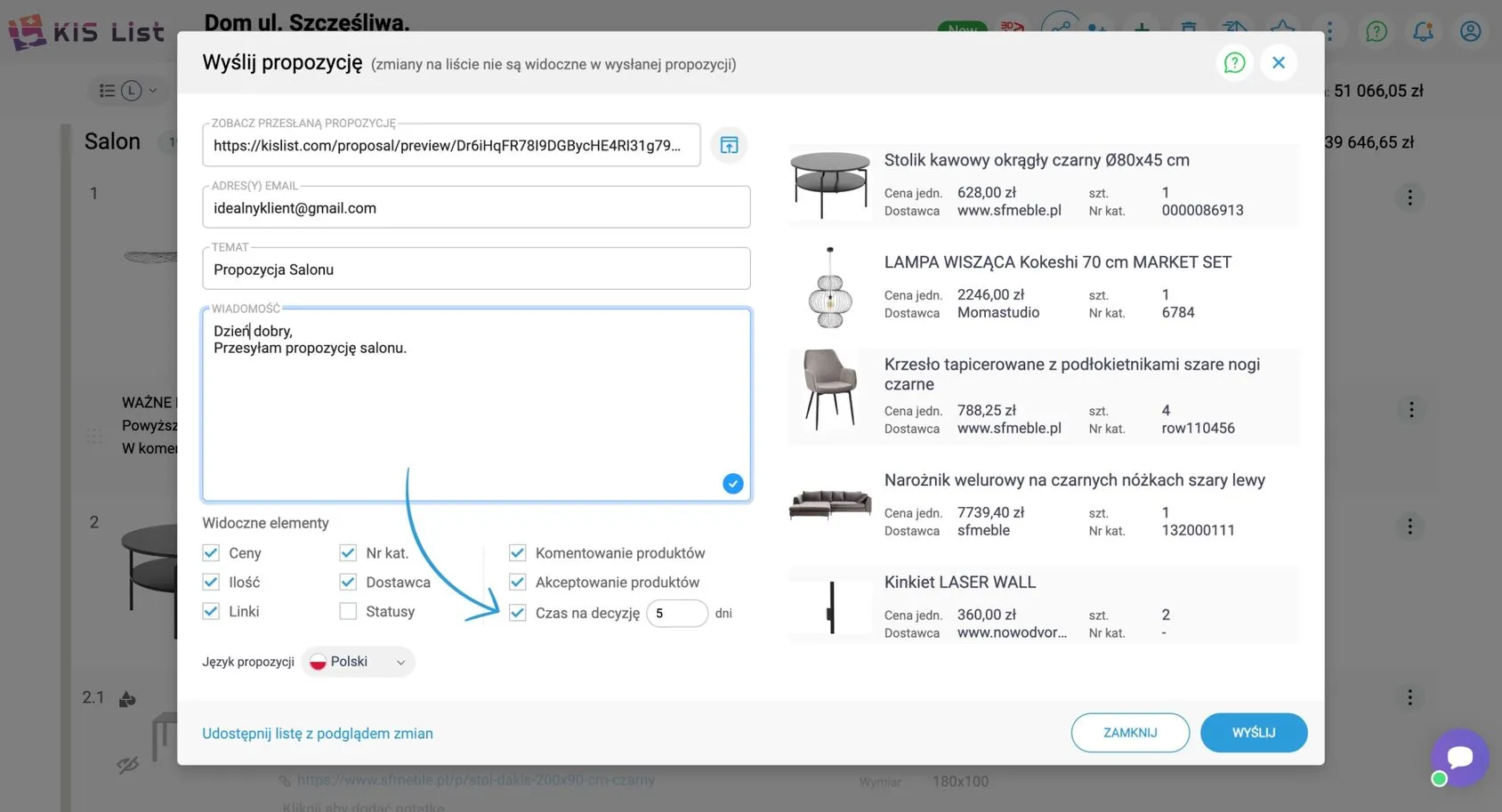
This way the client has a set time to analyse the list and make the decisions we're waiting for. Using online proposals in KIS List is a great way to streamline your work with the client and keep to deadlines.
5. You only learn from your own mistakes.
Our industry presents us with many challenges - from assertiveness in dealing with clients to managing the budget and getting the client committed.
We often think that we're the only ones who run into certain difficulties and make mistakes. But the truth is that many of us struggle with similar problems, and what seems unique to us right now may already be a familiar challenge for other, more experienced designers. That's why it's important to look for advice and solutions among other designers.
Meeting at conferences and industry events, or following other designers on social media, is a great way to exchange experiences and discover new working methods and tools that can significantly improve our work process.
Consultations with more experienced designers, as well as conversations with people from other fields, can give us new perspectives and solutions that we can apply in our own work.
The KIS Masters meetup - sharing experiences!
A great example of an event that let designers look differently at assertiveness in an interior designer's work and learn ways of saying "no" to clients was the KIS Masters community meetup in November 2023.

During the panel discussion, Agnieszka Pasieka-Adamek (a designer with 16 years of experience) and Przemysław Kutnyj (a personal effectiveness specialist) shared their proven methods for building assertiveness.
They gave valuable tips on how to defend your boundaries and how to look after your work process, so that you can effectively hold the client to what was agreed.
Thanks to this, many of us not only gained valuable knowledge, but also realised that problems with assertiveness affect every one of us.

Remember that learning from other people's mistakes and successes is an effective way to grow in the interior design profession. You don't have to "reinvent the wheel".
By drawing on other people's experience, you can find effective solutions to your problems, streamline your work and become the designer you've always wanted to be.
Think about your work process.
As interior designers, we often face many challenges that can make our work more time-consuming than it should be.
This often frustrates us and makes us fed up with our profession. That's why it's worth asking ourselves whether we're making mistakes in our work process that eat up too much of our time and energy.
It's worth treating the analysis of our work, the search for solutions or getting to know new tools as, for example, an investment.
By looking for the areas where your actions are inefficient, you'll not only be able to implement or test new solutions, but in the longer term you'll become more efficient, your projects will be even better, and your work more enjoyable and profitable.